
How to Cook Backcountry Meals Without Wasting Fuel or Water
Match the meal to the method, stabilise the stove, measure resources, protect food safety, and clean without leaving odour.
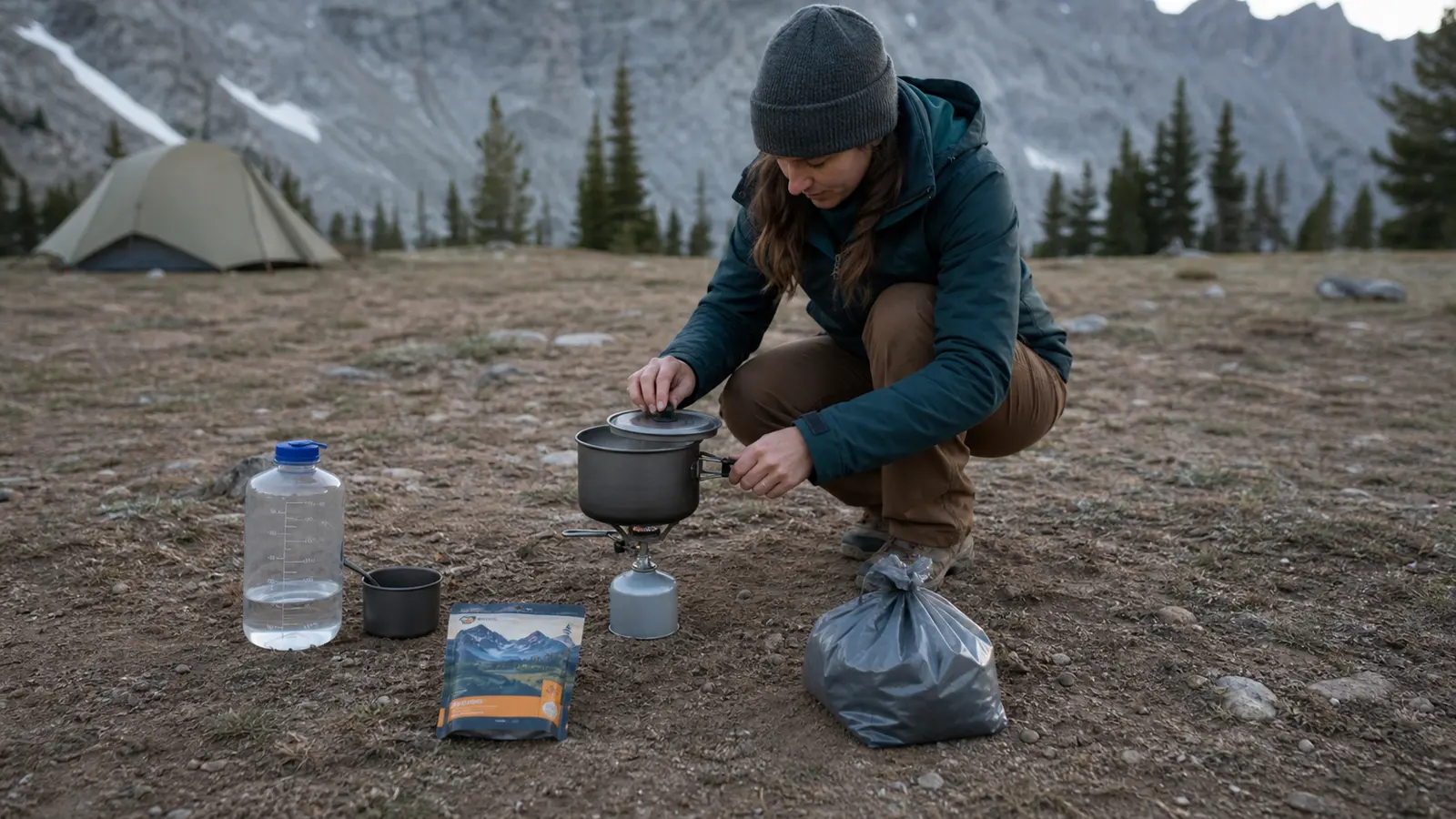
Plan the meal, stove, water, fuel, pot, weather fallback, food safety, and cleanup as one tested field process.
Backcountry cooking works when the meal, stove, fuel, water, pot, weather, cleanup, and food-storage plan are designed as one process. Choose the method at home, package one meal at a time, and test it with the exact cook kit before the trip.
Most trail dinners need only a boil, a measured soak, or a short controlled simmer. Complicated cooking adds fuel use, unstable cookware, washing water, and food odour where the kitchen is smallest.
Design the meal around the field process. A good recipe that needs the wrong pot, too much clean water, or a long simmer is a poor backcountry meal.
Choose a cooking method from water, fuel, and cleanup
Begin with the trip constraint that is hardest to change. A dry route may favour a meal with low preparation water, while a fire ban, winter cold, high altitude, or long carry may change the stove and fuel choice.
Boil and bag-rehydrate
Uses one boil and keeps most food out of the pot, provided the pouch is intended for hot water
Boil and pot-rehydrate
Gives control over water and texture but requires the pot to be cleaned
Short one-pot simmer
Works for quick grains and noodles when the stove can simmer without scorching
Cold soak
Saves fuel but needs enough time, a leakproof container, and food that becomes safe and palatable without heat
No-cook meal
Removes stove use for a meal while increasing attention to food weight, texture, and appetite
Fresh-food cook
Can work early in a supported trip when cold storage and safe internal cooking temperatures are available
You should not plan a campfire as the only cooking method. Fires may be prohibited, fuel may be wet or unavailable, and an open flame is a poor tool for precise food temperature.
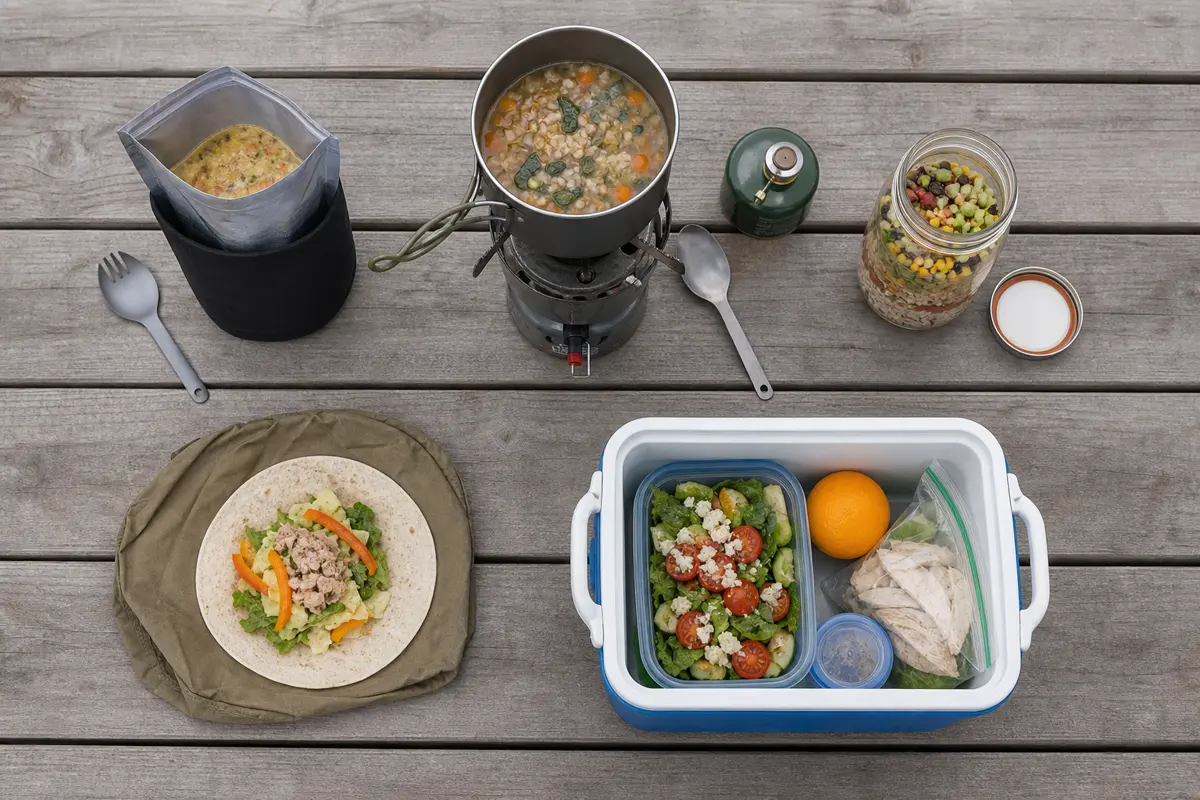
Include at least one meal that can be eaten without the stove. It protects the group when fuel is lost, weather makes cooking unsafe, or arrival is too late for a full kitchen setup.
Pack each meal around the cooking sequence
Portion ingredients at home and label the water amount and soak or simmer time on the meal package. Keep instructions usable in low light without turning the bag into litter that can blow away.
Break long pasta, pre-mix dry seasoning, and package oil separately when those changes reduce field work. Do not pre-mix ingredients that have different storage needs or cooking times simply to save one bag.
Match each packet to the pot volume and utensil reach, then include the fuel allowance and cleanup water in the same meal record. Pack its wrapper, residue, and used wipes in a secure waste bag rather than treating disposal as a separate problem.
You should test one portion at home with the actual pot and stove. Record the water left after cooking, fuel consumed if measurable, texture at the stated time, and whether the pot can be cleaned with the planned method.
Keep a no-cook serving for a stove or weather failure.
Set the stove where it cannot tip or ignite the site
You should use the stove outside tents and away from dry grass, duff, roots, loose clothing, and overhanging material. Select a stable level surface allowed by the land manager, then assemble the stove according to its instructions.
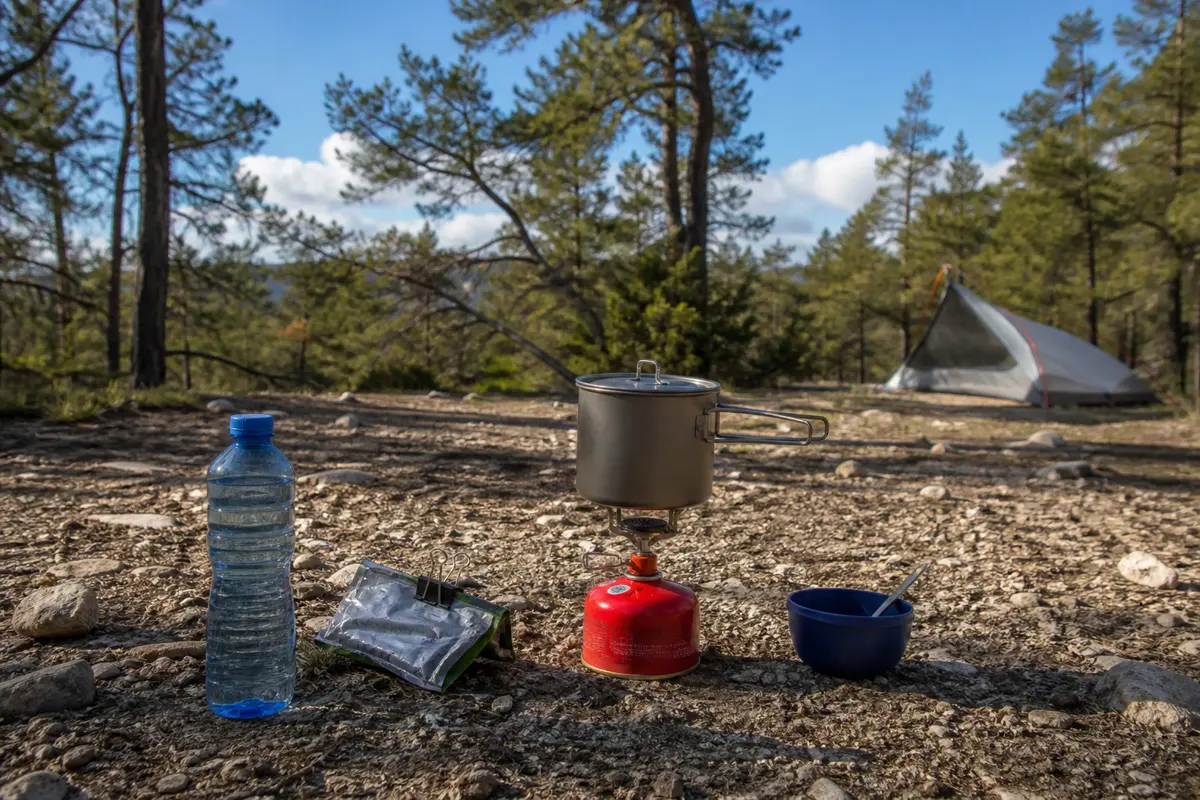
Before ignition, inspect fuel connections, secure wrappers and clothing, and keep one clear approach for the cook. Place cooking water within reach without crowding the burner.
A windscreen can trap heat around a fuel canister or bottle. Use only the wind protection and arrangement allowed for the exact stove, monitor the fuel container for heat, and never operate the stove inside a tent, vehicle, or sleeping space.
How do you boil and rehydrate efficiently?
Measure water before lighting the stove. Heating excess water wastes fuel, while guessing low can leave a salty, underhydrated meal that is difficult to correct after the fuel is turned off.
- Set and measureStabilise the complete kitchen, then add the tested water volume before ignition
- Light, shield, and coverFollow the stove instructions, use approved wind protection, and control the fitted lid and handle
- Reach the required heatBring water to the meal's stated boil or cooking condition
- Turn off before handlingExtinguish the burner and move fuel controls to the safe state
- Add food or waterAvoid steam burns and keep the package or pot stable
- Insulate for the soakUse a safe cosy or wrapped pot away from flame, then wait the tested time
- Check texture and temperatureAdd a small measured correction only when the food still needs it
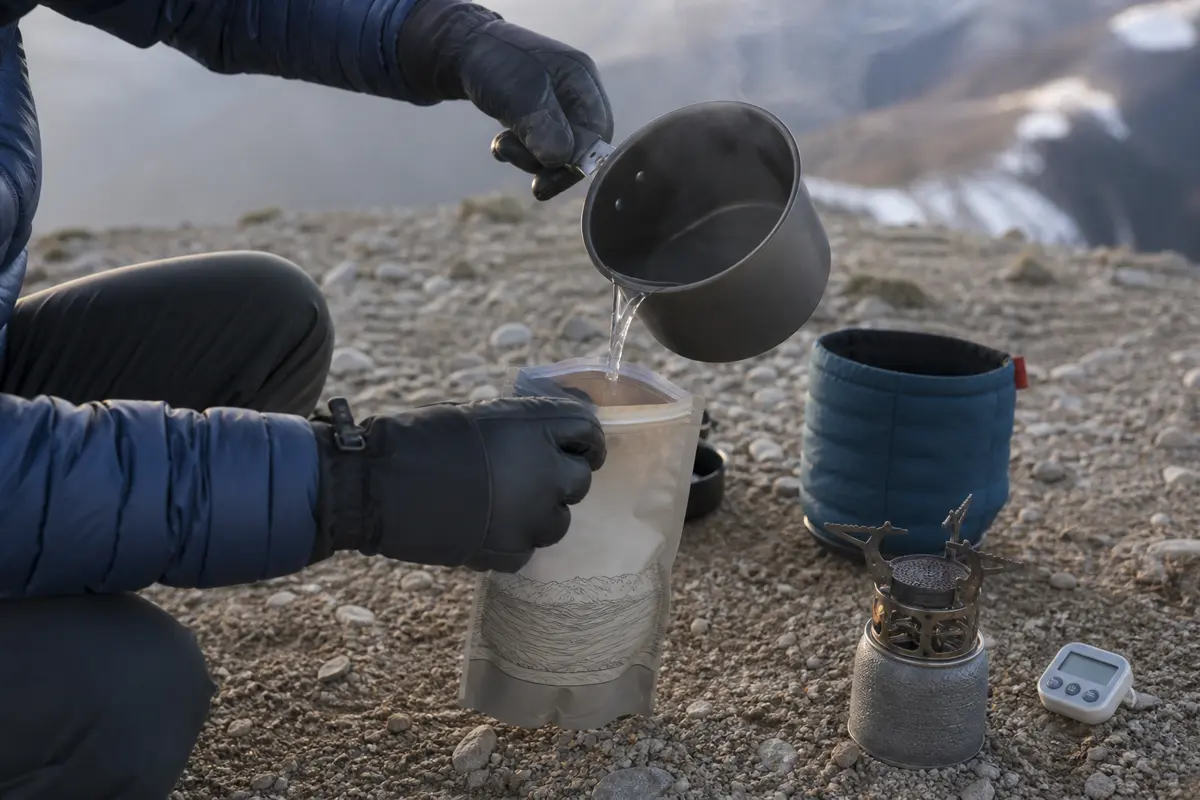
At altitude, water boils at a lower temperature and food may need more time. Cold water, wind, and near-empty fuel containers also extend the process, so test the meal conservatively and carry a reserve.
When does one-pot cooking work better?
One-pot cooking earns its extra cleanup when ingredients share a short cook time and the meal benefits from real texture or combined flavours. It works poorly when one ingredient needs a long boil and another becomes mush before the first is ready.
| Meal pattern | Why it works | Likely failure | Field correction |
|---|---|---|---|
| Quick noodles plus dried vegetables | Similar short hydration time | Boil-over or uneven seasoning | Use a larger pot and stir after the burner is off |
| Couscous with shelf-stable additions | Mostly passive hydration | Too much water creates soup | Measure water and add oil after soaking |
| Instant rice with dehydrated protein | Components can rehydrate together | Protein remains hard | Pre-soak the slow component or use a tested finer cut |
| Long-cook pasta and sauce | Familiar ingredients | High fuel use and starchy cleanup | Choose quick pasta or cook-soak-cook in tested cycles |
| Fresh meat and vegetables | Real texture | Cold-chain and doneness risk | Reserve for cooler-supported trips and use a thermometer |
You should keep the flame low enough to control the pot. Thin titanium cookware transfers heat quickly and can scorch thick sauces unless the stove and recipe are suited to simmering.
You should not pour starchy water or food residue onto the ground. Plan a meal whose remaining liquid can be consumed safely or packed out under the local waste rule.
How much water and fuel does dinner actually use?
The recipe water is only one part of the total. Drinking during cooking, cleaning hands, rinsing or scraping the pot, and keeping an emergency reserve can exceed the water absorbed by the meal.
Dinner resource ledger
- Recipe amountWaterThe tested volume absorbed by or served with the meal
- Preparation lossWaterSpills, steam, and water left in the pot or pouch
- Cleanup amountWaterThe smallest tested amount that removes food without broadcasting residue
- One complete cycleFuelIgnition, heat-up, boil, simmer, and relight needs measured with the real stove
- Weather marginFuelAdditional use caused by cold, wind, altitude, and group delays
- No-cook reserveMealOne safe serving that does not depend on the stove
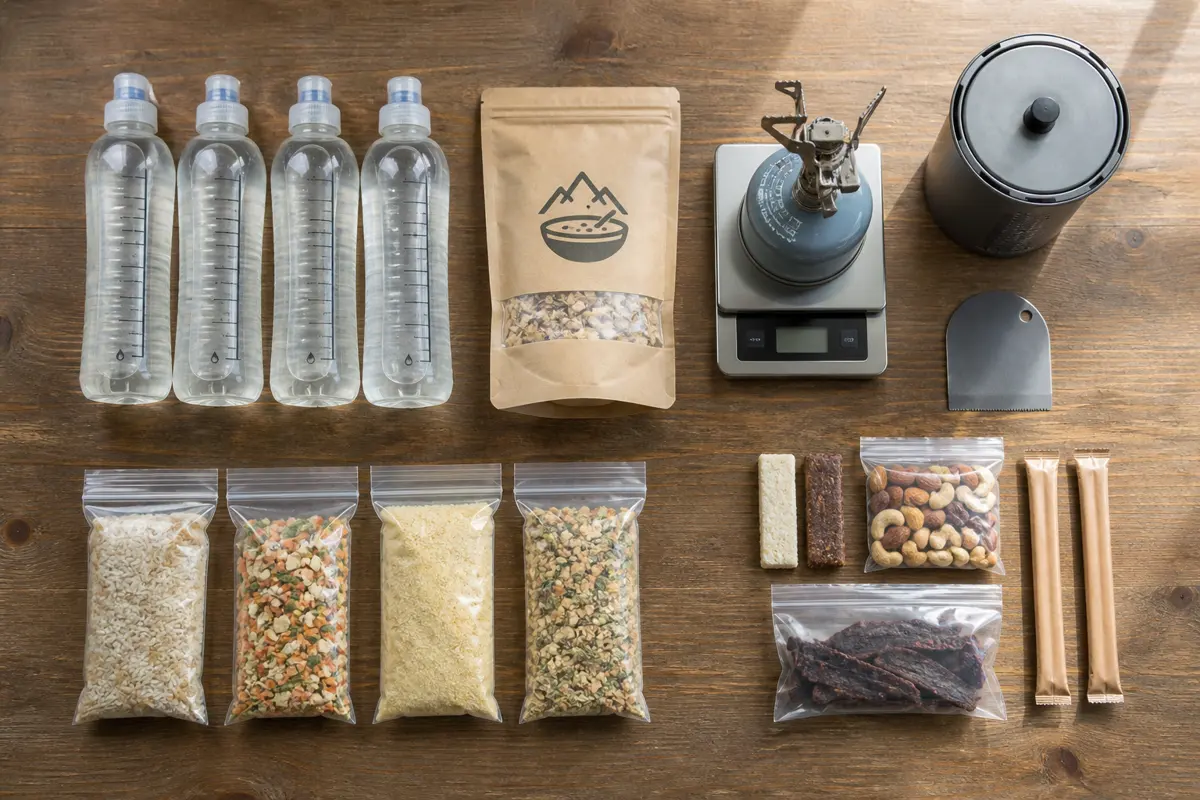
Never depend on an untreated lake or stream for cooking because the water will later boil. Some meal methods do not keep every part of the water at a reliable treatment condition, and cleanup still exposes hands and utensils.
Keep hands, utensils, and raw food separated
USDA food-safety guidance recommends planning ahead, keeping hands and equipment clean, separating raw food, controlling perishable temperatures, and using safe potable water. Shelf-stable food is usually the practical choice after the first day of an unsupported backpacking trip.
Wash with soap and treated water where the local rule permits, or use an appropriate hand-sanitising method when washing is not possible. Sanitiser does not remove visible dirt or food residue from cookware.
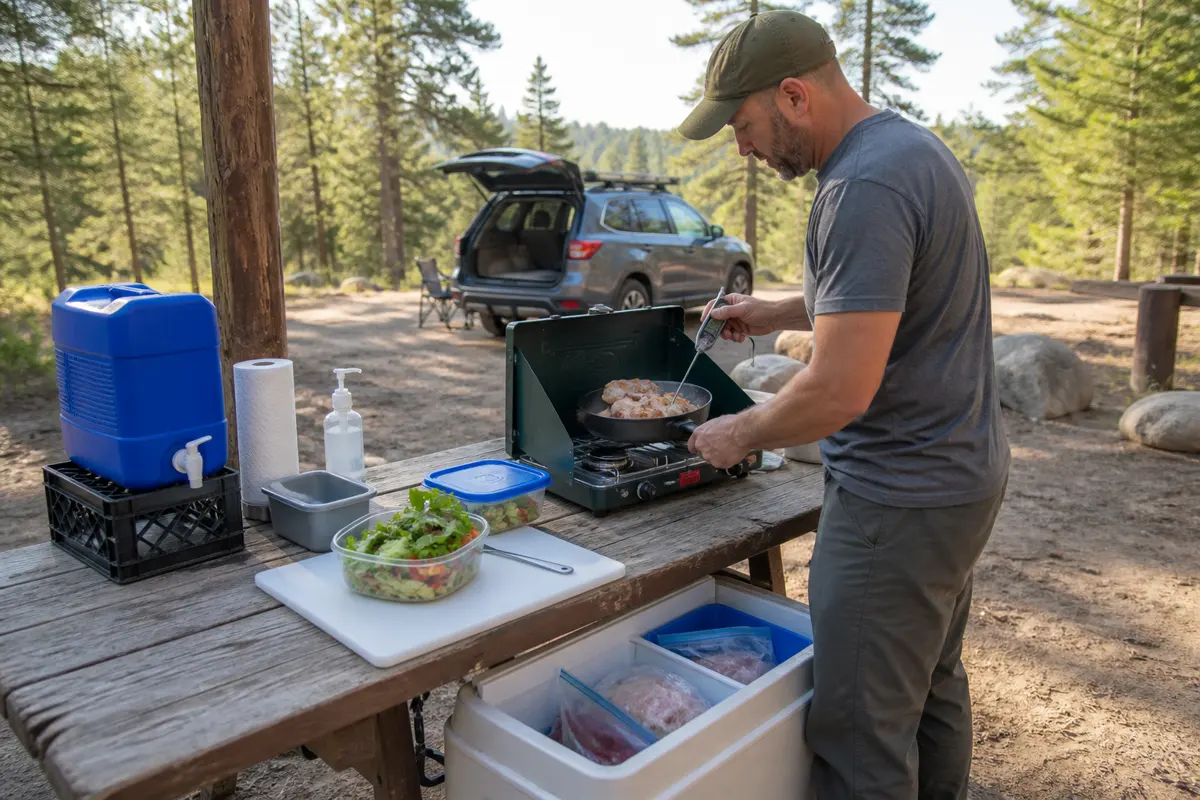
Discard perishable food that has spent too long at an unsafe temperature. A cool evening, shaded pack, or cold stream is not a measured refrigerator.
What changes above treeline, in rain, or during a fire ban?
You should move from the preferred meal to the safest workable method. Exposed wind may make stove use inefficient or unstable, rain can tempt cooking inside a shelter, and a fire restriction may limit stove types as well as open fires.
Never solve weather by bringing a burning stove into a tent. Carbon monoxide, flame, hot fuel, steam, and melting fabric create consequences far beyond a cold dinner.
In exposed wind or above treeline, protect fragile ground, control loose waste, and use only the wind protection approved for the stove.
Heavy rain still requires a safely separated outdoor cooking position, while severe cold changes fuel performance and increases the value of insulated soaking.
Read the exact fire restriction because it may limit stove types, shutoff valves, and locations. Choose the fallback early when a delayed arrival or worsening weather removes the safe setup margin.
Clean the pot without feeding wildlife
Eat every practical food particle, then scrape the pot with the utensil before adding water. A small warm rinse can loosen residue, but that liquid still contains food odour and must be handled under local rules.
- Finish and scrapePortion accurately, eat the usable food, and remove residue mechanically before adding water
- Use minimal treated waterLoosen the remaining film without creating a large volume
- Consume or strain as requiredFollow local guidance and pack strained particles with food waste
- Store the kitchenPut pot, utensils, waste, and scented items into the required food-storage system
- Inspect the groundPick up grains, packaging corners, labels, and spilled ingredients
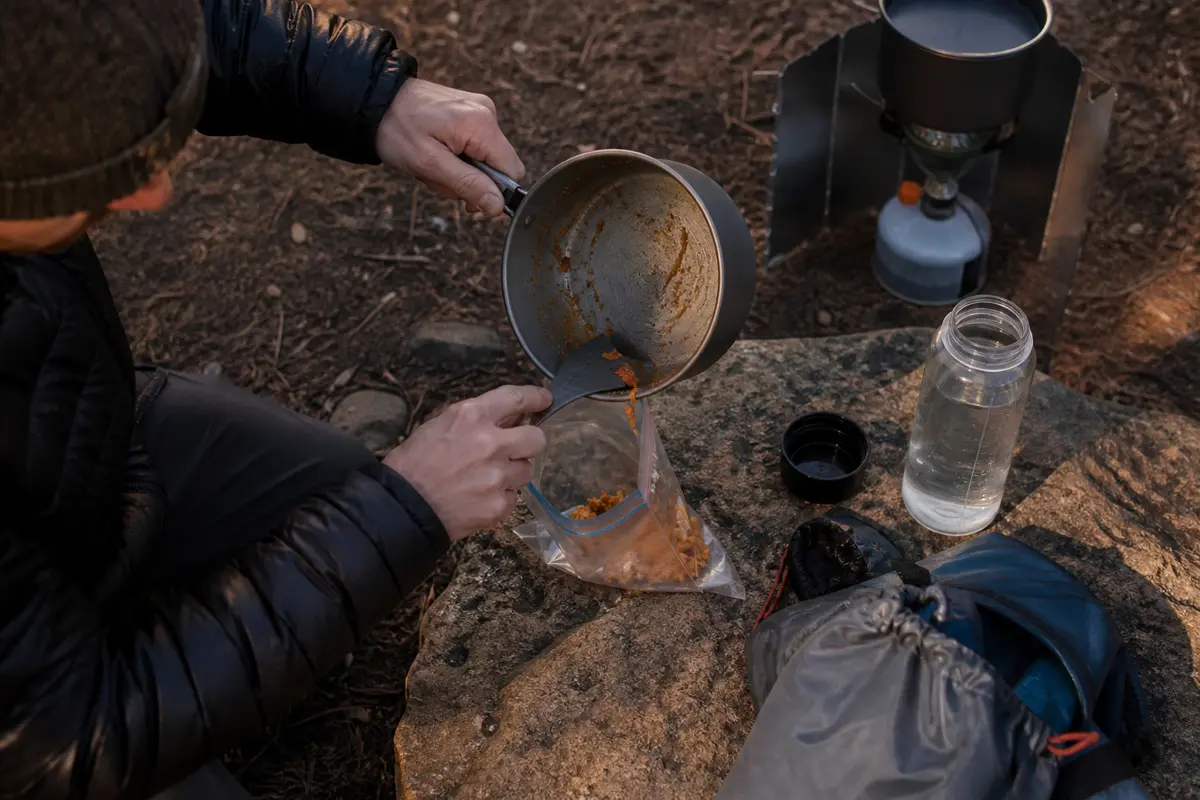
Do not burn foil, plastic, leftover food, or packaging. Store every scented item as the managing agency requires, including cookware, rubbish, wipes, and toothpaste.
A finished dinner leaves no active flame, unstable fuel, food scrap, wastewater pool, or unsecured scented item. Pack the kit in the order needed for breakfast so the next cooking cycle begins controlled.
Sources
Meal planning, one-pot cooking, and fuel-saving preparation follow REI's ultralight backpacking meal planning.
Outdoor cold-chain, safe-water, hand-cleaning, separation, and cooking-temperature guidance follows USDA FSIS advice on food safety while hiking and camping.
Field cooking variety and tested backcountry recipes are supported by the NOLS discussion of backcountry cooking.
Step by stepPractical steps
- Choose a method that fits water, fuel, weather, and cleanup
- Portion and test the exact meal at home
- Package measured water, timing, fuel, and waste needs
- Set the stove on a stable legal outdoor surface
- Boil, simmer, or soak with controlled heat
- Protect food safety and use potable water
- Scrape, clean, pack waste, and secure scented items