
49 Palms Oasis Trail: Closure, Heat, and Return Climb
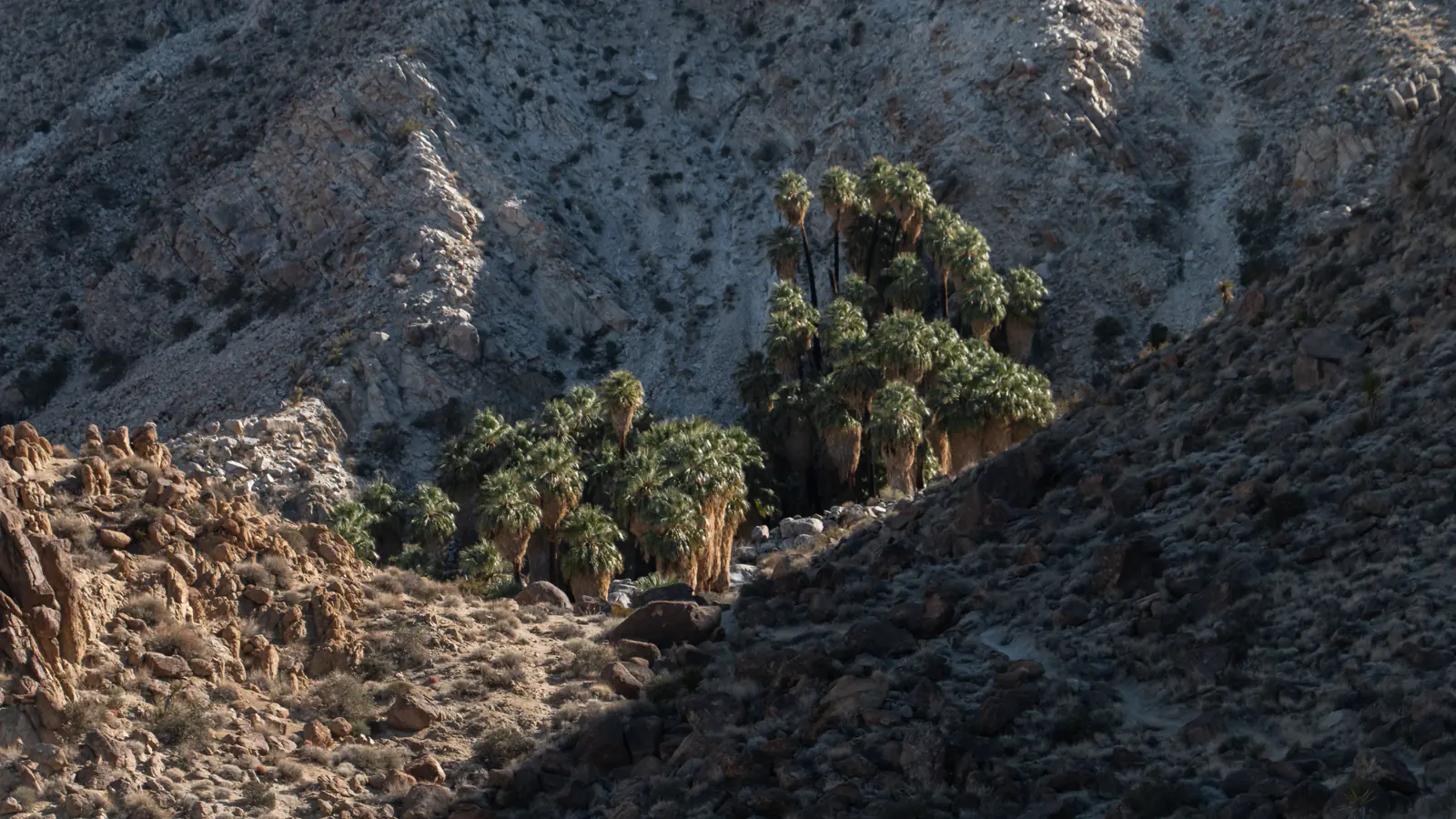
49 Palms Oasis is a three-mile desert out-and-back that crosses a ridge twice. Plan around summer heat and possible wildlife closures, complete lack of water, protected oasis habitat, and the exposed return climb.
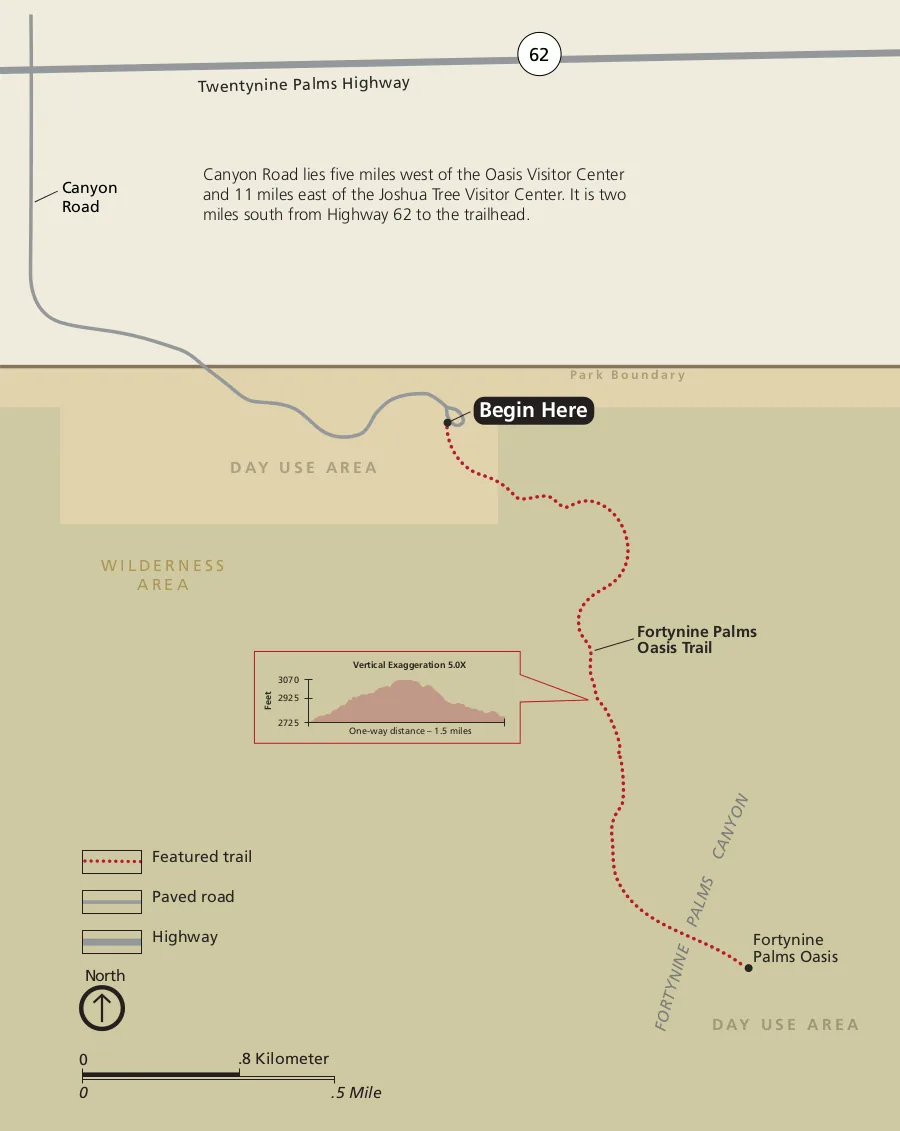
The 49 Palms Oasis Trail is a three-mile out-and-back with no water and almost no shade. It crosses a rocky ridge, drops to a fan-palm oasis, then makes you regain that ridge before the final descent to the trailhead.
Joshua Tree National Park lists the trail as open in fall, winter, and spring. It closes in summer so bighorn sheep can reach scarce oasis water without disturbance, and reopening depends on monsoon rainfall restoring water availability.
When is the 49 Palms Oasis Trail open?
Plan this hike for fall, winter, or spring, then check the park alerts on the morning you go. Do not treat a cool summer forecast as permission to enter because the seasonal closure protects wildlife access to water rather than merely closing the trail on hot afternoons.
| Period | Normal status | Planning consequence |
|---|---|---|
| Fall and winter | Often the most suitable season when open | Cooler air helps, but exposed rock can still be hot and winter daylight is short |
| Spring | Suitable on many days when open | Start early as temperatures rise and carry all water from the car |
| Summer | Closed for wildlife water access | Choose another hike and wait for the park to announce reopening after adequate monsoon rainfall |
A posted closure is a firm boundary. Outside summer, flash flooding, fire, road work, or extreme heat can still make an otherwise open route a bad choice, and the basin offers no dependable escape from the sun.
Closed means choose another hike. The oasis also supports desert wildlife that depends on the same limited water visitors come to see.
Why does the return feel harder than the route profile suggests?
The trail climbs from the parking area to a ridge, descends into the oasis basin, and reverses every change on the way out. Reaching the palms therefore leaves a second climb between you and the car.
That shape matters more than the modest mileage. The return begins when the day is warmer, your water is lower, and the exposed slope is now uphill.
- Distance
- About 3 miles round trip
- Route
- Out and back over a ridge
- Water
- None on the route
- Shade
- Limited until the oasis
- Summer
- Extreme heat and wildlife closures require a current status check
- Navigation
- Signed trail with rocky desert tread
Loose stones and uneven steps slow the descent into the basin. Save a steady pace for the climb out rather than treating the palms as the end of the work.
How much heat and water margin do you need?
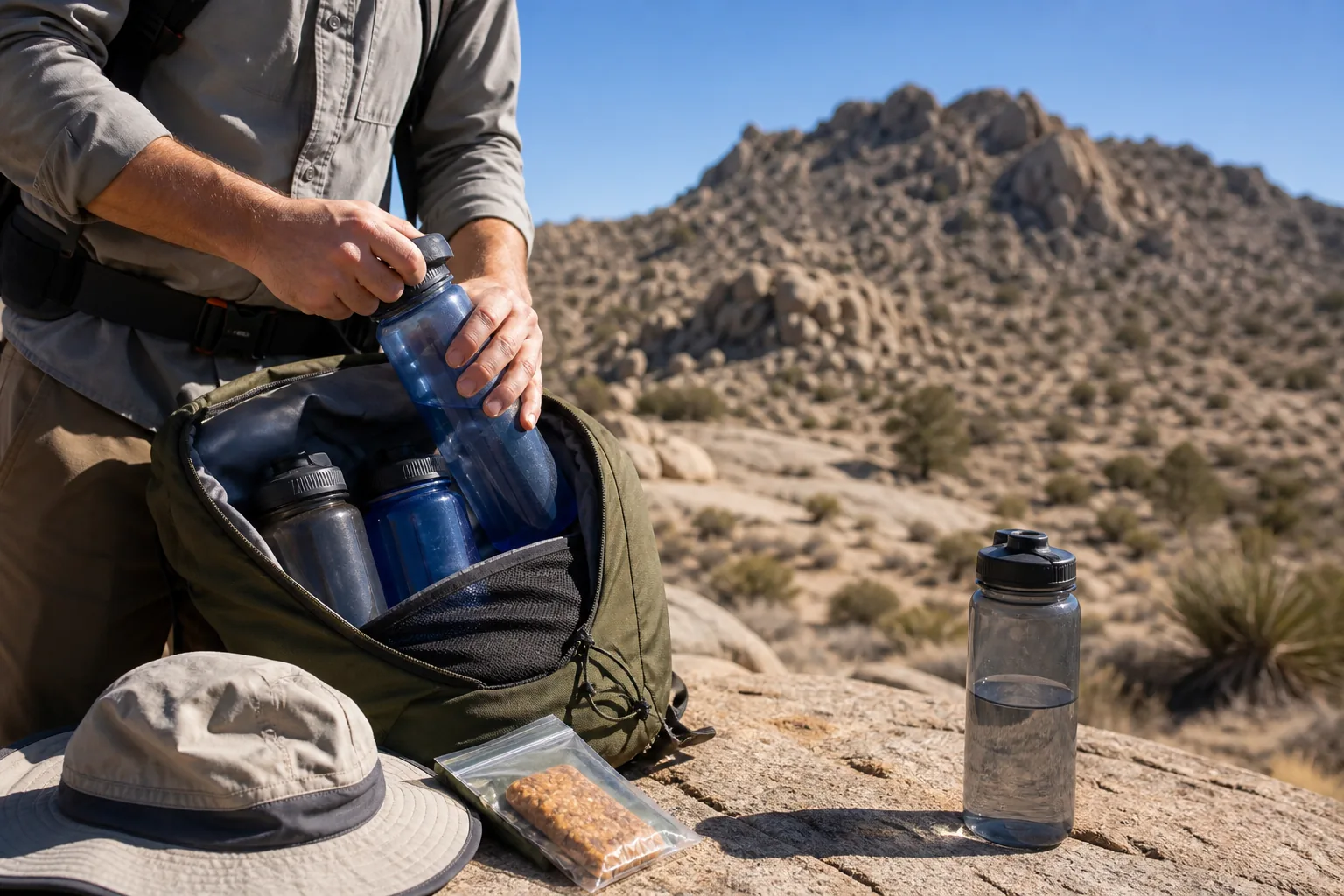
Carry the full supply from the trailhead because oasis water is not a drinking source. The National Park Service recommends at least one gallon per person per day in desert conditions, but your actual need changes with temperature, body size, pace, and time outside.
Start with cool water, drink before you feel depleted, and keep an untouched reserve for the return ridge. A bottle that is almost empty at the oasis is a turnaround warning, not proof that the shortest half of the map remains.
Cell service is limited and unreliable. Tell someone your route and return time before leaving, and do not make a phone signal part of the rescue plan.
Your water reserve must cover the ridge. The final downhill to the car starts only after you have regained it.
What should you expect at the oasis?
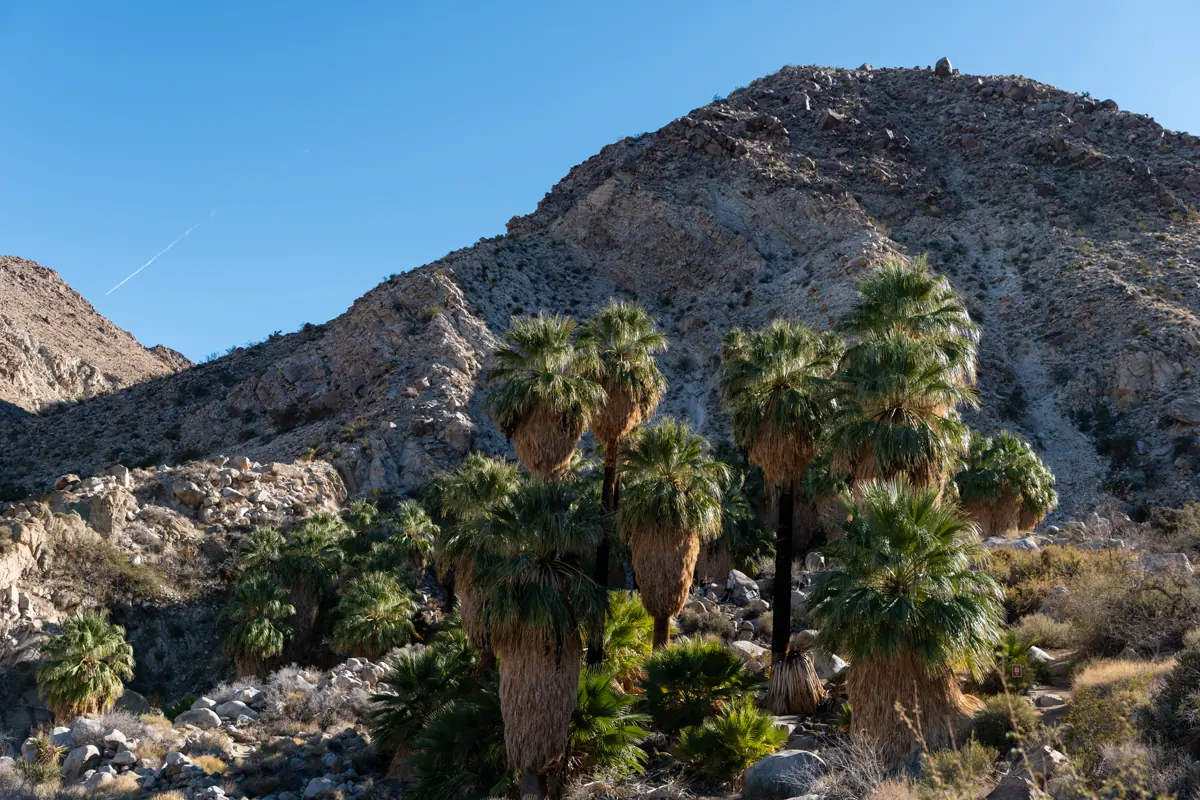
California fan palms grow where a fault allows groundwater to reach the surface. The dense grove is a habitat and water source, not a swimming area or a place to push through vegetation.
Stay on the established approach, keep food secured, and observe wildlife without crowding it. Do not enter the water, climb palms, or leave fruit peels and other food scraps.
Recognition
A concentrated stand of tall fan palms marks groundwater in an otherwise dry basin.
Behavior
Stop on durable ground and keep the water and dense vegetation undisturbed.
Wildlife
Give birds and mammals a clear path to the only reliable water in the area.
Leave
Pack out food scraps and every item you carried in.
The oasis provides visual shade, but it should not become a long midday stop that delays the exposed return. Eat, reassess water and temperature, then leave enough time to cross the ridge in control.
How do you reach the separate 49 Palms trailhead?
This trailhead sits at the end of Canyon Road on the north side of the park. It is not reached from Park Boulevard, so a navigation app that simply points toward Joshua Tree National Park can send you to the wrong entrance.
The access road ends at a small parking area with no water. Download the route and park information before driving because service can disappear near the hills.
- Confirm the trail is open on the official park alerts page
- Carry all water needed for the out-and-back and keep a return reserve
- Wear sun protection and footwear that grips loose rock
- Save an offline map and tell someone when you expect to return
- Leave pets at home because pets are not allowed on park trails
- Do not leave food or valuables visible in the vehicle
A Joshua Tree entrance pass applies even though this trailhead is separate from the main entrances. Buy or display the appropriate pass under current park instructions rather than assuming the side road is outside the fee area.
Should you hike 49 Palms Oasis or turn back early?
Choose this trail when the route is open, the forecast supports exposed desert hiking, and every person can complete a second climb after reaching the oasis. Choose a shorter or shadier outing when heat, limited water-carrying capacity, or an uncertain return time removes that margin.
The ridge itself provides useful checkpoints. If breathing and pace are already deteriorating before the first descent, continuing only moves the group farther from the car and adds the return climb.
Turning around before the oasis still removes the hardest risk. You lose a destination view, but you keep the simplest route back while water and temperature remain manageable.
Sources
Closure and safety. National Park Service Fortynine Palms Oasis trailhead information and Joshua Tree current conditions support the fall-through-spring availability, summer wildlife closure, monsoon-dependent reopening, ridge profile, heat warning, lack of shade, and current-status check, verified August 30, 2026.
Park rules. Joshua Tree hiking guidance and fees and passes support desert safety practices, the pet restriction, and entrance-pass requirement, verified August 30, 2026.
RespectHazards to plan for
- extreme heat
- no water
- limited shade
- loose rock
- limited cell service