
Lightning Safety Outdoors: When to Leave and Where to Go
A field decision guide to real shelter, exposed terrain, group movement, and first aid after a strike.
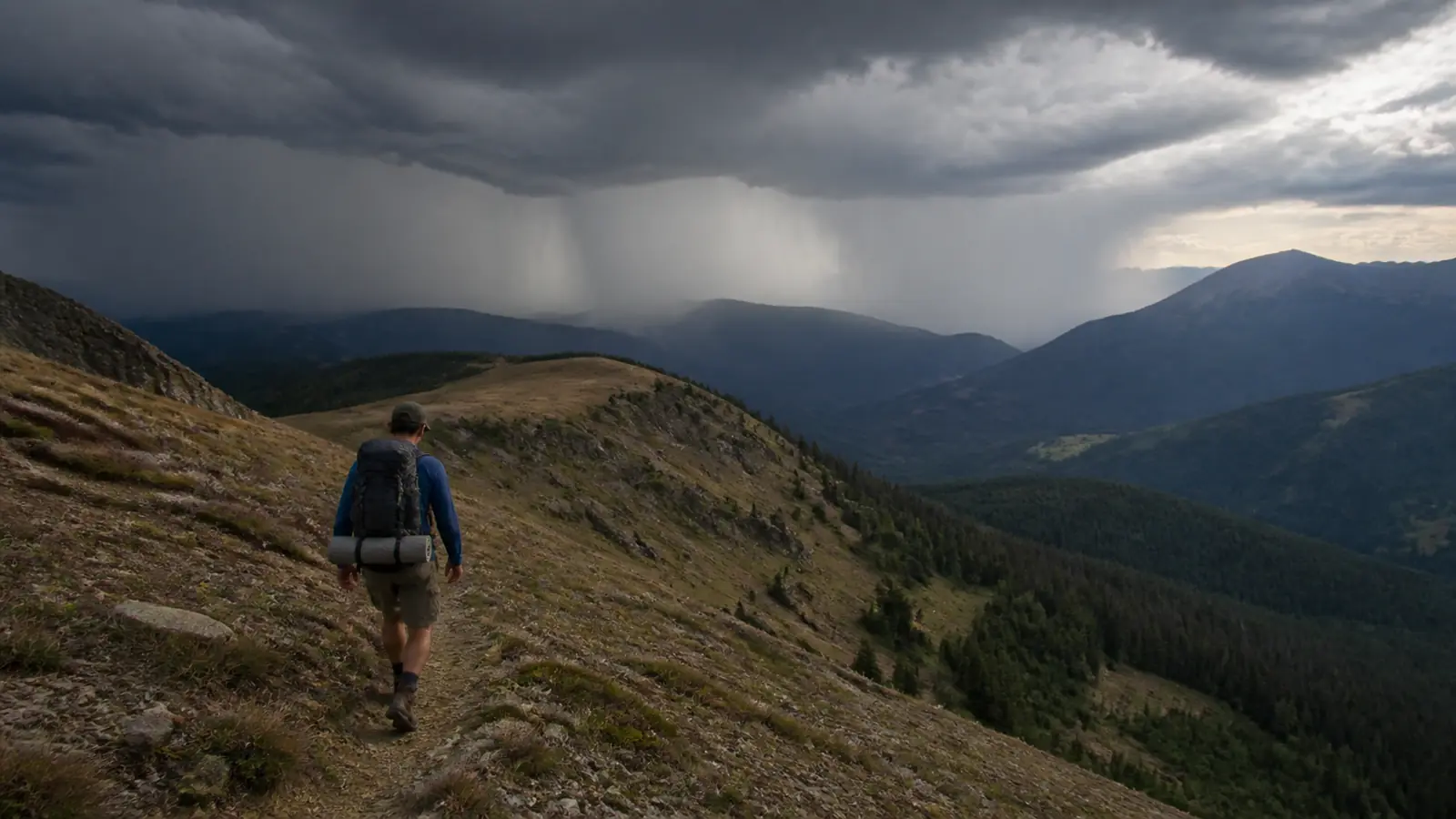
If you can hear thunder, lightning is close enough to strike you. The safest response is to move toward a substantial enclosed building or a hard-topped enclosed vehicle, even when the trail is still dry.
If you can hear thunder, lightning is close enough to strike you. The trail can still be dry, the rain can look miles away, and the safest decision is already to move toward a substantial enclosed building or a hard-topped enclosed vehicle.
That direct rule matters because the alternatives are easy to overrate. A tent, picnic pavilion, shallow cave, isolated tree, or practiced crouch may change how wet or exposed you feel, but none turns the outdoors into a safe place during a thunderstorm.
This article separates real shelter from rain cover, then deals with the harder case where you cannot reach either protective option. Shelter first is the order that keeps every later tactic in its proper place.
Which shelter actually protects you from lightning?
A substantial enclosed building is the best destination. A hard-topped enclosed vehicle with its windows closed is the practical alternative when a building is unavailable.
The building protects through its grounded electrical and plumbing systems. The vehicle protects because its conductive outer shell can carry current around the occupants, not because rubber tires insulate it from a lightning bolt.
Once you enter a building, stay away from windows, doors, plumbing, corded devices, and equipment connected to an outlet. Inside a vehicle, close the windows and avoid touching metal parts connected to the exterior until the storm has passed.
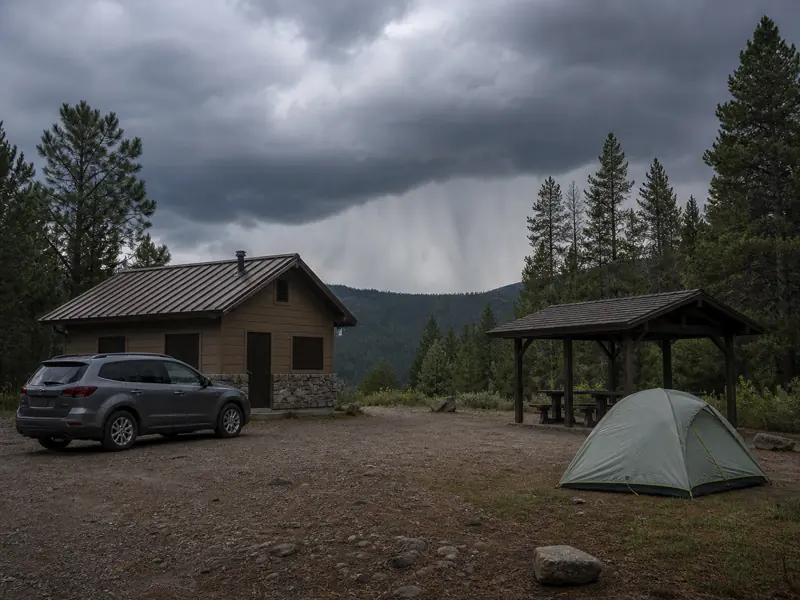
A tent creates a particularly convincing false sense of safety. Fabric and poles do not block a direct strike, side flash, or current moving across the ground, so changing from a ridge-top tent to a lower campsite reduces exposure but does not create shelter.
This classification changes trip planning before a cloud appears.
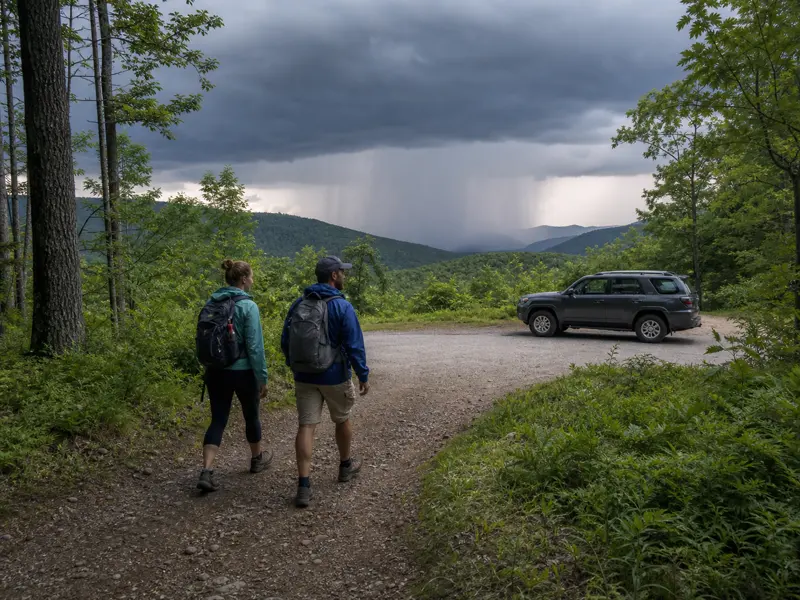
When the route leaves the last building or vehicle behind, note how long it will take to return because that travel time belongs in every thunderstorm decision.
What starts the retreat clock?
Lightning can strike outside the part of a storm where rain is falling, sometimes around ten miles from the rain shaft.
Waiting for the first drops therefore waits for a signal that may arrive after the hazard.
Thunder is the useful field trigger. If you hear it, the discharge happened close enough that another strike could reach your location, so the question is no longer whether the storm will come closer.
The better calculation happens before the hike. Compare the forecast storm window with the time needed to cross exposed terrain and return to a building or vehicle, then build in room for a slow group, route finding, or an injury.
The lightning decision clock
- Before leavingCheck the forecast for the actual route and identify the last substantial building or hard-topped vehicleChange the route or start time if exposed travel overlaps the storm window
- Clouds build or distant thunder beginsTurn away from ridges, summits, shorelines, and open ground while the safer exit is still reachableEarly movement preserves choices that disappear once the storm is overhead
- Thunder is audibleGo directly to a substantial building or hard-topped vehicleYou are already within potential striking range
- Thirty minutes after the last thunderKeep waiting in shelter before resuming the activityA trailing strike can occur after rain and thunder seem to have moved away
Flash-to-bang timing can estimate distance, but it should not become permission to stay for one more viewpoint or one more mile. Wind, terrain, and hearing conditions make the estimate imprecise, while audible thunder has already supplied the decision you need.
Phone weather alerts help only while the device has power, data, and a useful forecast grid. Look at the forecast before losing reception, watch the sky during the trip, and treat an alert as extra warning rather than the system that makes an exposed route acceptable.
Safer terrain when real shelter is out of reach
When no building or hard-topped vehicle is reachable, you are choosing lower exposure, not safety.
That distinction prevents a relatively better patch of ground from becoming a place where the group stops thinking.
Leave summits, ridgelines, open fields, exposed shorelines, and open water first. Move away from isolated tall objects and toward lower terrain or a lower stand of trees, provided the route does not put you into a drainage threatened by flash flooding.
- Descend from peaks, ridges, and other skyline terrain without waiting for rain.
- Leave open fields, beaches, exposed shorelines, and water as directly as conditions allow.
- Avoid isolated trees, cliff edges, shallow caves, rock overhangs, fences, and long metal conductors.
- Choose a lower stand of similar-height trees over the tallest tree at the forest edge.
- Keep moving toward real shelter if one remains reachable.
- Never lie flat on the ground during nearby lightning.
An isolated tree combines several hazards. It can take a direct strike, send a side flash to a nearby person, and spread current through the ground around its roots.
A shallow cave or overhang creates a related trap because current can bridge the opening or travel through wet rock. Pressing against the wall also gives electricity another contact path through the body.
If flashes and thunder are nearly simultaneous and movement is momentarily impossible, minimize your footprint on the ground and avoid lying down. Some wilderness guidance describes a compact posture as a last resort, but no posture provides the protection of a building or vehicle and it must never delay movement to safer terrain.

Why the familiar lightning myths fail
Metal is a conductor, but a trekking pole or pack frame does not pull a thunderstorm toward you like a magnet. Height, isolation, terrain, and the storm's electrical field determine where a discharge develops, while conductive objects matter because they can carry current after lightning reaches them.
Do not spend an active storm emptying every metal item from your pack. Put down a long exposed conductor such as a fishing rod if you can do so immediately, then keep moving toward shelter or less exposed terrain.
| Familiar belief | What the electrical path actually does | Better decision |
|---|---|---|
| Metal attracts lightning | Metal conducts current well but does not create the storm or choose the strike point by itself | Leave exposed terrain and avoid contact with long conductors instead of sorting small gear |
| Rubber tires make a vehicle safe | A hard-topped vehicle's conductive shell carries current around occupants | Close the windows and avoid exterior-connected metal inside the vehicle |
| A lone tree or shallow cave is shelter | Side flash and ground current can move from the struck object through a nearby person | Move away from isolated tall objects and cave mouths toward enclosure or lower terrain |
| Lying flat makes you a smaller target | More body contact with the ground can expose you to a larger voltage difference from ground current | Never lie flat and keep any last-resort ground contact compact |
| A tent or foam pad insulates you | Thin fabric, poles, and sleeping pads do not stop lightning-scale current | Use them for weather protection only after choosing less exposed terrain |
Ground current explains why these mistakes persist. The visible flash may hit a tree or patch of ground some distance away, yet current spreads outward through the surface and enters a person through one contact point before leaving through another.
Side flash explains why standing beside the tallest object can be worse than standing in the open seemed a moment earlier. Current can jump from the struck object to a nearby body because that body offers another route toward ground.
Change location first because no equipment ritual or posture reliably repairs a bad position during an active storm.
A group should avoid becoming one casualty
A tight cluster beneath one tree can lose every person capable of calling for help.
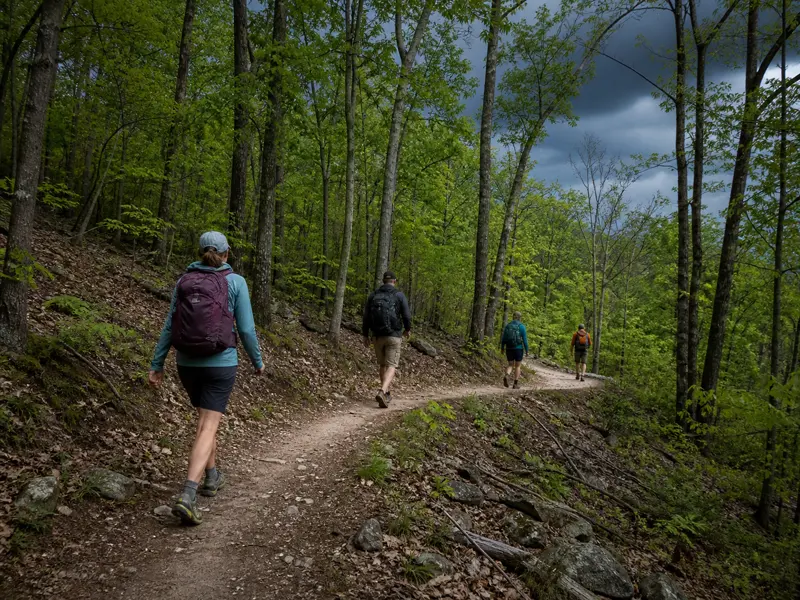
Ground current and side flash can injure several people in the same event, so a group outside without shelter should spread out while staying close enough for voice or visual accountability.
Spacing does not make the route safe. It reduces the chance that one electrical path incapacitates the entire party and preserves a potential rescuer while everyone continues toward a better location.
Route leader
Chooses the direct line toward the agreed building, vehicle, or lower terrain and keeps the group moving rather than debating each flash.
Weather monitor
Notes thunder and starts the 30-minute wait from the last sound once the group reaches shelter.
Tail check
Keeps every person in sight or voice contact as the group separates, preventing a spacing tactic from becoming a lost-person problem.
Do not stop to measure an exact interval between people. Terrain, visibility, wind, hearing, and the group's condition vary too much for one universal number, while obvious separation without losing contact captures the useful principle.
At a campsite, move cooking and social activity away from an isolated tree or a cluster of metal bear boxes before the storm arrives. If substantial shelter is absent, choose lower terrain early and separate tents so one ground-current path is less likely to involve everybody.
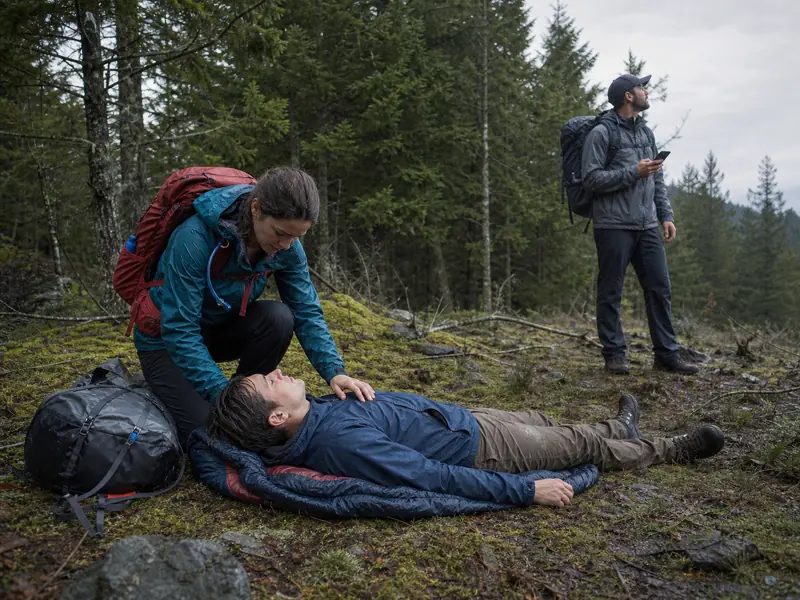
What do you do after lightning strikes someone?
A lightning victim does not retain an electrical charge. You can touch and treat the person as soon as you have considered the continuing storm threat to rescuers.
Make the scene less exposed if you can do so without creating another injury, then call emergency services and give the location, number of victims, current weather, and each person's condition. A person struck by lightning needs urgent medical evaluation even when awake and talking.
- Protect the rescuers and call for helpLook for continuing strikes, move away from an isolated tree or exposed high point when practical, and start the emergency response.
- Check responsiveness, normal breathing, and circulationLightning can stop breathing or the heart, and an apparently lifeless person may still respond to prompt care.
- Start CPR and use an AED when indicatedFollow your current training and the device prompts, continuing until the person recovers or qualified help takes over.
- Use reverse triage for multiple victimsAttend first to people who are not breathing or have no pulse because immediate resuscitation can change their outcome.
- Check for associated injuriesLook for falls, burns, confusion, weakness, numbness, hearing changes, vision problems, and pain after the immediate threats are managed.
- Evacuate every struck personCardiac, neurologic, hearing, eye, and trauma effects may need assessment beyond what a trail examination can provide.
Standard first aid and CPR rules still apply. Do not move a person with suspected spine or major trauma merely to make care easier, but balance that caution against an exposed strike location that continues to threaten victim and rescuers.
In most incidents, a responder first helps the person who is visibly breathing and calling out. A lightning incident gives priority to a pulseless or nonbreathing victim because prompt resuscitation has produced meaningful survival.
Keep the person warm and dry after immediate care, especially when hail, rain, wind, or a long wait raises the risk of hypothermia.
Record changes in awareness, breathing, pulse, movement, hearing, and vision for the arriving rescue team.
Sources
The National Weather Service defines protective shelter, explains why audible thunder triggers immediate action, describes outdoor terrain choices, and gives the 30-minute wait after the last thunder: Lightning Safety Outdoors and Lightning Safety.
The CDC confirms that lightning can strike outside rainfall, that a victim carries no residual charge, and that rescuers should call emergency services and begin resuscitation when needed: Frequently Asked Questions About Lightning and Safety Guidelines: Lightning.
The National Park Service distinguishes substantial buildings and enclosed vehicles from tents, pavilions, sheds, porches, and other open structures: When Thunder Roars, Go Indoors.
The Wilderness Medical Society guideline supports immediate standard resuscitation, scene safety, and reverse triage for multiple lightning casualties: Practice Guidelines for the Prevention and Treatment of Lightning Injuries.
AnswersQuestions readers ask
What is the safest place during lightning outdoors?
Go to a substantial enclosed building or a hard-topped enclosed vehicle with the windows closed. Tents, picnic pavilions, trail shelters, porches, sheds, shallow caves, and isolated trees are not safe lightning shelters.
How far away can lightning strike from a storm?
Lightning can strike outside the rain area, sometimes around ten miles from it. If you can hear thunder, you are already close enough to be struck and should go directly to protective shelter.
How long should you wait after the last thunder?
Stay in a substantial building or hard-topped vehicle for at least 30 minutes after the last thunder. Restart the clock if you hear thunder again.
Is a tent safe during a thunderstorm?
No. Tent fabric, poles, and sleeping pads do not protect against a direct strike, side flash, or ground current. If no enclosed shelter is reachable, leave exposed terrain and move toward lower ground while recognizing that this only reduces risk.
Can you touch someone who was struck by lightning?
Yes. A lightning victim does not retain an electrical charge. Call emergency services, check breathing and circulation, and begin CPR or use an AED when indicated by your training.