
Alberta Falls Trail: Timed Entry, Shuttle, and Conditions
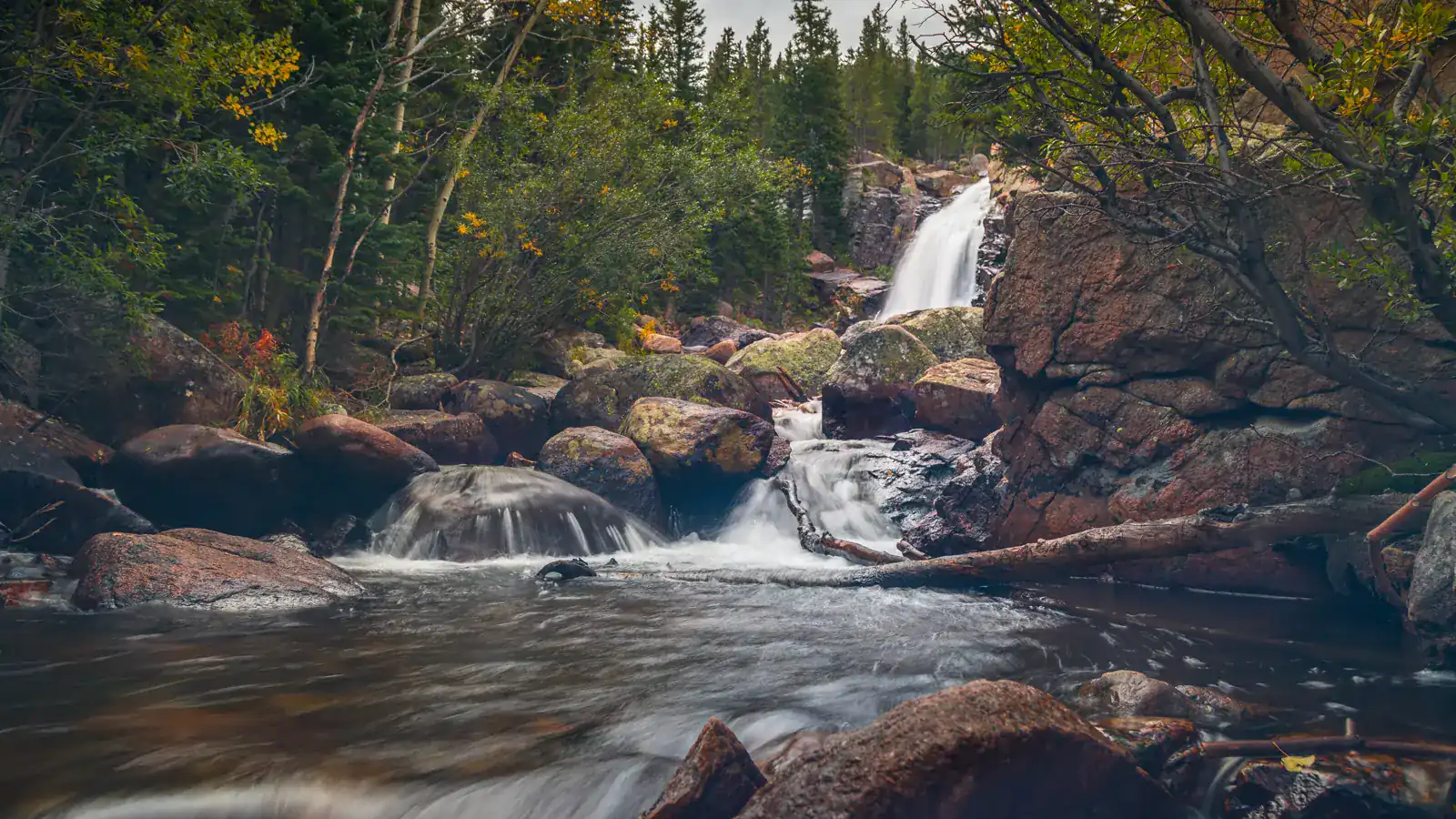
Alberta Falls is about 0.8 mile from Glacier Gorge, but Bear Lake Road access can take more planning than the trail. Separate timed entry, parking, shuttle, seasonal surface, and extension decisions before you go.
Alberta Falls is a short waterfall hike in Rocky Mountain National Park, but Bear Lake Road access usually requires more planning than the trail itself. From the Glacier Gorge trailhead, the falls are about 0.8 mile away with roughly 200 feet of climbing.
In the 2026 timed-entry season, vehicles entering Bear Lake Road from 5 a.m. to 6 p.m. need a Timed Entry+ Bear Lake Road reservation in addition to a park entrance pass.
What route facts matter from Glacier Gorge?
- One-way distance
- About 0.8 mile from Glacier Gorge
- Elevation gain
- Roughly 200 feet
- Route
- Out and back, with longer extensions available
- Surface
- Forest trail, bridges, rock steps, and waterfall-side granite
- Trailhead
- Glacier Gorge on Bear Lake Road
- Waterfall edge
- No guardrail around every wet or exposed rock
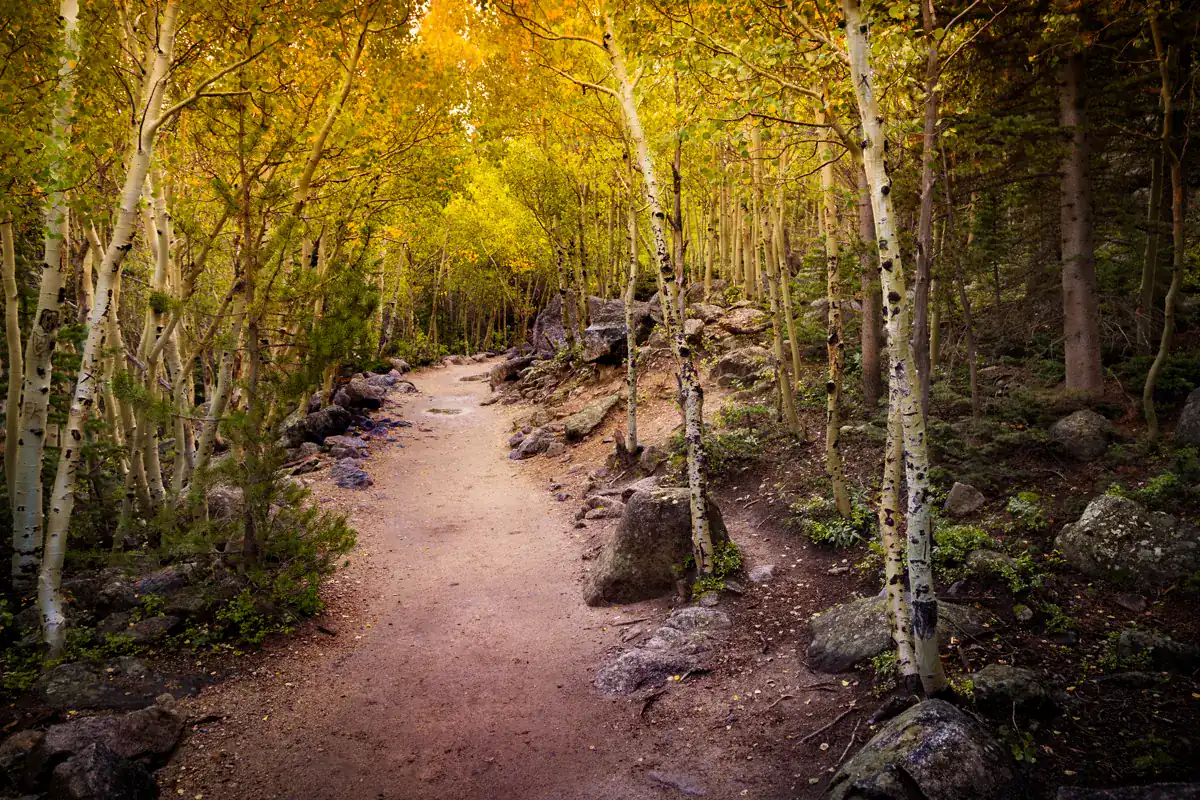
The route begins around 9,180 feet, crosses Glacier Creek, and climbs through forest before the waterfall becomes audible. Its short distance suits many visitors, but rock steps, altitude, mud, snow, and crowds can make the outing slower than an urban walk of the same length.
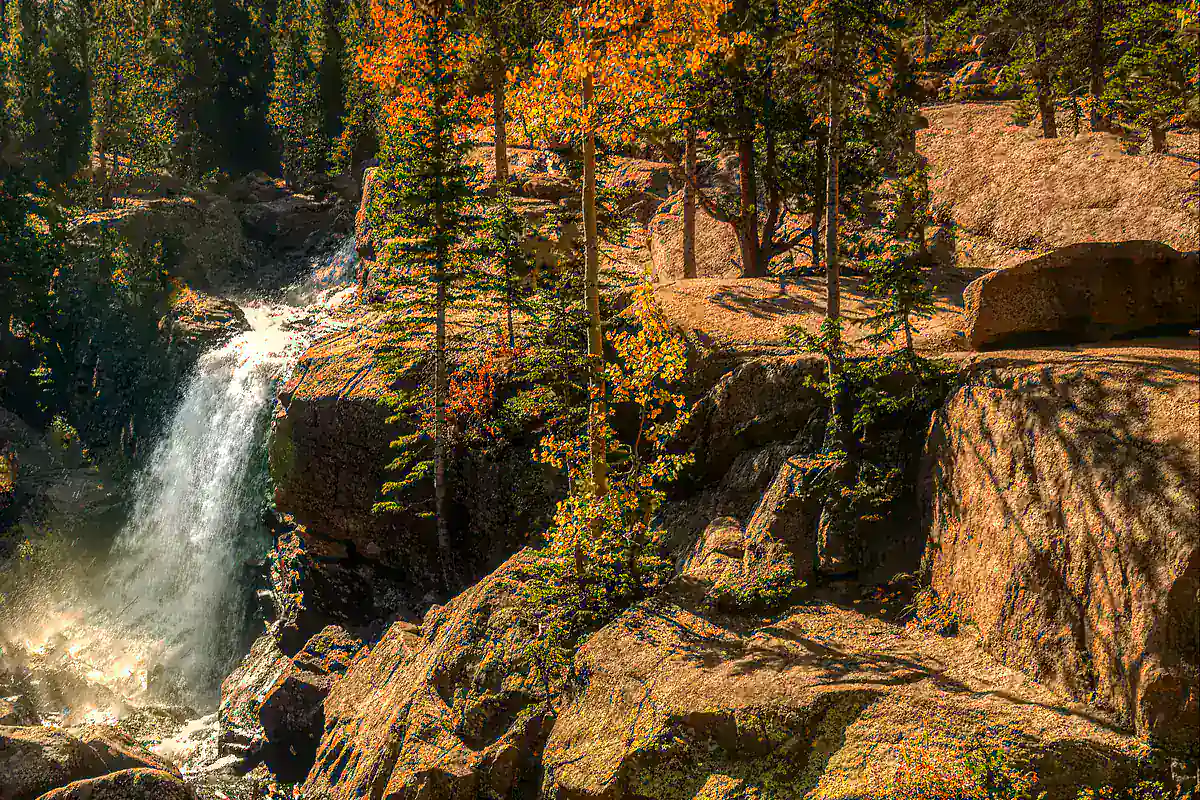
From Glacier Gorge
Glacier Gorge is the shortest common start at about 0.8 mile each way. This is the cleanest choice when the group wants the waterfall as its endpoint and can use the small trailhead lot or shuttle stop.
From Bear Lake
Starting at Bear Lake makes the round trip roughly 2.4 miles and joins the same trail network near Glacier Gorge Junction. It can suit a Bear Lake itinerary, but the added distance should be stated before the group leaves the shuttle because both starts are often described simply as the Alberta Falls hike.
Why does Bear Lake Road require a separate plan?
From May 22 through October 18, 2026, Timed Entry+ controls vehicle entry to Bear Lake Road from 5 a.m. through 6 p.m. The reservation carries a $2 processing fee and does not replace the park entrance pass.
Build access before trail time
- Before the tripReserve Timed Entry+ for the intended arrival windowThe Bear Lake option must be selected
- Park entrancePresent the reservation and a valid entrance passOne does not replace the other
- Park and RideUse the shuttle when Glacier Gorge parking is fullShuttle waiting belongs in the schedule
- Glacier GorgeConfirm the return stop before hikingCrowds can make the small lot impractical
- ReturnAllow a queue margin at the shuttle stopThe hike ends before the transport does
Glacier Gorge parking fills early, and circling a small lot adds congestion without creating spaces. The Park and Ride shuttle is often the cleaner plan during busy periods.
A reservation does not reserve a parking space. It grants road access during the stated window.
How close can you safely get to Alberta Falls?
The water drops through a narrow granite gorge, and visitors spread across rock viewpoints above and beside the cascade. Wet granite, spray, ice, and polished edges can remove traction without an obvious barrier marking every hazardous spot.
Stay on established durable surfaces and keep back from the rushing channel. Do not climb onto wet slabs for a clearer photograph or let children run ahead where the trail reaches open rock.
High water increases both spray and force. The waterfall can remain impressive from a safer distance, so proximity adds little reader value and considerable consequence.
When does an easy summer trail become a winter route?
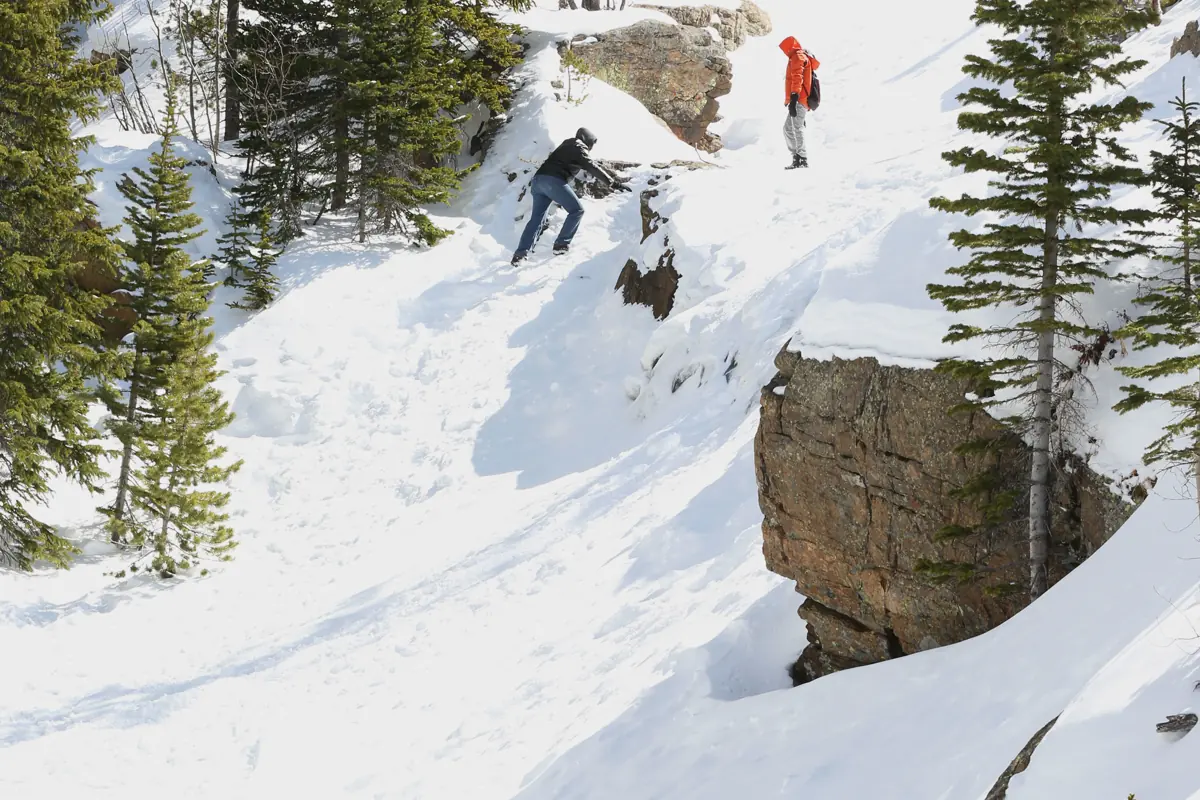
Snow can cover steps and create packed, icy tracks long after lower roads are clear. In spring, repeated freezing and thawing can leave alternating ice, mud, and running water, so winter hiking gear must match the surface rather than the month.
| Condition | Trail change | Useful response |
|---|---|---|
| Dry summer | Visible tread and rock steps | Manage crowds and carry water for altitude and sun |
| Recent rain | Mud, wet roots, and slick granite | Slow down and avoid waterfall-side slabs |
| Packed snow | Firm, polished track | Use suitable traction and test grip before steeper steps |
| Fresh snow | Hidden edges and uncertain footing | Follow current reports and turn around when the route disappears |
| Spring thaw | Ice, mud, and runoff in one outing | Expect repeated traction changes rather than one surface |
Traction devices help only when they match the surface and remain securely fitted. They do not make thin ice beside moving water safe.
Weather also changes with elevation. Carry a layer and rain protection even when the parking area feels warm.
Should you stop at Alberta Falls or extend the hike?
Alberta Falls is a complete destination. Continuing toward Mills Lake, The Loch, or other Glacier Gorge routes adds mileage, elevation, time, and sometimes different seasonal hazards.
Stop at the falls
Best when access time, weather, altitude response, or group energy already used the planned margin.
Continue toward Mills Lake
Choose only with the map, conditions, and time for the longer lake route.
Continue toward The Loch
Treat it as a separate objective with additional climbing and trail decisions.
Return to shuttle
Protect enough time for queues and the trip back to the vehicle.
Do not let a short first destination turn an unprepared group into an accidental long hike. Check water, weather, time, and every person's pace before passing the junction.
The best endpoint is the one that preserves a calm return. Reaching the falls and turning around can be the right full day when crowds or transport consumed more time than expected.
What should you carry for a short waterfall hike?
Carry water, a weather layer, secure footwear, sun protection, and an offline map of the Bear Lake corridor. Add traction when current conditions call for it rather than relying on the season printed on the calendar.
Visitors arriving from low elevation should watch how they feel before extending the hike. A persistent headache, nausea, unusual fatigue, or worsening coordination can indicate altitude sickness, and climbing farther is the wrong response when symptoms are getting worse.
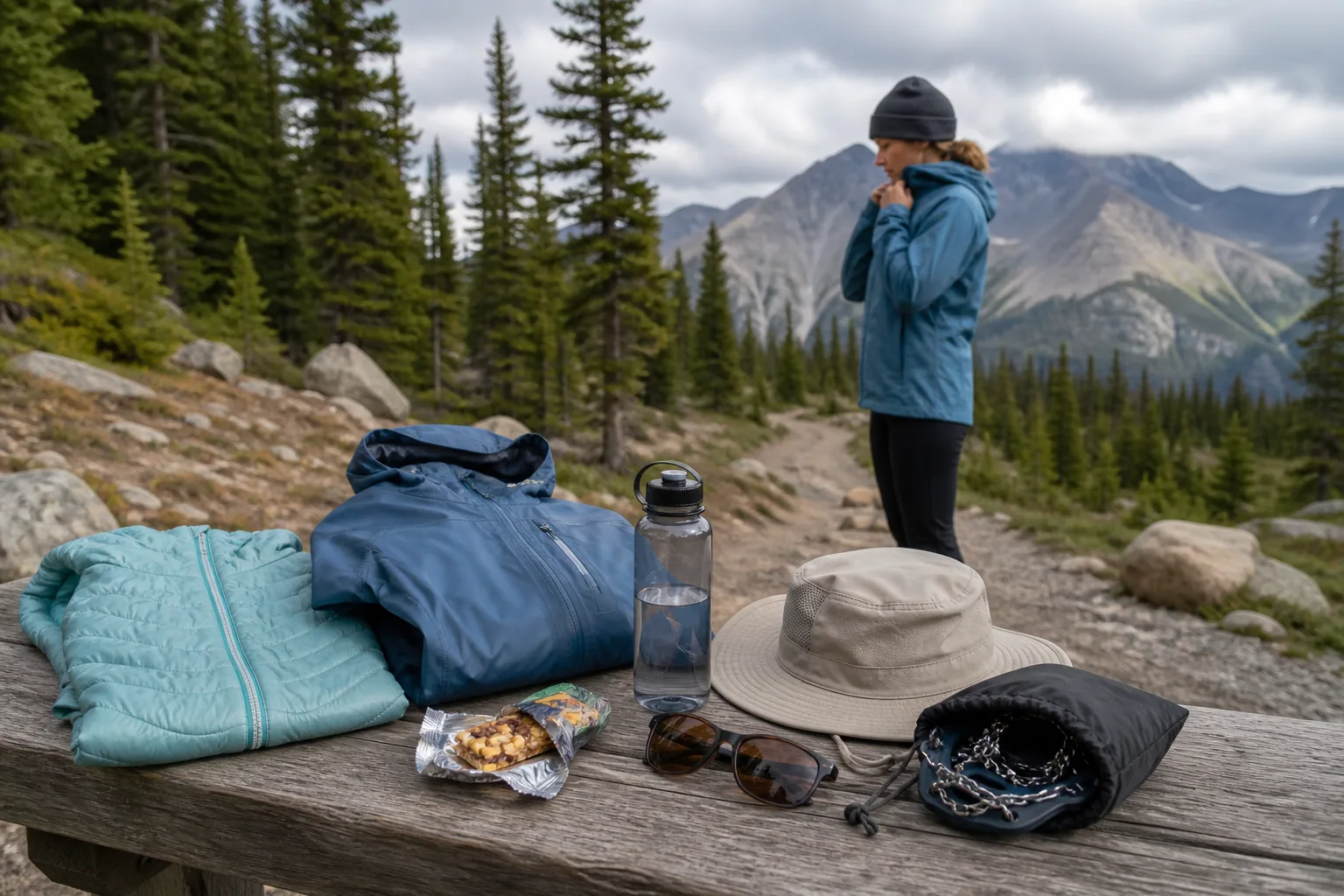
- Save the Timed Entry+ reservation and entrance pass where they work offline
- Confirm the Glacier Gorge stop and current shuttle schedule
- Check trail conditions for snow, ice, mud, and closures
- Carry enough water for altitude and any chosen extension
- Keep a turnaround time that includes the shuttle queue
- Leave pets at home because dogs are not allowed on park trails
The hike's simplicity comes from a clear destination, not from the absence of planning. Once road entry, parking, conditions, and the waterfall edge are handled, the route becomes the short forest outing most visitors expect.
Sources
Route. National Park Service Bear Lake Road corridor, the official Bear Lake summer trail guide, and Rocky Mountain maps support the Glacier Gorge and Bear Lake starts, elevation, trail network, and extension context, verified August 30, 2026.
2026 access. Rocky Mountain National Park timed entry, shuttle buses, and fees support the May 22 through October 18 season, 5 a.m. through 6 p.m. Bear Lake Road control, $2 reservation fee, entrance-pass requirement, and shuttle planning, verified August 30, 2026.
Conditions. Rocky Mountain National Park trail conditions supports current snow, ice, mud, and closure checks, verified August 30, 2026.
RespectHazards to plan for
- slick waterfall-side granite
- snow and ice
- altitude
- crowds
- weather changes
- transport delay