
Essential Day Hiking Gear and How to Choose It
Judge a good version of each essential by its stress points, buy in the order that changes your hikes soonest, and borrow the rest until it earns a place.
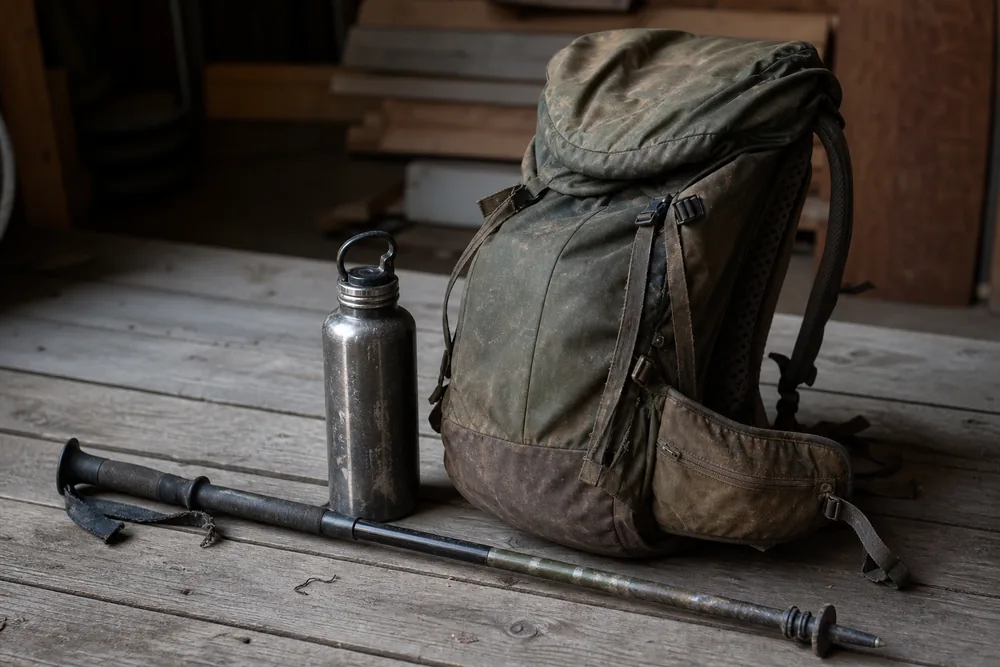
How to tell a good version of each day hiking essential from a cheap one, what to buy first, what to rent, and what fails first with use.
A day hike asks less of your equipment than a shop floor suggests, and considerably more of it than a bargain bin can deliver.
The gap between a twenty dollar headlamp and a sixty dollar one is real and you will feel it in the dark. The gap between that sixty dollar one and a two hundred dollar one almost never shows up on a six hour walk.
Knowing which gaps matter is the whole skill of buying. Here is how we judge a good version of each essential, the order worth spending in, and the things you should keep borrowing.
Why does cheap hiking gear fail at the worst time?
Budget equipment almost never gives up on a warm afternoon with three hours of daylight left. It fails cold, wet, and late, when the group is tired and the last two kilometres run downhill in poor light.
That timing is why the moment feels like bad luck rather than a bad purchase made months earlier in a warm shop.
A discount shell sheds steady rain for roughly an hour, then wets through under the pack straps where fabric is pressed flat against your shoulders. That hour usually arrives while a stalled group is already losing heat waiting for a slower walker, and wet fabric in moving air is the ordinary route into real hypothermia risk on a trail nobody would call serious.
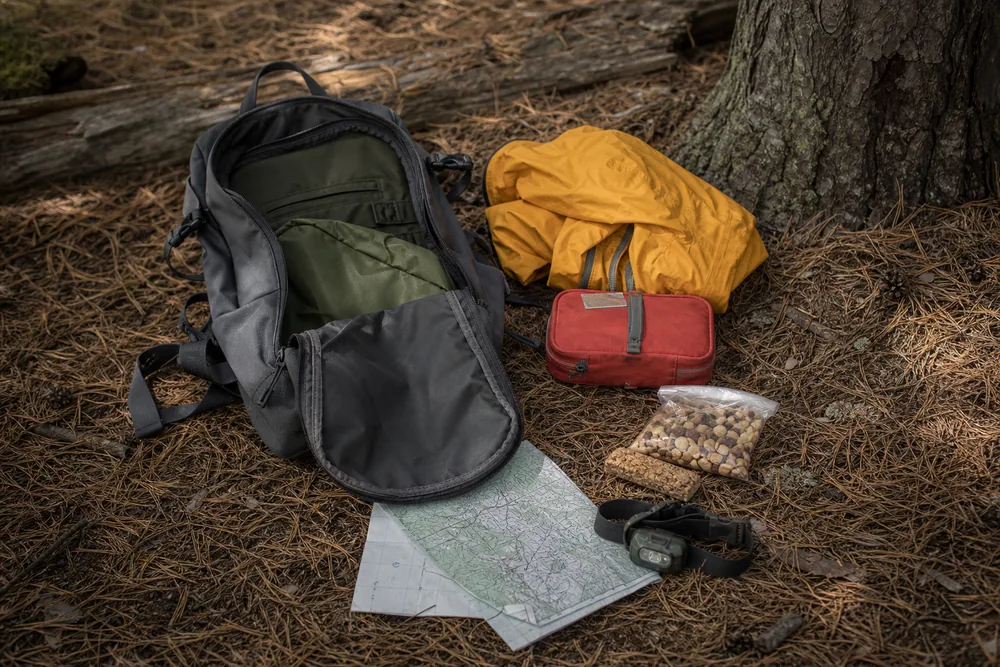
Feet swell measurably over a long descent, so a pair bought half a size small feels reasonable on shop carpet and starts lifting skin somewhere around kilometre eight. That delay between the purchase and the pain is one reason common early mistakes cluster around the feet instead of around fitness.
So the useful question is never which item is best. It is which failure you can afford on the walking you genuinely do, and once you frame a purchase that way, most of the price ladder above the middle of the range stops looking interesting.
Reliable gear differs from cheap gear in a few specific places
Across every category the same three things divide a good item from a poor one. Those are the materials at the stress points, the quality of the closures, and whether the thing was shaped around a moving body or around a shelf display.
In footwear the tell is the midsole rather than the upper.
A cheap foam midsole compresses within a few hundred kilometres and stops returning any energy, so the boot feels harsh and dead underfoot long before the tread looks worn. Press a thumb hard into it and watch whether the foam recovers.
In a rain shell the tell is the seams and the hood. Taped seams that lie flat, a hood that turns with your head instead of blinding you, and pit zips you can open one-handed matter far more than any waterproofing number on the hangtag.
The difference shows up inside the first hour of wet weather hiking, long before a rating would.
In a daypack the tell is the harness. A twenty litre bag with a shaped shoulder yoke and a hipbelt that genuinely moves weight onto your hips carries better than a thirty litre bag with foam pads glued to a flat panel, and that gap is small at three kilos and obvious under heavier day loads of eight or more.
Insulation is the category where cheap and good separate least. A basic synthetic fleece traps warmth, dries quickly, and keeps working when damp, which covers nearly everything an expensive one does.
Paying more buys compressibility, so saving money here costs you packed volume and very little warmth.
Headlamps divide on beam regulation and battery behaviour. A regulated lamp holds usable output for hours as the cell drains and then drops off sharply near the end, while an unregulated one runs bright for twenty minutes and settles into a glow that reaches your boots and nothing beyond them.
Water carrying divides on the lid. Bottles leak at threads and bite valves, filters clog at the intake, and both failures happen silently inside a closed pack until something soft is soaked.
Replaceable gaskets and a wide mouth matter as much as the water carry plan that decides how many litres you need.
Anything worn against skin is judged by its seams rather than its fabric name. A flat seam sitting under a pack strap or along an inner thigh still rubs no matter what the material is called, and that one detail decides whether a shirt stays comfortable or turns into chafing on long days that no ointment fully repairs.
| Item | Cheap version tell | Good version tell | ||
|---|---|---|---|---|
| Hiking boots | Midsole stays dented under thumb pressure | Midsole springs back, lugs deep and well separated | ||
| Rain shell | Stitched seams, fixed hood, no venting | Taped seams, adjustable hood brim, working pit zips | ||
| Daypack | Flat panel with glued foam pads | Shaped yoke, load lifters, hipbelt that transfers weight | ||
| Headlamp | Bright for minutes, then fades steadily | Regulated output, usable low mode, tilting housing | ||
| Water bottle | Thin threads, walls that flex when squeezed | Thick collar, replaceable gasket, wide mouth | ||
| Fleece or puffy | Loose knit, gaping cuffs and hem | Dense knit, snug cuffs, adjustable hem | ||
| Socks | Cotton content, thin heel panel | Wool blend, reinforced heel and toe box |
Those rows describe a pattern rather than a shopping list. Every good tell sits at a stress point where load, water, or repeated movement concentrates, and stress points are the only place extra money reliably buys something you will notice.
How can you judge hiking gear in ten minutes?
Handle the closures first, because closures fail first.
Work every zip twice while pulling gently against the fabric, and treat a zip that catches under that small load as one that will jam in rain with cold hands. Buckles deserve the same test, especially the hipbelt ladder lock that has to hold under weight.
Then load the thing the way you intend to use it. Put five kilos in the pack and walk stairs for two minutes, flex the boot at the ball of the foot rather than the arch, and pull the hood over a hat to check whether the brim still clears your eyes when you look down.
Pros
- A shop lets you load a pack, flex a boot, and reject a poor fit inside ten minutes
- Staff usually know which models come back as returns most often
- You leave with the item and lose no planned trip to a shipping delay
Cons
- Local stock is narrow, so the right size in the right model may not be on the wall
- Floor prices sit above online prices on identical items
- Sizing varies enough between makers that a good in-store fit does not transfer to a mail order replacement
Fit beats specification every single time. A pack with the correct torso length fit and a plain foam back will out-carry a better specified bag sized wrong, because the load never sits where the design intended, and no feature list rescues a boot that lifts at the heel.
Spend first on the three items that fail worst
Buy from the feet upward. Footwear and socks affect every hour of every hike you will ever walk, and their failures end days rather than merely spoiling them, which puts them closer to your comfort than any of the hiking clothing choices layered above.
Second comes the rain shell, because weather is the one variable you cannot train around. A shell that holds through three hours of steady rain turns a miserable retreat into an ordinary afternoon with a wet hood and dry shoulders, and this is where the middle of the price range is genuinely worth reaching for.
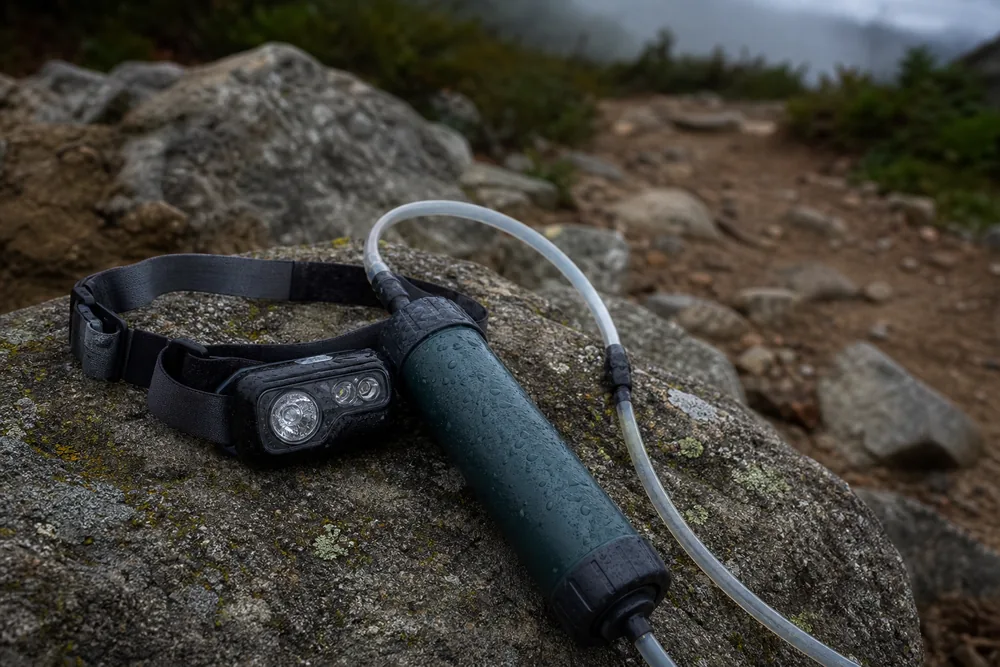
Third is light. A dependable headlamp costs less than dinner out and is the cheapest piece of day hike safety basics anyone can own outright.
Almost every frightening day hike story involves someone finishing in the dark without one.
Fourth is water carrying, sized to the driest route you realistically walk rather than the wettest. Two litres of capacity covers most temperate days and the bottles cost almost nothing beside the shell, while treatment only becomes worth buying once your routes stop offering taps or clean running water.
The pack arrives fifth, which surprises most people. Nearly any bag carries five kilos across ten kilometres without complaint, so it rarely limits an early hiker, yet beginners buy it first because it is the most visible thing a hiker wears.
Some purchases are better delayed until you know your own patterns:
- Trekking poles, which earn their keep on sustained descent and do little on rolling ground - A second insulating layer, until you have been genuinely cold on at least two separate days - Gaiters, unless wet grass, scree, or spring snow appear on your routes regularly - A dedicated satellite navigation unit, while a phone and a paper map already cover where you walk
Navigation sits outside that order because skill dominates hardware here. A baseplate compass costing very little, paired with practised compass and map work, beats an expensive handheld nobody has learned properly.
Put the money into a paper map of your local ground and the time into using it.
The whole order collapses if you buy for an imagined version of yourself. Spend against the trips already sitting in your calendar rather than the alpine week you might book one day, and let your first hikes show you where the real discomfort is.
Should you rent or borrow hiking gear first?
Anything used a few times a year is a rental problem rather than an ownership problem. Snowshoes, ice traction, and a heavy insulated shell all sit in that category for most day hikers, and renting three or four times still costs less than owning gear that ages in a cupboard between outings.
- Borrow before the season startsAsk friends for the item a few weeks early so you can walk in it rather than only try it on.
- Rent the expensive outlierOutdoor shops rent traction and winter shells by the day, which beats owning something used twice a year.
- Buy used from a serious ownerGear from someone upgrading is usually well cared for, and packs and shells show their wear honestly.
- Keep the tags and the receiptMost retailers accept an unused return for several weeks, so a first walk on easy ground stays reversible.
- Decide after three outingsIf the borrowed item changed how you walked all three times, it has earned a place in your own kit.
Borrowing does something beyond saving money. A weekend in somebody else's pack teaches you more about torso length and hipbelt shape than an hour of comparing daypack options ever manages, and you learn what you dislike, which is far more useful at the till than a vague sense of what you want.
Some gear wears out on a predictable schedule
Every category has one part that ages faster than everything around it. Knowing which part turns replacement into something you can plan and budget for, rather than something discovered at a trailhead on a cold morning.
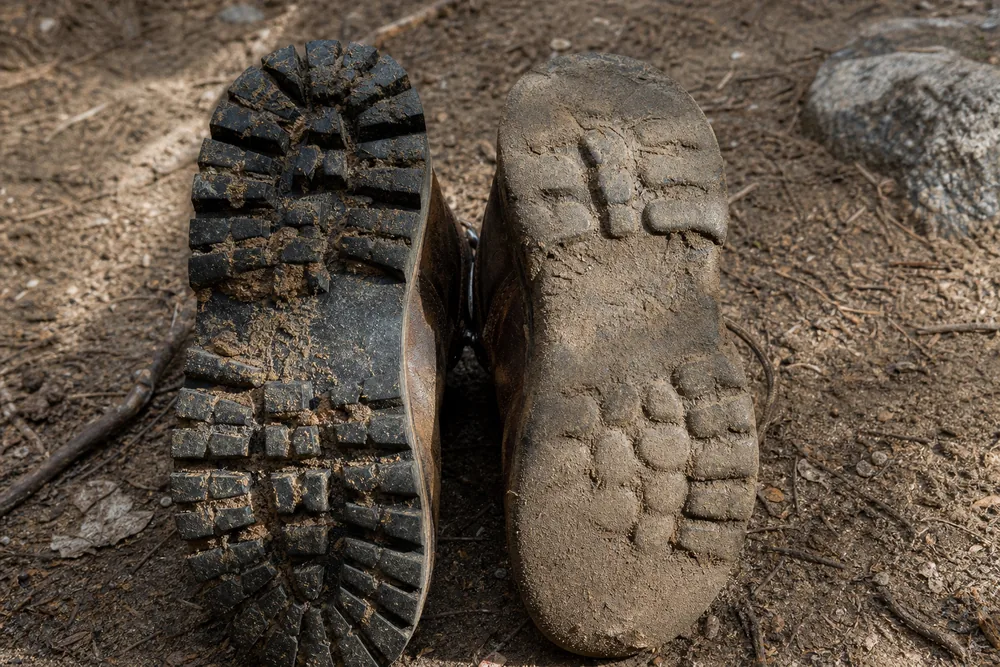
Boot midsoles die well before treads do. Expect roughly 600 to 1000 kilometres from a midsole depending on your weight, your load, and how much rock you walk, and read a boot that suddenly feels harsh on stone as a midsole that has finished even when the rest looks presentable.
Tread lugs round off from the rear edge forward, because braking on descent loads the back of the heel hardest. Once those lugs read smooth rather than square-edged, the boot slides on wet rock and packed mud while the upper still looks close to new.
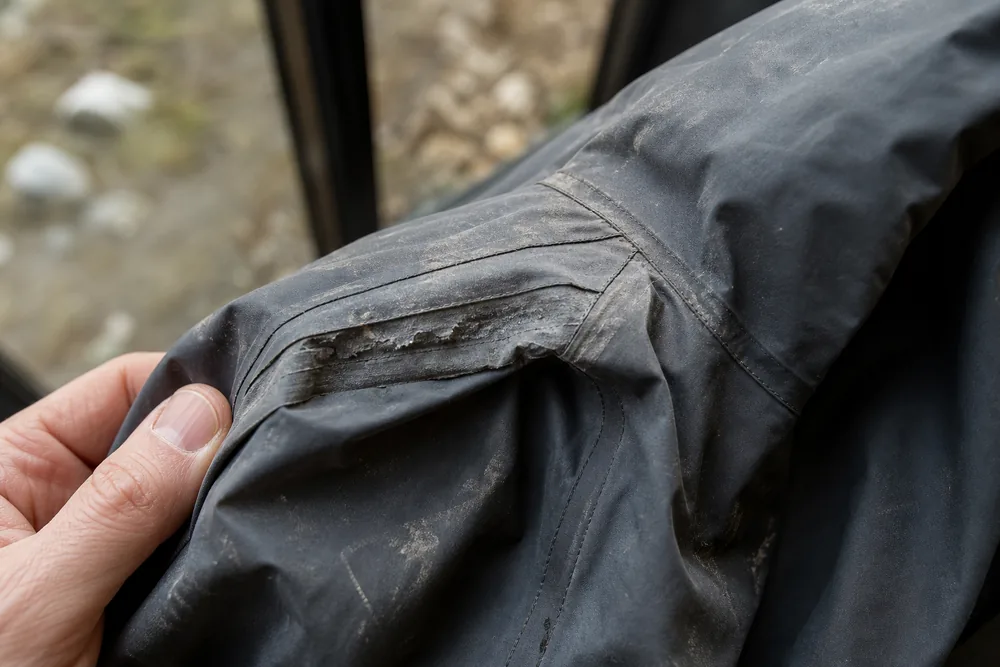
Shell coatings fail from the inside outward. The inner polyurethane layer breaks down after two or three seasons of body oils, sweat, and infrequent washing, and you see it as flaking or a tacky feel on the shoulder panels well before you notice water coming through.
Zips are the second most common way a shell dies. A main zip that separates behind the slider usually means worn teeth rather than a failed slider, though a slider swap fixes it often enough to try first and a repair shop will do it for a fraction of a new jacket.
Some wear states mean replacement rather than repair:
- A midsole that stays dented under firm thumb pressure - Heel lugs worn flush with the edge of the sole - Shell fabric flaking or going tacky on the inside of the shoulders - A hipbelt that slips under load no matter how hard you pull it
Pack failures begin at the hipbelt stitching and the bottom panel, because both take abrasion every time the bag is set down on rock or dragged off a car seat. Both are also repairable while the fabric elsewhere remains sound, which makes a pack one of the better candidates for repair rather than replacement.
Elastic ages on a shelf rather than only on a trail. Cuffs, drawcords, and headlamp bands go slack after three or four years whether you walk in them or not, which is why kit pulled out after a long break often disappoints on its first outing.
Water filters are the outlier, because they fail on a counter instead of on a schedule. A hollow fibre filter frozen even once is finished and the damage leaves no visible sign, so cold garages and car boots during winter hiking conditions destroy more filters than trail use ever manages.
When does a hiking gear upgrade earn its price?
An upgrade is justified when the current item changes a decision you would otherwise make freely. If your shell makes you cancel on a wet forecast, or your boots push you onto the shorter loop, those items are quietly costing you hikes in a way no specification comparison captures.
It is not justified by a better number on paper. Moving from a shell rated at ten thousand millimetres to twenty thousand changes almost nothing across a single day out, while a better hood, working vents, and sleeves that stay put change every hour of rain you walk through.
Weight upgrades pay off latest of all. Two hundred grams saved on a daypack matters on a fifteen hour push and vanishes entirely on a morning loop, and lighter versions of most items trade away exactly the durability you were meant to be buying in the first place.
- The item made you shorten, cancel, or avoid a hike in the past season
- It fails at a stress point rather than from general age
- A repair has already been attempted and did not hold
- The replacement fixes that specific failure rather than adding a different feature
- You have used the current version enough to name precisely what is wrong
- The new version suits your real trip length rather than an aspirational one
Two ticked boxes are usually enough, and one usually is not. A single frustrating day is more often a fit problem or a technique problem wearing the costume of a gear problem, so adjust, refit, and repeat the same walk before spending anything.
Season changes are the honest exception to all of that. Moving onto hotter ground or thinner air creates requirements your existing kit was never bought against, and sustained hot weather days demand ventilation and sun coverage that no amount of care adds to a sealed winter shell.
How do you make hiking gear last longer?
Most gear dies of storage rather than of use. A shell packed away damp loses its coating faster than one worn through an entire season of rain, and a pack stored compressed keeps those creases permanently while folded hipbelt foam never recovers its shape.
Storage habits that add years to a kit:
- Hang shells and insulation instead of stuffing them into a bin - Dry boots at room temperature and away from radiators - Store filters dry and indoors through every freezing month - Loosen every strap before a pack goes onto the shelf
Wash technical clothing far more often than feels correct. Body oils and sunscreen are what kill water repellency rather than the rain itself, and a shell cleaned with technical detergent and warmed in a dryer recovers performance most owners assume was lost permanently.
The last part of owning gear well is matching what you already have to the day in front of you. Kit that suits wildfire season air and a hot dry ridge is the wrong kit for a wet spring morning, and no purchase closes that gap for you.
Sources
- U.S. National Park Service, hiking safety guidance on footwear, layering, light, and water carrying - Leave No Trace Center for Outdoor Ethics, Principle 1, Plan Ahead and Prepare
Step by stepPractical steps
- Buy footwear and socks first, fitted late in the day with the socks you actually hike in.
- Add a rain shell judged on taped seams, hood adjustment, and working pit zips rather than a waterproofing rating.
- Buy a headlamp with regulated output so brightness holds as the battery drains.
- Size water carrying to the driest route you realistically walk, then add treatment if sources are unreliable.
- Choose a daypack by torso length and hipbelt transfer, loading it in the shop before deciding.
- Borrow or rent anything used only a few times a year, and decide on ownership after three outings.
- Replace an item only when it fails at a stress point and a repair has already failed.
AnswersQuestions readers ask
What day hiking gear should I buy first?
Footwear and socks, then a rain shell, then a headlamp.
Those three affect every hour of every hike and cover the failures that end a day early. The pack can wait, because almost any bag carries five kilos across ten kilometres, and water carrying can start with bottles you already own.
How much should I spend on hiking boots?
Enough to get a midsole that springs back under thumb pressure and a heel that does not lift when you walk a slope in the shop. Above that point, extra money mostly buys weight savings and materials rather than fit.
A mid priced boot that fits will outperform an expensive boot in the wrong size on every hike you take.
Is an expensive rain jacket worth it for day hiking?
Only up to a point.
Taped seams, a hood that turns with your head, and pit zips deliver most of the real difference. Waterproof ratings beyond about ten thousand millimetres change very little across a six hour walk, while hood shape and venting change every hour you spend in rain.
How long do hiking boots actually last?
Roughly 600 to 1000 kilometres, limited by the midsole rather than the tread. The signs are a boot that feels harsh on rock, a midsole that stays dented under thumb pressure, and heel lugs worn flush with the sole edge.
Uppers often look fine well after the boot has stopped protecting your feet.
Should I rent or borrow hiking gear instead of buying?
Yes for anything used a few times a year, such as snowshoes, ice traction, and heavy winter shells.
Borrowing also tells you what torso length and hipbelt shape suit you before you spend anything. A reasonable rule is to buy only after a borrowed item has changed how you walked on three separate outings.
When is it worth upgrading gear I already own?
When the item makes you shorten, cancel, or avoid hikes, when it fails at a stress point rather than from general age, and when a repair has already been attempted without holding. A single frustrating day is more often a fit or technique problem than a genuine equipment problem.