
Norovirus on the Trail: Why Your Filter Did Not Stop It
It arrives on hands, not in water, which is why two of your existing defences do nothing.
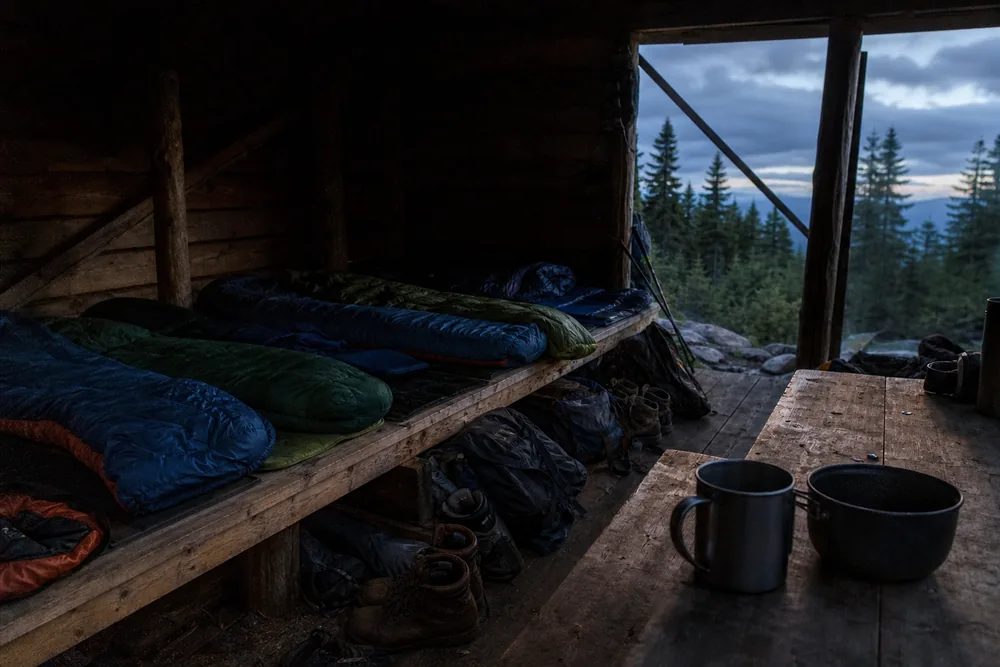
Norovirus particles are around 0.03 microns, far smaller than the pore size of a backpacking filter, and alcohol hand gel does not work on them either. It moves between people and across shared surfaces, which is why outbreaks follow shelters rather than watersheds.
You filtered every litre, and you carry hand gel and use it.
Neither of those touches the illness most likely to end your trip.
Those four numbers explain most of what follows. The particle is too small for the filter in your pack, the dose is too low for ordinary care to matter, and the incubation is short enough that a whole group goes down together.
Why did your filter not stop this?
Start with the size, because it settles the question in one line.
A norovirus particle is around 0.03 microns across. The hollow-fibre microfilter clipped to your pack has an absolute pore size somewhere near 0.1 or 0.2 microns, which is several times larger.
Your filter was never rated for this. It is designed to take out bacteria and protozoa, which are enormous by comparison, and the manufacturer does not claim otherwise.
That gap has a name in the guidance. A device that removes viruses is sold as a purifier rather than a filter, and the alternatives that deal with them are ultrafiltration, chemical disinfection with chlorine or chlorine dioxide, or simply boiling.
Even so, the water is usually not where this came from.
Most backcountry norovirus moves between people and by way of things people have touched, which is why an outbreak follows a shelter rather than a watershed. A contaminated source is a real route and a less common one.
The dose is what makes all of this so unforgiving. An estimated 18 viral particles may be enough, which is a quantity too small to see, taste, or wash off casually.
| Norovirus | Giardia | |
|---|---|---|
| How long after exposure | 12 to 48 hours | One to three weeks, sometimes longer |
| Where it came from | Hands, surfaces, shared food | Untreated or poorly treated water |
| How long it lasts | One to three violent days | Weeks of grumbling symptoms |
| Does your filter help | No, the particle is far too small | Yes, cysts are well within its range |
The onset row is the useful one when you are trying to work out what you have.
If you were fine yesterday afternoon and wretched by midnight, that timing does not fit a waterborne parasite at all. If the symptoms crept in ten days after a trip, the delayed one is far more likely.
Sudden onset, three bad days, and a long tail
It does not creep up. Norovirus tends to arrive suddenly, often overnight, and the vomiting is usually the first thing that tells you.
After that it is watery diarrhoea, stomach cramps and nausea, sometimes with a low fever, chills and a headache alongside.
- Incubation
- About 12 to 48 hours from exposure
- Acute illness
- Usually 1 to 3 days
- Shedding after recovery
- Can continue two weeks or more
- Infectious dose
- Estimated as low as 18 particles
The shedding line is the one that surprises people.
You stop feeling ill long before you stop carrying the virus, and shedding can continue for a fortnight or more after you feel fine. Whether it stays genuinely infectious that whole time is not settled, but it is the reason a recovered hiker should not be the one handling everyone's food.
What actually threatens you is not the infection. It is the fluid you lose while it runs its course, which is why the whole management question is about drinking rather than about treating the virus.
Some people lose ground much faster than others. Older hikers, young children, and anyone already dealing with another illness have less margin, and the same three days can go somewhere very different for them.
One sick hiker becomes eight in a single evening
Between April and June 2022, at least 222 rafters and backpackers fell ill in the Grand Canyon backcountry, in the largest documented outbreak of its kind there.
The investigation is what makes this section possible, because it turned general hygiene advice into specific routes. Illness among rafters was associated with using only sanitiser, or only water, rather than soap before eating.
One introduction, one group, forty-eight hours
- Evening, first person illSeparate them from shared sleeping, cooking and eating straight awayAlmost nobody does, because it feels unkind and the illness looks like bad food
- Overnight, the privy and the shelterTreat door latches, handles and shared surfaces as contaminatedVomiting aerosolises virus that settles on everything within a few metres
- Next morning, the food bagStop the bag being passed around and portion food out insteadThis is the shortest route from someone's hands to everyone's mouths
- Twelve to forty-eight hours laterExpect the rest of the group and plan for it rather than being surprisedThe whole party comes down at once because they were all exposed in the same evening
The aerosol part is worth dwelling on because it is the route nobody pictures.
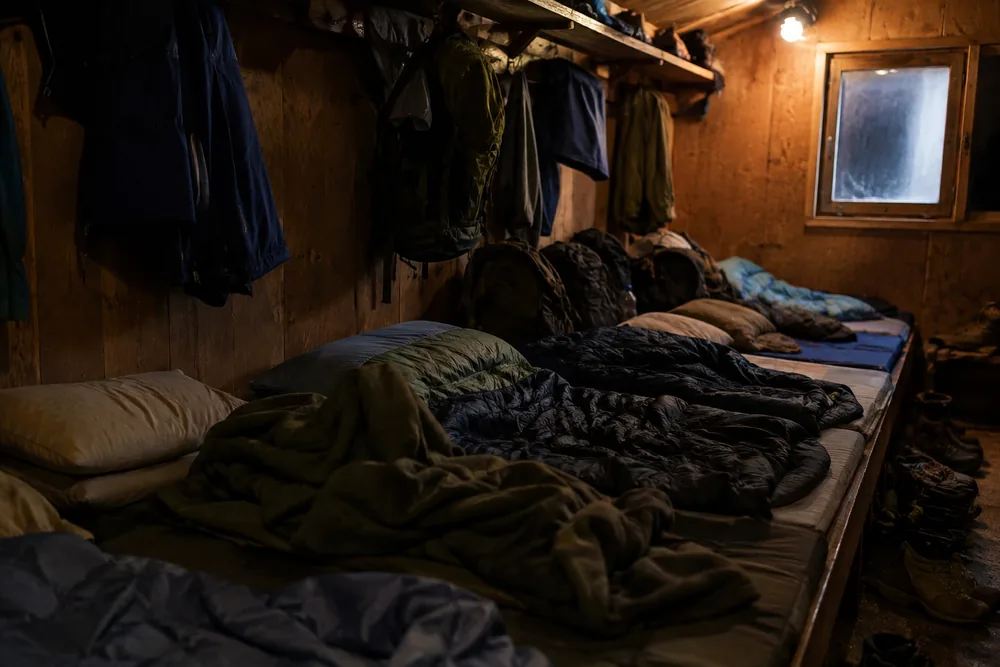
Vomiting throws virus into the air, and it settles onto whatever is nearby. In a shelter that means sleeping platforms, a shared table and every door latch between there and the privy.
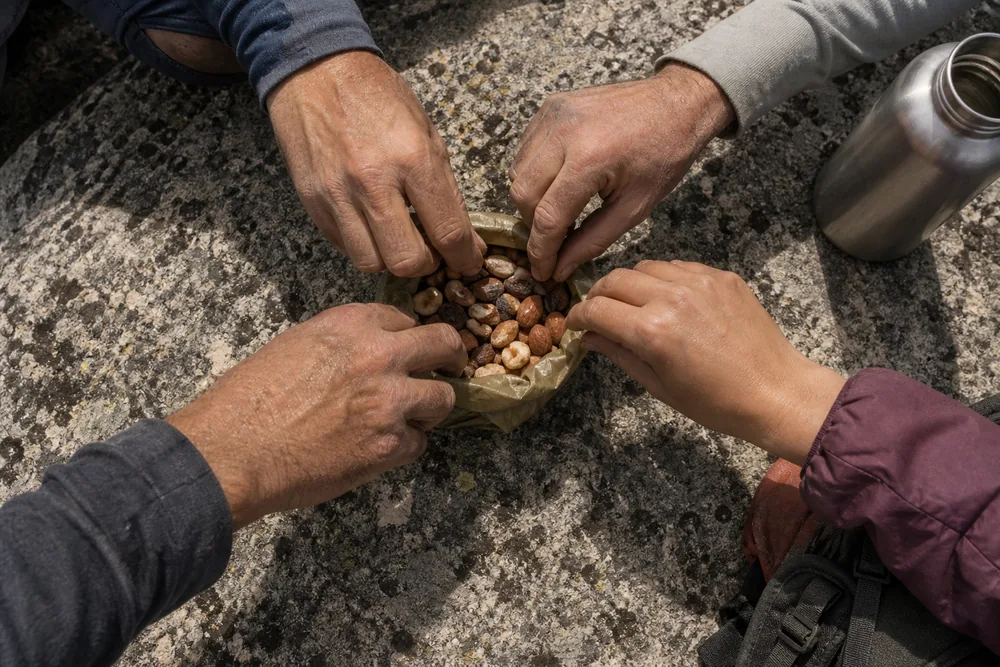
Shared kit does the rest of the work. One food bag, one bottle passed round, one set of utensils, one pot everyone dips into.
Shelters, huts, hostels and privies concentrate all of this. They put a rotating population of strangers through the same handful of touched surfaces, which is why outbreaks on long trails follow the infrastructure rather than the terrain.
One caution about reading any of this too neatly. A busy trail in a bad season may have several separate introductions rather than one tidy chain, and the Grand Canyon cases were reported as probable norovirus rather than each individually confirmed.
Soap is the precaution that actually works
The bottle of alcohol gel on your hip belt does not work on this virus.
That is not a nuance. Norovirus is unusually resistant to alcohol, and the Grand Canyon investigation specifically noted that many outfitter staff did not know it, which is how a whole river season can be run on a defence that was never working.
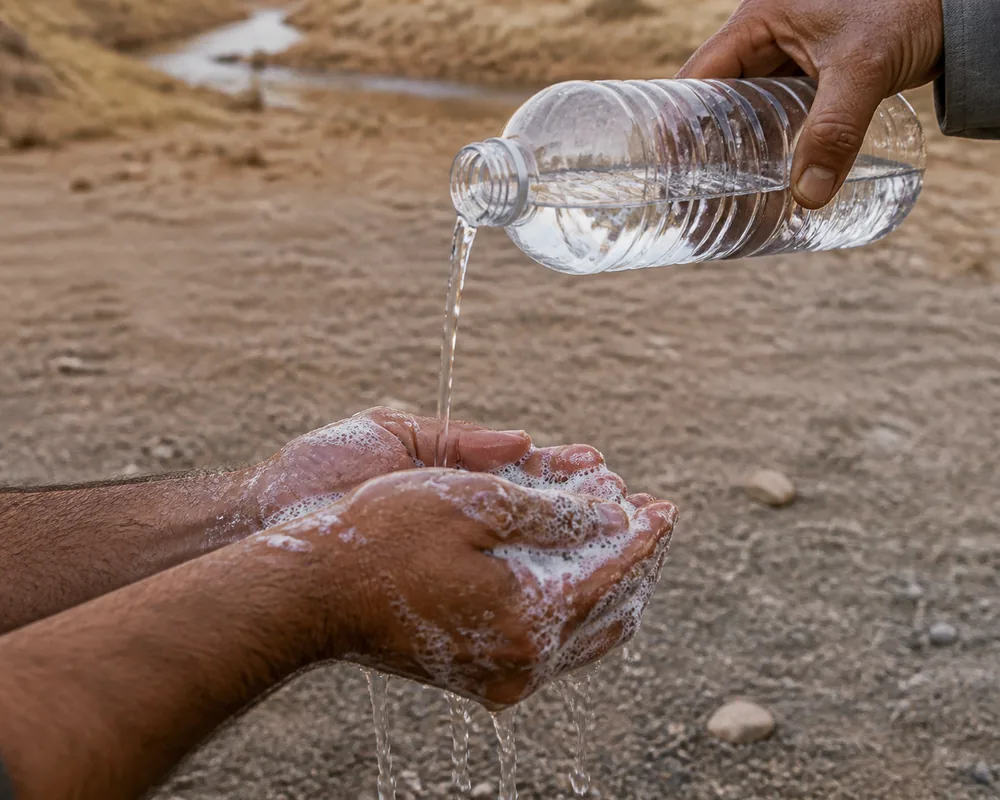
What works is soap and water, for at least 20 seconds, after the privy and before touching food. That is a genuine logistical cost in the backcountry and it is the cost worth paying.
The group habits matter more than anything you do alone.
- Carry soap and use it for a full 20 seconds after the privy and before food
- Stop sharing food bags, bottles and utensils, and portion food out instead
- Carry a small bleach solution, roughly one part bleach to nine parts water, for surfaces during a known outbreak
- Sleep and cook away from crowded shelters when an outbreak is reported on your section
- Keep the sanitiser for everything else it is genuinely good at
Bleach is on that list for a specific reason. Norovirus survives most household disinfectants, and a dilute bleach solution is one of the few things that reliably deals with it on a surface.
The measure that beats all the personal ones is the least popular. If an outbreak is running on your section, sleeping in your own tent and cooking away from the shelter removes more risk than any amount of careful handwashing inside it.
None of this is a reason to throw the gel away. It remains useful against plenty of other things, and the correction here is narrow rather than general.
Someone in the group has it
Separate them now, before the discussion about whether that is necessary.
The first hours are when the group still has options, and politeness is what usually costs them. The ill person sleeps apart, does not cook, does not handle shared food, and ideally does not share a shelter at all.
Fluids are the actual treatment, because dehydration is the actual danger. Small amounts often, rather than a large drink that comes straight back, and the goal is holding ground rather than catching up.
Waste needs handling properly and it is the part people skip when they are exhausted. Vomit and diarrhoea go well away from camp and well away from any water, buried or packed out according to what the land manager requires.
One person looks after the patient rather than the whole group taking turns. It feels less caring and it means one exposure instead of five.
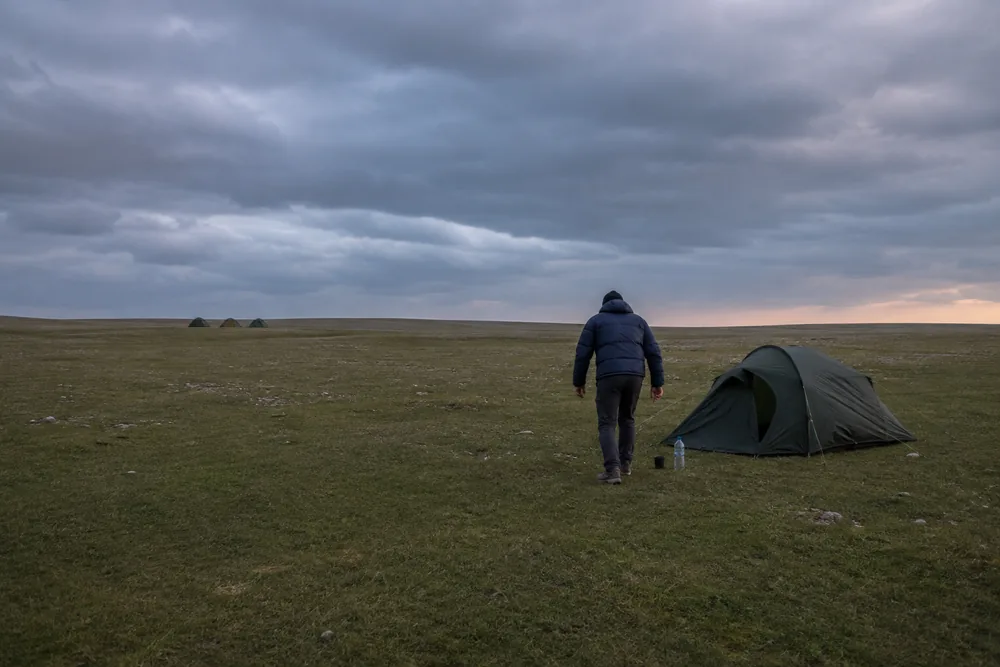
Sometimes there is nowhere to isolate anyone. A full hut or a small shelter in bad weather leaves no clean answer, and in that case leaving is usually better than staying and managing it.
Plan the exit while people are still well enough to walk. A group that waits until three of them are ill has fewer options than one that moved on the first evening.
Sources
The transmission routes, the ineffectiveness of alcohol hand sanitiser, the soap and water recommendation, and the finding that illness was associated with sanitiser-only or water-only hand hygiene come from: CDC report on the Grand Canyon backcountry gastroenteritis outbreak, April to June 2022.
The incubation period, symptom picture, illness duration, prolonged shedding after recovery, the low infectious dose and the bleach dilution for surfaces come from: European Centre for Disease Prevention and Control, norovirus factsheet.
The point that portable microfilters do not reliably remove enteric viruses at about 0.03 microns, and that ultrafiltration, chemical disinfection or boiling are needed instead, comes from: CDC water disinfection guidance for travellers.
The outdoor-specific prevention guidance for camping and hiking comes from: CDC, preventing norovirus when camping, hiking, or outdoors.
AnswersQuestions readers ask
Does a backpacking water filter remove norovirus?
No. A norovirus particle is around 0.03 microns and a hollow-fibre microfilter has a pore size nearer 0.1 to 0.2 microns. Filters are rated for bacteria and protozoa; removing viruses needs ultrafiltration, chemical disinfection or boiling.
Does hand sanitiser kill norovirus?
Alcohol-based sanitiser is not effective against it. Soap and water for at least 20 seconds is the defence that works, and the Grand Canyon outbreak investigation found illness associated with using only sanitiser or water before eating.
How long does norovirus last?
Symptoms usually start 12 to 48 hours after exposure and the acute illness runs about one to three days. Shedding can continue for two weeks or more after you feel well again.
How can you tell norovirus from giardia?
Timing. Norovirus arrives within a day or two of exposure and hits hard and briefly. Giardia takes one to three weeks to appear and grumbles on for weeks, and it comes from water rather than from hands.
How do you stop norovirus spreading through a group?
Separate the ill person from shared sleeping, cooking and eating immediately, stop passing food bags, bottles and utensils around, wash with soap rather than gel, and have one designated carer rather than the whole group helping.
When does norovirus need evacuation rather than waiting it out?
When the person cannot keep fluid down for several hours, shows real dehydration such as no urine output or dizziness on standing, becomes confused or drowsy, or has blood in vomit or stool. Several people ill at once in a remote party should also trigger a call for help.