
Build a Hut-to-Hut Trek That Still Works When Plans Change
Link verified overnight stops with walking days your group can repeat, then give every booking a safe alternative.
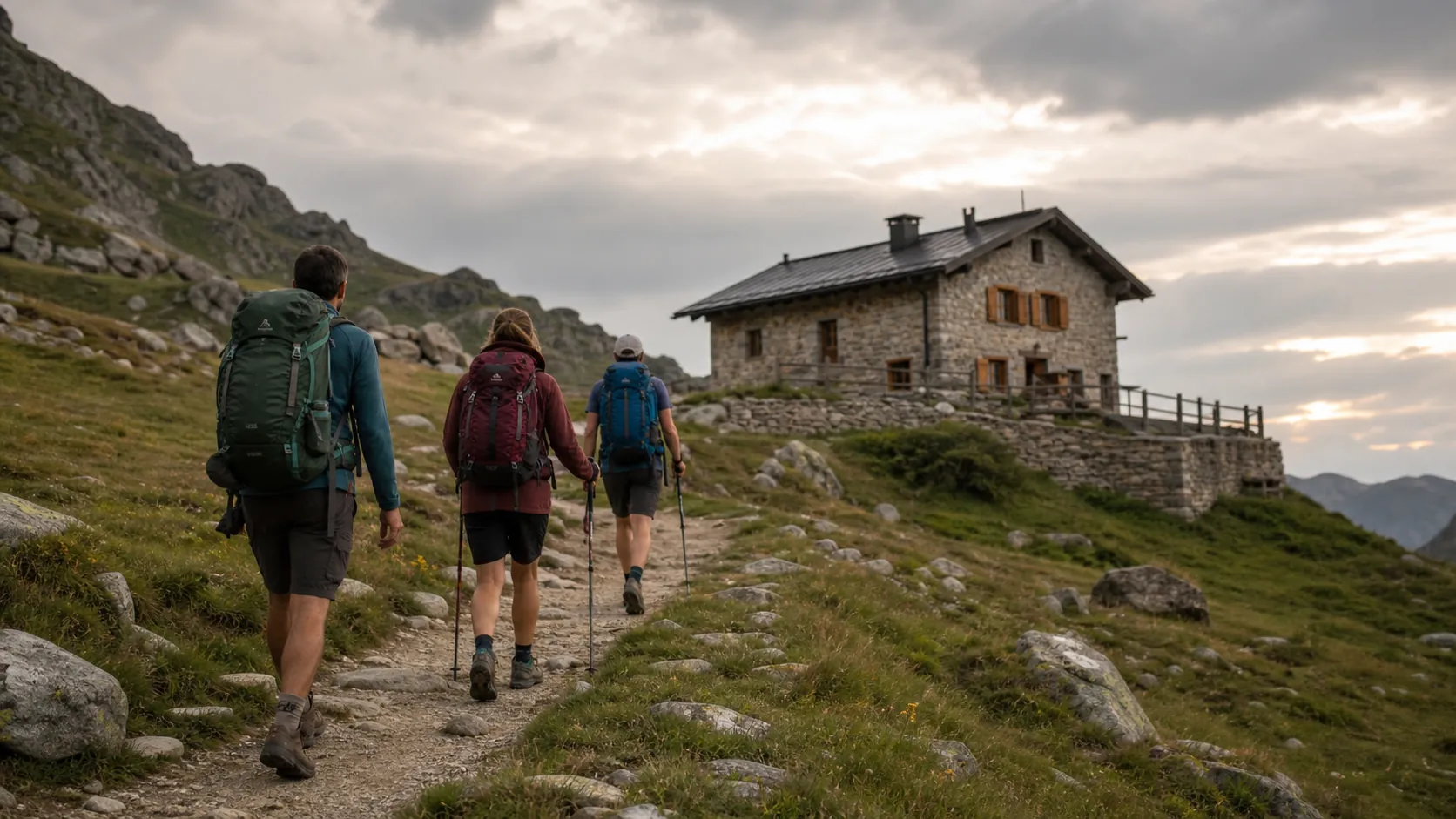
A hut-to-hut trek works when each overnight booking matches a conservative daily stage and every hut's services are confirmed directly. Plan the walking route first, then book beds, meals, transport, and a lower or shorter alternative for days when weather or pace changes.
Huts reduce shelter and cooking needs only when those services are actually available. Verify each overnight because staffed, self-service, seasonal, and emergency shelters follow different rules.
Treat the hut chain as a transport network on foot. Common trekking assumptions about an open building or easy connection can break everything after it.
How do you choose a first hut-to-hut route?
Choose a two or three night marked route with moderate stages, clear public information, and at least one early exit. This gives beginner trekkers room to learn booking, arrival, meal, sleep, and morning routines.
Compare the group's trekking fitness with distance, ascent, descent, surface, altitude, and expected pack weight. A route that needs altitude acclimatization cannot be judged by kilometers alone.
Check whether the route category means ordinary hiking or includes exposed, protected, glaciated, or technical terrain. A hut destination does not guarantee an easy approach.
| Route feature | Better first choice | Higher commitment |
|---|---|---|
| Navigation | Marked trail with current maps | Unmarked terrain or glacier travel |
| Daily stage | Repeatable moderate effort | One stage near the group's maximum |
| Weather option | Lower route or short transfer | Single exposed pass with no alternative |
| Hut access | Staffed and directly bookable | Unstaffed or key-access shelter |
| Exit | Road, lift, rail, or valley link nearby | Several days from transport |
| Technicality | Walking terrain within group skill | Cables, scrambling, snow, or rope work |
Read the route in both directions. The better direction may reduce the steepest descent, fit transport, or place a flexible hut before a high pass.
Choose repeatable stages. The best first route is one your group can walk again after a noisy night and an early breakfast.
How should daily stages be measured?
Start with official walking times and elevation profiles, then add the group's pace, breaks, weather, and hut arrival requirements. Do not estimate from distance alone.
A full hut day includes breakfast timing, packing in shared space, water, navigation checks, lunch, foot care, and check-in. Late arrival can burden hut staff and leave little time to dry gear or eat.
Ask the group to estimate moving time and total time separately. Four hours of walking can become six hours between breakfast, photo stops, route checks, and a long lunch.
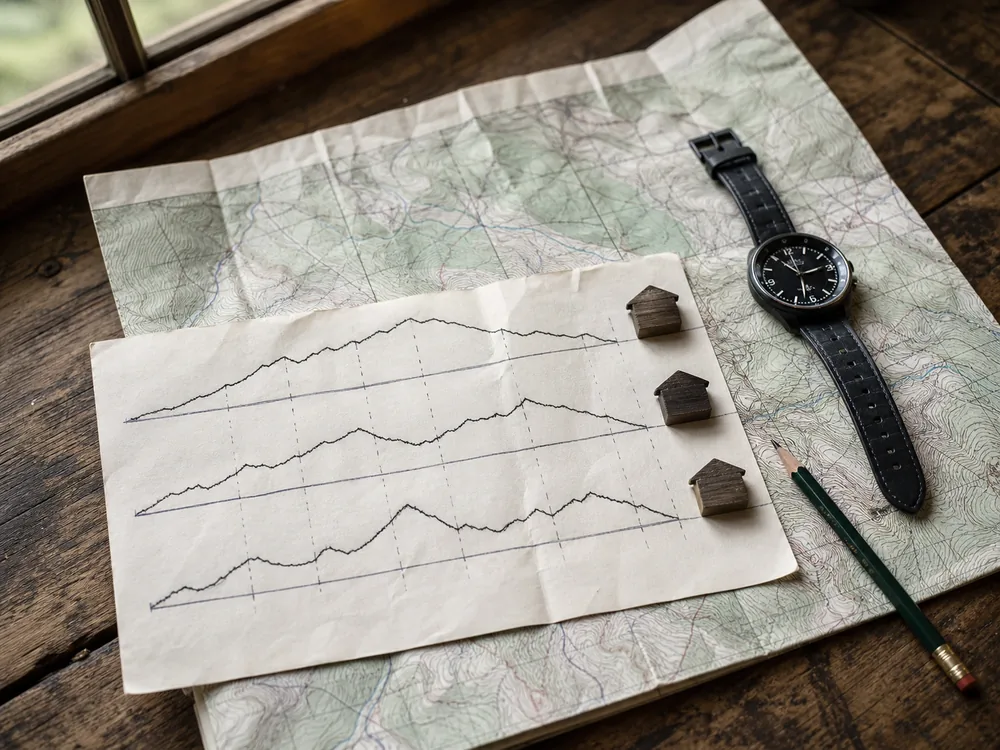
Use the daily trekking pace proven in training, not the guidebook's fastest estimate. Add a larger buffer for heat, altitude, snow patches, loose rock, or a mixed-experience group.
Arrival time is part of the route. Set a turnaround or alternate-route deadline early enough to reach a safe overnight stop.
When should you reserve the huts?
Reserve after the route and alternatives make sense, but early enough for the season and popularity. Confirm each booking, group size, meal request, deposit, arrival expectation, and cancellation terms in writing when possible.
Hut booking timeline
- Route chosenCheck hut opening datesConfirm every intended overnight stop
- Before bookingVerify transport and escape routesMake sure the route direction still works
- After bookingSave confirmations offlineRecord cancellation rules and contact numbers
- Before each stageRecheck weather and hut statusContact the hut when arrival changes
Swiss Alpine Club terms make confirmed accommodation and half board binding. They also allow no-show charges for late cancellation, with rules set by the applicable terms and hut.
- Build the walking sequenceMatch each day to current route information and the group's repeatable pace.
- Confirm operating statusCheck staffed dates, winter room access, water, meals, and any construction or closure.
- Reserve each nightUse the official system or contact listed by the hut owner.
- Record the conditionsSave confirmation, deposit, cancellation deadline, meal request, and contact number offline.
- Recheck before departureContact huts when weather, route conditions, group size, or arrival time changes.
Never double-book competing huts for the same night. If plans change, cancel promptly so staff can manage beds, food, and overdue guests.
Store every confirmation offline because mountain reception may be weak. Put the hut phone number, reservation name, meal arrangement, and cancellation rule in one shared trip note.
A booking creates obligations. It secures a place, but it also requires honest group details and timely communication.
A mountain hut provides less than most people assume
Services range from a staffed building with dinner, breakfast, blankets, and drinks to an unstaffed room with bunks and little else. The word hut does not define the service level.
Staffed hut
May provide meals, drinks, bedding, and route information during a published season.
Self-service hut
May require your own food, cooking knowledge, payment method, and cleanup.
Winter room
Can need a special key and may have limited fuel, water, or sleeping space.
Emergency shelter
Exists for emergencies and should not replace a planned legal overnight.
Valley lodging
Offers easier access and services but may add transport or road walking.
Confirm drinking water rather than assuming a tap is safe or available. Also ask about showers, charging, packed lunch, dietary needs, dogs, footwear, sleeping liners, and cash.
Opening status deserves a final check after winter damage or poor weather. A date shown in an old route description does not prove that staff, water, or the normal approach is available now.
The Swiss Alpine Club advises carrying weather protection, footwear, a headlamp, first aid, drink and food, a hut sleeping bag, earplugs, membership card, and enough cash. Specific huts can require different items.
Carry what the hut lacks. A light pack comes from verified services, not from optimistic omissions.
Huts remove the tent and change the whole packing list
Pack for the trail first. You still need navigation, weather layers, insulation, water capacity, food between huts, headlamp, first aid, sun protection, and emergency equipment appropriate to the route.
- Official map or current digital map stored offline
- Waterproof shell and insulation for the expected low
- Hut sleeping liner when required
- Indoor footwear or clean socks if requested
- Headlamp with spare power
- Cash, identification, membership card, and confirmations
- Food and water for every walking stage
- First aid, blister care, and personal medication
- Phone, power bank, and hut contact numbers
- Small toiletries, towel, earplugs, and waste bag
A 30 to 40 liter pack often holds a simple Alpine hut kit, but route demands control the volume. Snow equipment, a helmet, extra water, or several unsupported meals can require more space.
Weigh the complete pack with water and stage food. A small bag can still be heavy when dense food, camera equipment, and spare footwear fill it.
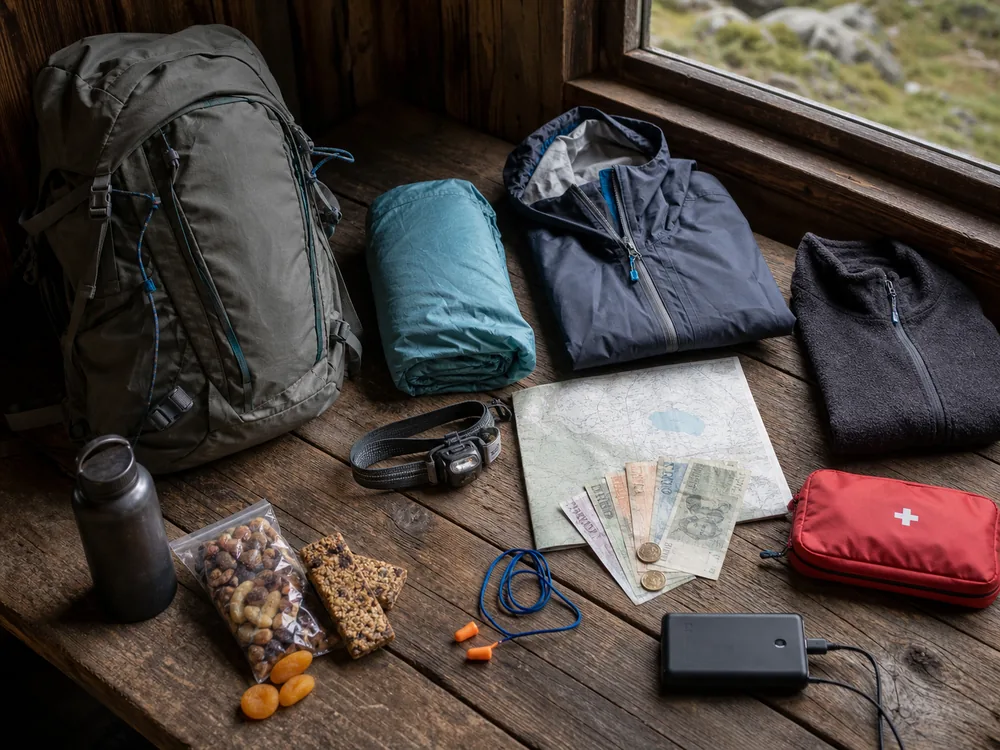
Use the trekking packing system to keep rain gear, water, snacks, map, and blister care reachable. A wet trekking day is manageable only when dry sleep clothing remains protected.
Light does not mean exposed. Huts reduce overnight equipment, but the route between them remains mountain travel.
How do meals, water, and payment work?
Staffed huts often offer half board, but meal times and choices may be fixed. Tell the hut about vegetarian food, allergies, or intolerances when booking because remote kitchens cannot always handle a surprise request.
Carry enough trekking food between huts even when dinner and breakfast are included. A delayed arrival or closed kitchen should not leave the group without calories.
Check when breakfast begins if the next stage needs an early start. Some huts can provide an earlier simple meal or packed option, but that arrangement must be requested rather than assumed.
Water may be scarce, untreated, rationed, or sold. Confirm the source at every hut and plan water between stops from the longest dry stage.
Meals are part of logistics. Booking food early can reduce pack weight, but you still need stage food, water capacity, and a backup.
Every hut runs on roughly the same routine
Arrive early enough to check in without rushing. Follow the warden's directions, remove dirty boots where required, store poles and wet gear in assigned areas, and keep sleeping spaces compact.
Quiet often begins around 10 p.m. because climbers and staff may start before dawn. Use a dim headlamp carefully, silence alarms quickly, and prepare morning gear before entering the dormitory.
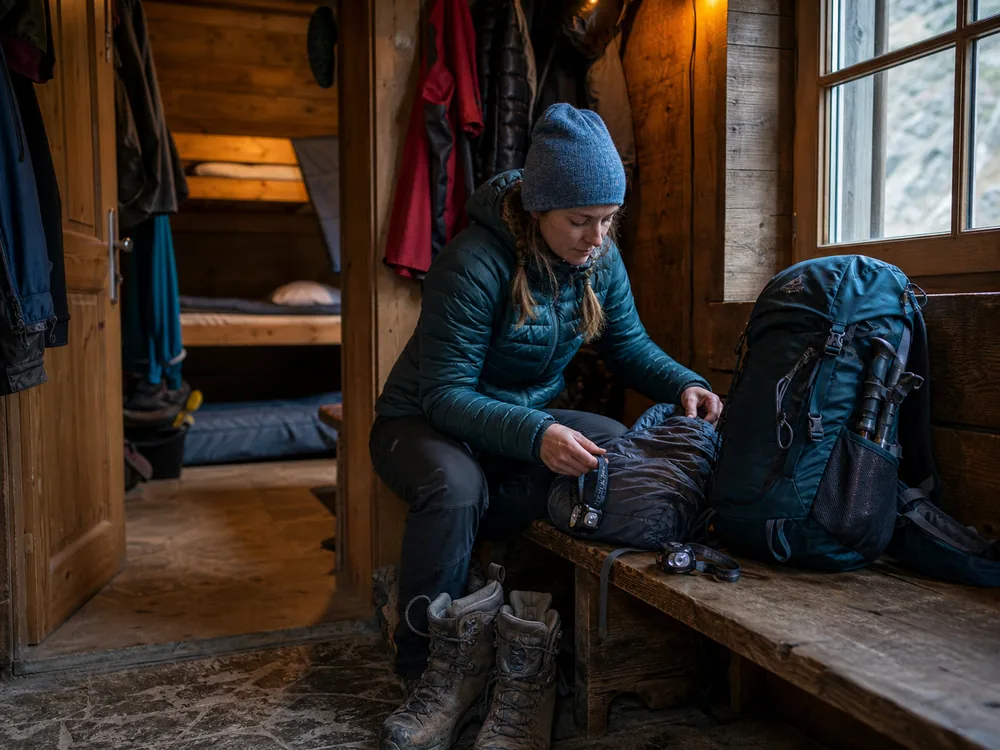
Pack out personal waste when required and cancel any unused reservation. Good trekking etiquette matters because each guest uses shared space and staff plan around confirmed arrivals.
Keep wet shells and boots out of sleeping areas when the hut provides a drying space. Food, toiletries, and alarms should remain contained so other guests are not disturbed.
Be ready before bedtime. A quiet, organized evening protects sleep for the whole hut.
How do you handle weather or a slow group?
Decide before breakfast which conditions trigger the lower route, short stage, extra night, or exit. Ask the warden for current observations, but keep responsibility for the group's route and skills.
Do not push toward a booked bed through thunderstorms, avalanche hazard, hard snow, flooding, or terrain beyond the group. Trekking safety decisions outrank a replaceable reservation.
Call the hut as soon as a delay becomes likely. Wardens may be watching for overdue guests, and early contact gives both sides more useful choices than a message after dark.
| Problem | Early action | Safer alternative |
|---|---|---|
| Late start | Recalculate the arrival window immediately | Short route, transport link, or another legal stop |
| Slow pace | Check progress at a named landmark | Turn back before the high commitment point |
| Thunderstorms | Avoid exposed ridges during the forecast window | Lower valley route or extra night |
| Snow or ice | Compare conditions with group equipment and skill | Use a snow-free route or postpone |
| Illness or injury | Stop and assess before the person deteriorates | Descend, use transport, or call appropriate help |
| Hut closure | Contact the owner and next hut | Rebuild the stage before leaving shelter |
Give a trusted contact the hut sequence, route alternatives, and overdue plan. A solo trekking check-in needs even clearer timing when nobody beside you can report the delay.
The safe route can change. A strong plan includes a destination for the day you cannot reach the original hut.
How do you connect the first and last trailheads?
Solve transport before finalizing the direction. Check seasonal buses, trains, lifts, parking rules, and the last service from the exit.
Point-to-point routes often work best with public transport. If a car is necessary, confirm whether it can remain at the start and whether the exit has a reliable return connection.
Keep the final day conservative when it must meet a fixed train or flight. A missed local bus should not cascade into a major travel failure.
Allow time to collect stored luggage, return rented equipment, or retrieve a vehicle. These small transfers belong in the itinerary even though they are not trail miles.
Transport closes the loop. Save schedules offline and carry a phone number or alternate connection for the final valley.
What does a hut-to-hut trek cost?
Hut fees are the largest fixed cost of the trip, and they vary by country, altitude, and whether the hut is staffed. A staffed mountain hut usually charges a set nightly fee for a bunk in a shared dormitory, with meals either priced one by one or bundled as half board that covers dinner and breakfast.
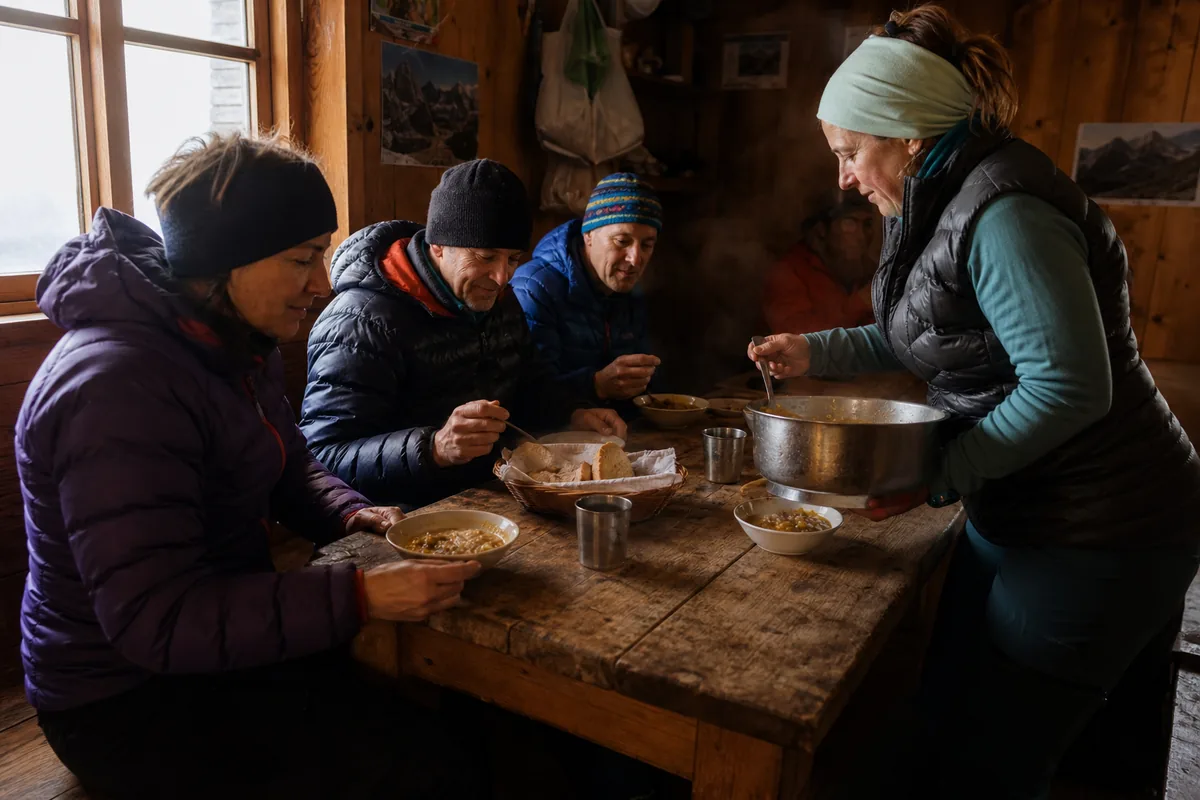
Budget for far more than the bed. Showers, device charging, drinking water, and a packed lunch are often paid extras, and a hot meal high on the mountain costs well above valley prices because the food, fuel, and gas arrived by helicopter or on someone's back. A few small extras each day add up across a week.
Decide early between half board and self-catering. Cooking from a hut kitchen or carrying your own food cuts the meal cost but adds pack weight and depends on the hut allowing it, which some staffed huts limit or charge a small fee for. On a budget trek the meal choice, not the bunk fee, is usually the number you can actually move.
Check whether a club membership pays for itself. Members of alpine clubs and their partner organizations often pay a reduced bunk fee that adds up over several nights. Then carry enough cash in the local currency, because many huts take no cards and a deposit paid online rarely covers the meals, drinks, and extras you settle before leaving. Confirm the payment method and the cancellation terms when you reserve, so a weather day that forces a change does not cost you the whole booking.
Sources
The Swiss Alpine Club hut information explains reservations, packing, meals, arrival communication, and route planning. Its hut terms define booking, cancellation, no-show, and payment conditions. The Austrian Alpine Club hut etiquette covers packing, transport, reservations, and shared-hut behavior.
AnswersQuestions readers ask
Do you need a sleeping bag for hut-to-hut trekking?
Many huts provide blankets but require a sleeping liner. Some provide less, so confirm the exact bedding rule for every hut.
How far should you walk between huts?
Choose a stage your group can repeat after imperfect sleep. Compare distance with ascent, descent, surface, altitude, weather, and required arrival time.
Can you arrive without a reservation?
Some huts may accept walk-ins, but popular or remote huts can fill. Reserve through the official system and cancel promptly when plans change.
Do mountain huts accept credit cards?
Some do, but connectivity and local rules vary. Carry enough local cash and verify payment options with each hut.
How much should a hut-to-hut pack weigh?
There is no universal number. Remove shelter and meal items only when the huts confirm they provide them, then keep all route, weather, water, and emergency functions.