
A Practical Hygiene Routine for a Multi-Day Trek
Spend limited clean water and effort on the habits that prevent illness and skin damage first.
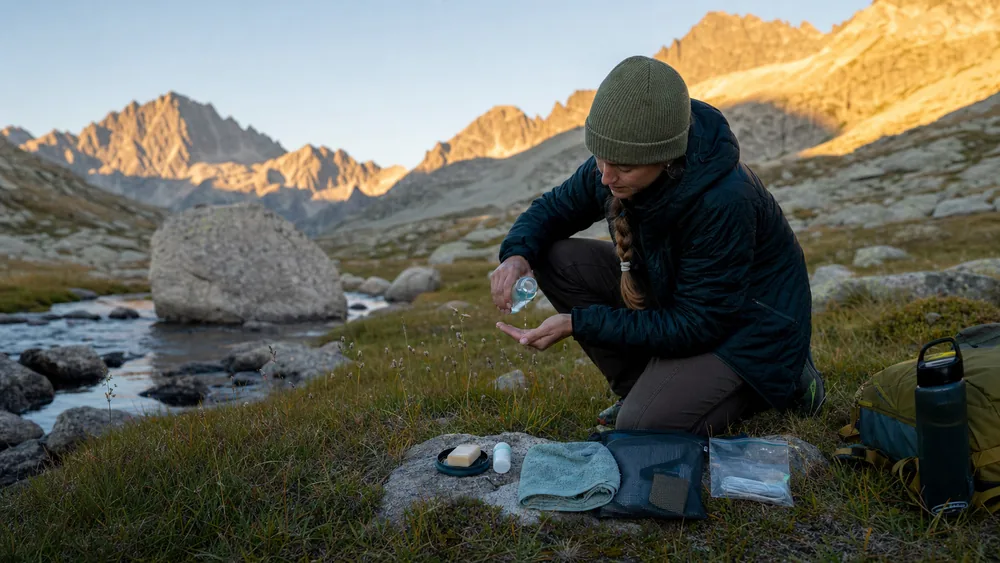
To manage hygiene on a multi-day trek, protect handwashing before food and after toilet use, keep drinking-water tools clean, dry feet and high-friction skin, and contain every waste item. Comfort washing comes after these jobs when water and local rules allow.
Wash hands with soap and water for at least 20 seconds.
CDC norovirus prevention guidance
Do this after toilet use and before touching food, eating, or treating another person's wound. CDC warns that hand sanitizer does not work well against norovirus, so it is a backup rather than the main control.
The risky moment is often ordinary. One person returns from the toilet, another opens the shared food bag, and a third steadies the same water bottle while dinner is being made. A reliable camp routine breaks that chain before anyone needs to remember every surface they touched.
Protect hands first. A clean face feels good, but clean hands, food tools, and drinking water prevent more serious trouble.
Which hygiene tasks deserve clean water first?
Use limited clean water in this order. Wash hands, protect drinking-water equipment, clean food-contact items, care for wounds and feet, clean high-friction skin, then wash the rest of the body.
Keep soap, handwashing water, toilet supplies, and the waste bag reachable. Hygiene fails when every use requires unpacking camp.
Separate clean and dirty duties in a group. The person handling human waste should wash before touching shared food or water equipment.
Review common camp mistakes before departure so cooking, washing, and toilet tools already have separate places when the group is tired.
Plan hygiene with the trekking safety routine because treatment does not protect water that is later touched by dirty hands or bottle threads.
Spend effort by consequence. Use your cleanest water and best attention where contamination matters most.
How do you make handwashing reliable?
Carry biodegradable soap in a leakproof bottle and enough capacity to transport water away from the source. A bottle with a small controlled opening can reduce waste.
- Move away from waterFollow the land manager's required distance, commonly at least 200 feet.
- Wet hands with clean waterKeep dirty fingers off the bottle opening.
- Apply soapLather palms, backs, between fingers, thumbs, nails, and wrists.
- Scrub for 20 secondsCount the full time.
- Rinse over durable groundKeep runoff out of camp, trails, and water.
- Dry with a clean methodAir-dry or use a personal quick-dry cloth.
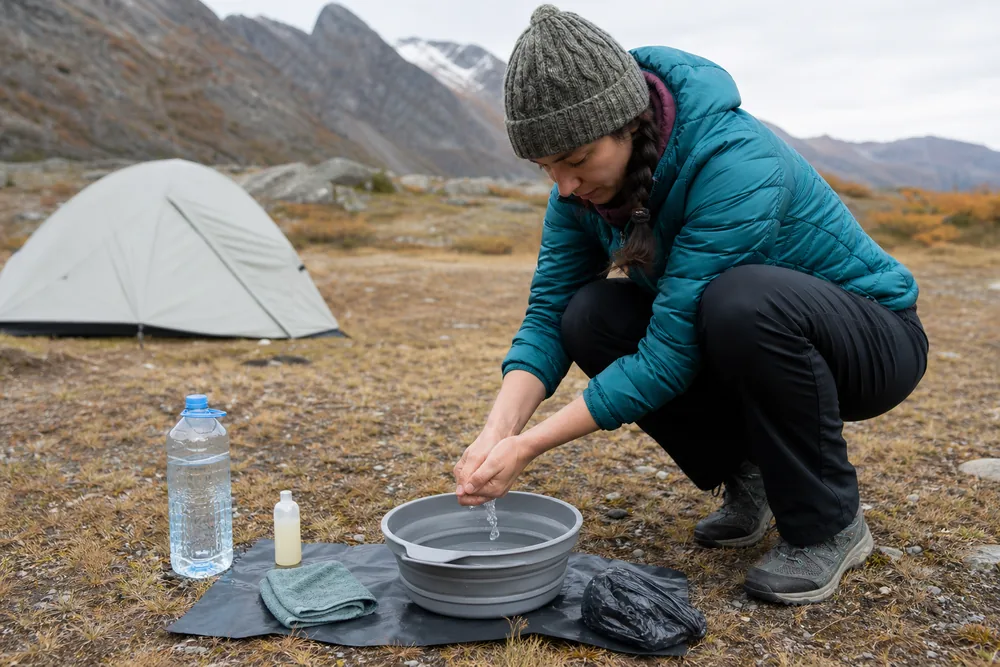
Wash before preparing shared meals, after diaper or menstrual-product handling, after helping a sick person, and after touching raw food.
Sanitizer can supplement handwashing where soap and water are temporarily unavailable. Let it dry fully and keep it away from flames.
Make the clean action easy. The station should work in darkness, rain, and cold.
Where can washing and wastewater go?
Never apply soap in a lake, river, spring, or stream, including biodegradable soap. Carry water away and wash on durable ground.
Body wipe
Use a damp cloth for face, armpits, groin, and feet
Small wash
Use a pot or bottle away from water and camp
Dishwater
Remove food scraps, use little soap, and follow local disposal rules
Laundry
Rinse only when water is abundant and regulations allow
No-water day
Change socks, air clothing, and clean hands with carried water
Use separate cloths for face and food-area cleaning versus feet and high-friction skin. If you carry only one body cloth, clean the face and upper body first. Wash the cloth with soap, rinse it completely, then clean the groin and feet last. Do not return the used cloth to the clean-water pocket.
A small wash still needs a clean starting point. Pour treated water into the wash container without touching its rim with dirty hands, then set the drinking bottle aside before you begin. When the wash is finished, clean the container before it returns to cooking or water duty. A collapsible bowl used for feet should not become the salad or snack bowl at the next camp.
Drying matters as much as washing when skin folds stay damp. Pat the skin instead of scrubbing it, then let the cloth dry in sun and moving air when conditions allow. Seal a wet cloth only for transport, and open it again at the first safe drying stop. Persistent rash, broken skin, drainage, fever, or spreading redness needs appropriate medical care rather than harder washing.
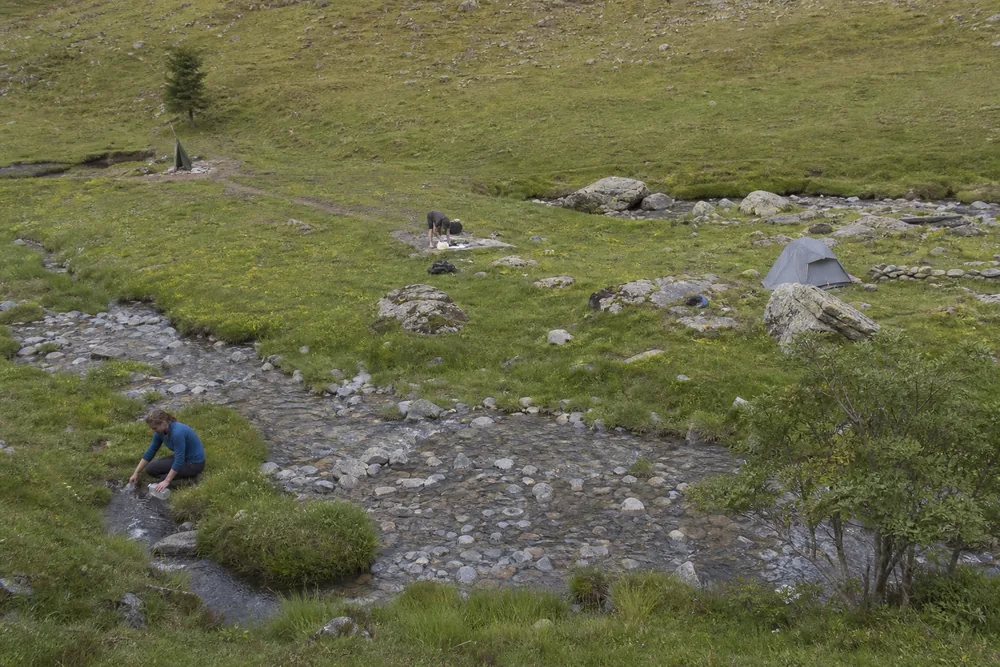
Leave No Trace commonly advises carrying washing water 200 feet from streams or lakes and scattering strained wastewater. Desert, alpine, snow, canyon, and regulated sites may require different methods.
Do not wash where wildlife or other visitors collect water. Avoid trampling vegetation while searching for privacy.
Use good trekking etiquette when choosing a washing or privacy area near other visitors. A private place still has to protect the trail, water, vegetation, and people nearby.
Use the multi-day preparation sequence to designate water, cooking, toilet, and washing areas before darkness.
Local rules decide. Distance and disposal practices change with soil, climate, use level, and land management.
What keeps feet and high-friction skin intact?
Clean and dry feet each evening. Remove grit, inspect between toes, and compare hot spots, cracks, softened skin, nails, and swelling with the previous day.
Wet socks
Change them as soon as practical and dry between the toes
Salt and grit
Wash them from heels, forefeet, and high-friction skin
Pack contact
Clean the waistband, shoulders, and skin beneath straps
Intact skin
Use only anti-chafe protection tested before the trek
Broken skin
Clean it and use an appropriate dressing
Changed gait
Stop and assess the cause before adding more distance
Keep foot cloths separate from face and dish cloths. Mark them or use different colors.
Air footwear and insoles away from food and sleeping gear. Follow a consecutive-day foot routine for hot spots, lacing changes, and escalation signs.
Do not scrub chafed skin aggressively. Gently clean, dry, reduce friction, and seek care for spreading redness, drainage, fever, or severe pain.
Dry the friction zones. Sweat, grit, and repeated movement damage skin even when it does not look dirty.
Can you preserve a dry sleep set?
Keep one base layer and one pair of socks dry for sleep. Seal them from rain, wastewater, and wet active clothing.
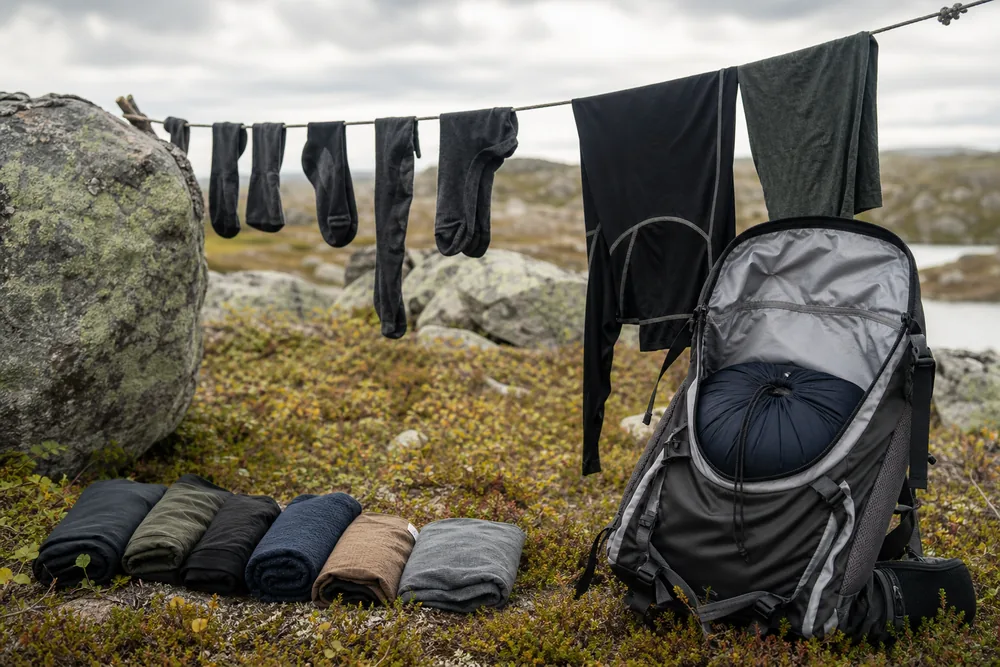
Rinse socks and underwear when water is abundant, weather permits drying, and rules allow. Soap residue can irritate skin, so rinse completely.
Attach damp items securely to the pack only when they will not catch vegetation, drag, or become lost. Bring them inside before rain or camp smoke.
In freezing weather, include soap, wet cloths, and bottle caps in the winter trekking check so the hygiene system still works at the next stop.
Do not sleep in clothing contaminated by toilet waste, vomit, raw food, or wound drainage. Isolate it in a sealed bag until it can be washed safely.
Use your trekking packing list to provide enough rotation without carrying an unnecessary outfit for every day.
Reserve the dry set. Comfort on the trail should not consume the clothing that keeps you warm at night.
Teeth and menstrual care need their own kit
Brush twice daily with a small amount of treated water. Spit and dispose of the residue according to local rules, away from water and camp.
Wash hands before and after changing menstrual products. Change products according to their instructions and your normal needs rather than extending use to save supplies.
Carry more products than the expected minimum because exertion, travel, and schedule changes can alter timing.
Do not bury wipes, pads, tampons, applicators, dental floss, or packaging. “Biodegradable” does not make them suitable for a cathole.
Pack out the products. Good containment protects water, wildlife, other visitors, and the user.
Toilets determine the waste system
Use toilets when provided. In the backcountry, follow the exact land-manager rule because some places require every solid waste item to be packed out.
Choose deep organic soil where allowed. Avoid drainage channels, flood zones, fragile alpine plants, cultural sites, animal burrows, and places other visitors are likely to use.
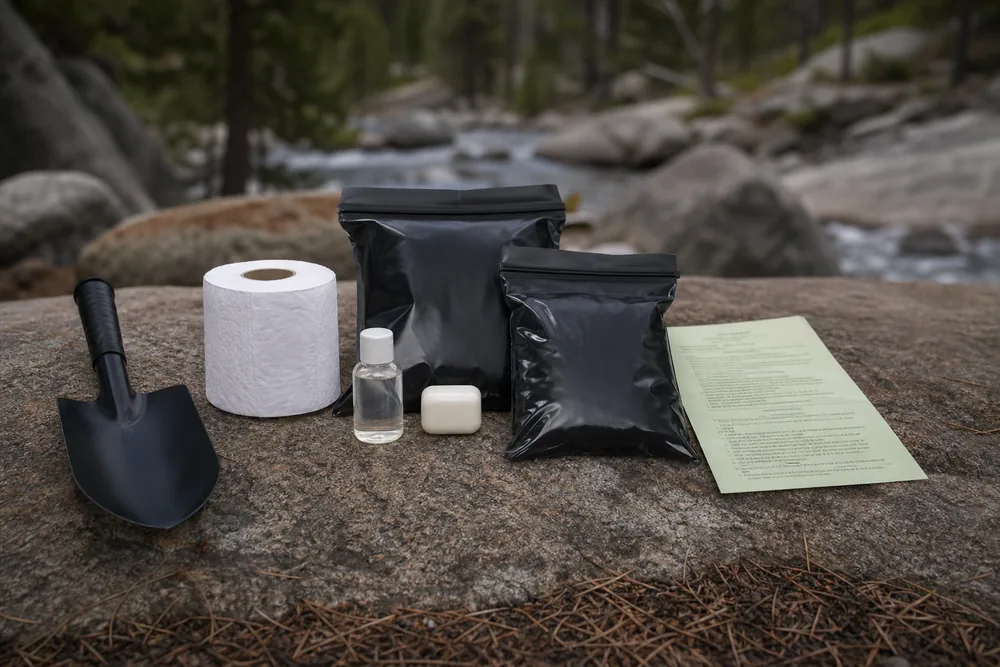
Pack out toilet paper when required and whenever decomposition is poor. Always pack out wipes and hygiene products.
Seal food scraps, used dressings, dental floss, contact-lens waste, and broken hygiene packaging. Inspect camp for small corners and tabs before leaving.
Leave no hygiene debris. Tiny plastic and fiber items remain after the visible camp is gone.
Illness changes every shared routine
Anyone with vomiting or diarrhea should stop preparing food for others. CDC advises waiting at least 48 hours after symptoms stop before handling food for others following a norovirus illness.
| Illness-control action | What changes |
|---|---|
| Dedicated utensils | The sick person's cup, spoon, bottle, and towel remain separate |
| Separate waste | Vomit, stool, and cleaning material use secure containment |
| Soap and water | Caregivers wash after every contact with contaminated items |
| Surface cleaning | Gear and touch points follow an appropriate disinfecting method |
| Route review | Hydration, shelter, communication, and exit are reassessed early |
| No food duty | The sick person does not prepare shared meals |
Move toilet and vomiting areas away from water, food, and camp according to local rules. Prevent runoff.
Persistent vomiting, inability to keep fluids down, blood, severe pain, confusion, fainting, or signs of significant dehydration need prompt medical assessment.
Use the group's solo check-in plan before illness becomes an emergency.
Contain and communicate early. One person's illness can quickly affect the entire group and the route home.
Pack for a delay and restock the system
Before departure, count soap, toilet paper, waste bags, menstrual supplies, and prescribed hygiene items against the longest plausible itinerary. Add enough containment for a delayed exit, not only the planned number of nights.
Use two barriers for wet or contaminated waste. Put the sealed inner bag inside a stronger opaque outer bag, then keep it away from food, cookware, and clean clothing. A spare cap, two robust zip bags, and tape can restore containment after a puncture or lost lid.
At each resupply, discard waste only in an approved receptacle and clean the outer storage bag before it returns to the pack. Restock the next stage before leaving town. If soap, waste capacity, or menstrual supplies are already tight, use the planned rest-day resupply instead of hoping the remaining amount will last.
On the final day, clean and dry bottles, filters, cloths, utensils, and the hygiene bag according to their maker's instructions. Wash contaminated clothing separately and inspect the first-aid kit before storing it.
Count the delayed exit. Hygiene supplies must cover the route you may walk, not only the route you hope to walk.
Protect the clean side of shared gear
Give each group member a personal spoon, cup, towel, and water-bottle opening. Shared cook pots may be necessary, but personal contact items reduce accidental exchange. Keep soap and waste supplies away from the dry clothing system so a leak cannot reach food or insulation.
Time handwashing before the trekking meal routine so hungry people do not touch shared food first. After dark, keep the same physical separation between cooking and washing instead of relying on memory.
Weather changes the setup, but not the separation. In prolonged rain, follow the wet-camp drying routine while keeping washing water away from shelter.
Avoid touching the clean end of a water-filter hose with dirty hands. Mark clean and dirty bags clearly, and never dip the clean bag into untreated water. Clean bottle threads and caps too, because drinking transfers food and saliva to those surfaces.
If water is scarce, allocate the handwashing share before using any for comfort washing. Confirm the distance to the next reliable source before opening the reserve.
Keep contact lenses and hand hygiene together. Wash and dry hands before handling lenses, use only approved solution, and carry glasses as a backup. A small clean groundsheet or bag can hold water caps, wound supplies, menstrual products, and lens equipment, but it should never hold food scraps or toilet tools.
Store soap and scented hygiene items with food wherever wildlife rules require it. Toothpaste, wipes, deodorant, and menstrual products can also attract animals. Unscented products may reduce odor, but no scent removes contamination.
When privacy is limited, tell the group how much time and distance you need without explaining personal details. A buddy can remain within voice range while facing away.
Guard the clean side. Treated water and washed hands only stay clean when every cap, hose, surface, and utensil follows the same separation.
How do you stay clean when water is scarce?
Water on a trek is often too limited or too valuable to spend on washing, and staying clean then means using almost none of it. The goal shifts from feeling fresh to preventing the specific problems that end treks: infected skin, stomach illness, and broken sleep.
Wash by target, not all over. A small amount of water and a cloth on the high-friction and high-risk areas, the feet, the groin, and the hands, prevents far more trouble than a full-body wash, and it uses a fraction of the water. Everything else can wait for a resupply point or a village with a tap.
Use waterless options for the rest. Alcohol hand sanitizer before every meal and after each toilet stop, plus body wipes for skin, cover most needs without touching your drinking supply. Pack out every used wipe, because they do not break down and burying them just moves the litter. A small dry towel and a change of socks do more for comfort than any amount of rinsing.
Protect the clean side of your kit above all. A dry, clean sleep set is worth more than a wash, so keep sleeping clothes and your bag away from dirty hands and damp gear, and sanitize before you touch food or the inside of a water container. Treat clean drinking water as the first call on every liter, ahead of any washing, and filter or treat it properly, because the fastest way to end a trek is not dirty skin but a stomach illness from bad water or unwashed hands.
Sources
CDC outdoor norovirus guidance covers 20-second handwashing, the limits of sanitizer, food handling, and illness containment. Leave No Trace waste guidance covers catholes, wastewater, and packing out hygiene waste while deferring to local rules. CDC menstrual hygiene guidance supports clean hands, regular product changes, and safe disposal.
AnswersQuestions readers ask
Is hand sanitizer enough on a trek?
No. CDC says sanitizer does not work well against norovirus. Use soap and clean water for at least 20 seconds when possible.
Can you wash directly in a stream?
No. Carry water away from lakes and streams and follow local rules for washing and wastewater.
How far should toilet and washing areas be from water?
A common minimum is 200 feet, but local land-manager rules always take priority.
How often should trekking clothes be washed?
Wash or rinse high-contact items when water, weather, and rules allow. Drying and rotation may be more practical than a full wash.
How do you carry used menstrual products?
Seal and pack them out with other hygiene waste. Do not bury pads, tampons, applicators, or wipes.