
Plan Your First Backpacking Trip Backward From Camp
Choose a forgiving one-night route, verify the camp and water, budget daylight backward, and set exits before the pack is closed.
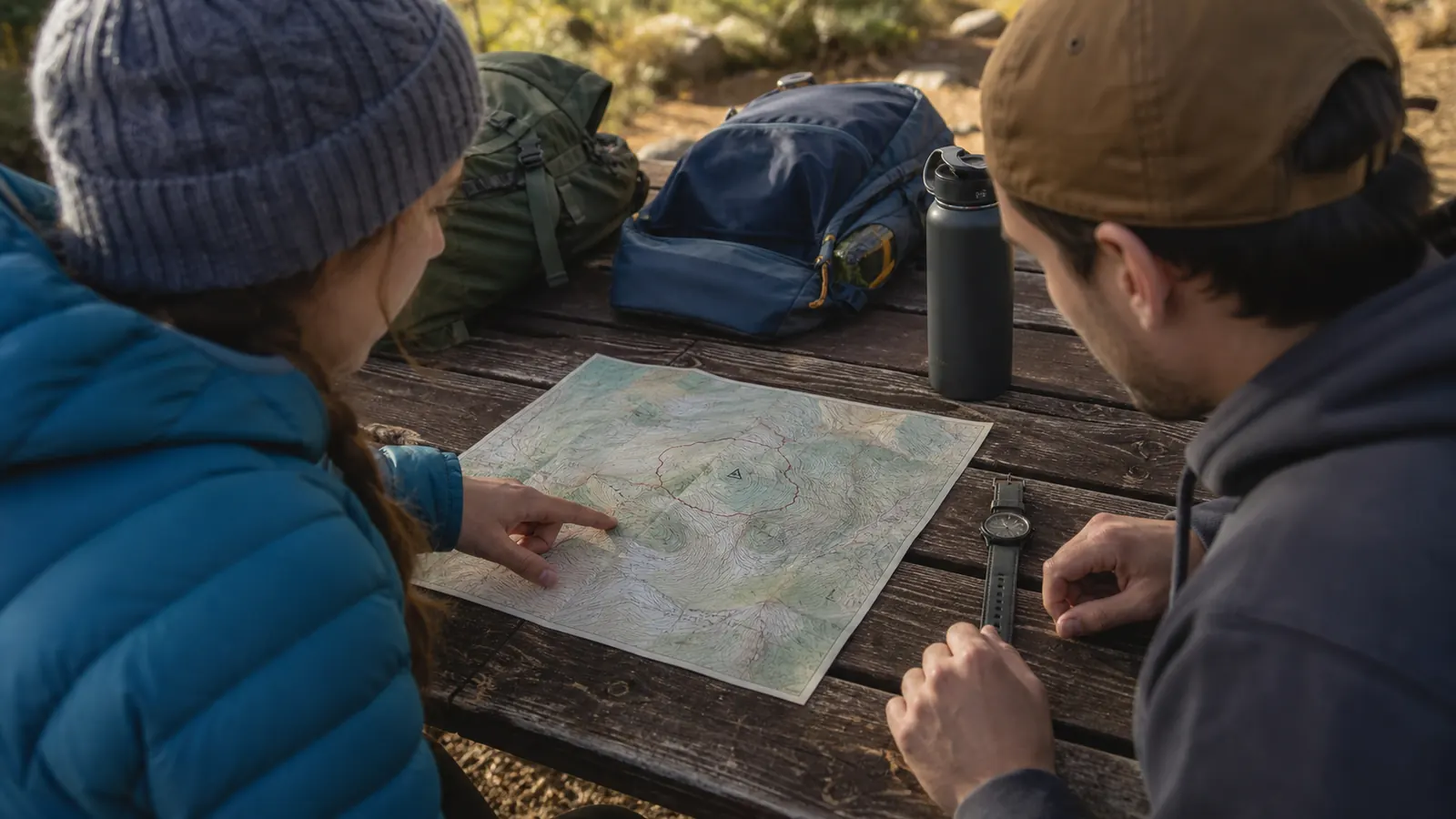
Plan your first backpacking trip around one legal campsite, a known water plan, modest walking, several hours of camp daylight, and an exit you can still use when a small problem appears. Build the schedule backward from shelter completion, verify changing conditions again before departure, share a specific overdue plan, and rehearse the full overnight system near home.
The first route should be easy to shorten. Scenery and mileage matter less than a camp, water source, start time, and walk-out that remain clear when the group moves slower than expected.
Build backward from camp. Pick where and under what rules you can sleep, then calculate the walking day that safely reaches it.
Why should a first route make mistakes cheap?
Beginner backpacking adds shelter, sleep, food preparation, water treatment, storage, hygiene, and a second morning to an ordinary hike. Keep the walking modest enough that attention remains available for those unfamiliar jobs.
One night is enough for the first test. It exposes ground cold, condensation, darkness, appetite, pack comfort, camp order, and morning recovery without multiplying every problem across several days.
Choose moderate elevation change. A steep climb under a new load and a long descent on tired legs can dominate the trip before the overnight systems are evaluated.
Simple navigation reduces one source of uncertainty. A clear out-and-back or short loop can still teach map checks, but it should not require advanced route finding to reach the legal camp.
Look for more than one decision point. A turnaround before the final climb, a nearer legal camp, or a direct walk-out gives the group a controlled alternative when pace, feet, water, weather, or equipment changes.
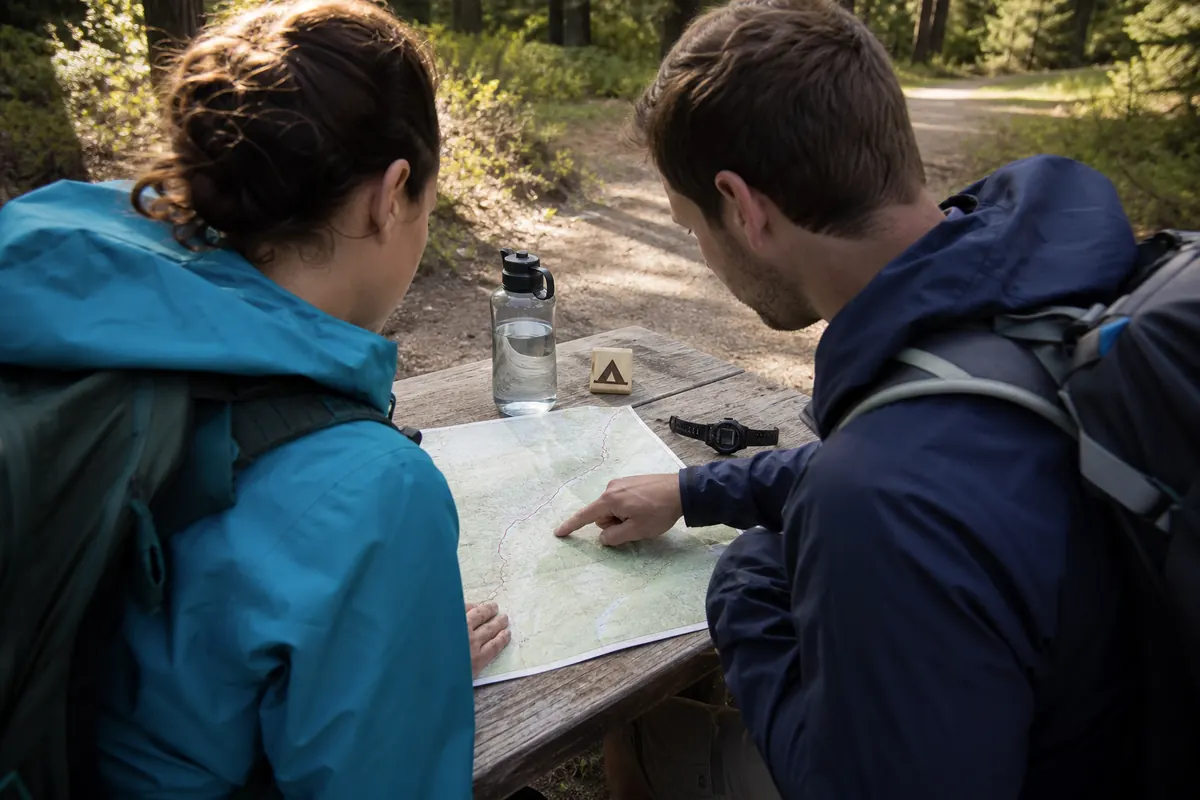
Avoid combining a first overnight with extreme heat, winter backpacking conditions, major exposure, difficult crossings, uncertain transport, or a remote camp. Together they hide what the beginner system actually needs to fix.
Plan around the least experienced person and the slowest loaded pace. A route that feels comfortable to the strongest person may remove daylight and camp attention from everyone else.
The trip is allowed to end early. A calm walk-out after a failed pad, painful foot, or unreliable water source provides better evidence than forcing a night with shrinking options.
Cheap mistakes teach clearly. The route should let a beginner stop, shorten, or leave while the problem is still easy to explain and control.
Why should you choose the legal campsite before mileage?
Find the official land manager or current local authority for the intended area. Confirm whether overnight camping is allowed, whether sites are designated, and whether a permit or reservation is required.
Read the site rules that change equipment and timing. Fire restrictions may require a stove plan, food-storage rules may set container volume, and waste requirements may add a carry-out system.
Check how the campsite is identified. A numbered established site has different navigation needs from dispersed camping within a legal zone, and neither can be assumed from a map symbol alone.
Understand the surface and exposure without claiming a live condition. Low ground can collect water, loose soil may hold stakes poorly, and dead overhead branches can make a flat site unsafe.
| Campsite fact | Verify from | Planning consequence |
|---|---|---|
| Overnight legality | Current land-manager rules | Keep, move, or reject the camp |
| Permit or reservation | Official booking or permit source | Confirm dates before transport and food |
| Site type | Official map and regulations | Navigate to a site or identify a legal zone |
| Fire rule | Current restriction notice | Choose stove, no-cook plan, and fuel legally |
| Food storage | Current wildlife and land rule | Pack the required container or approved method |
| Waste rule | Current sanitation guidance | Carry the correct disposal or pack-out system |
| Water access | Current official or local source | Carry enough for a dry camp if uncertain |
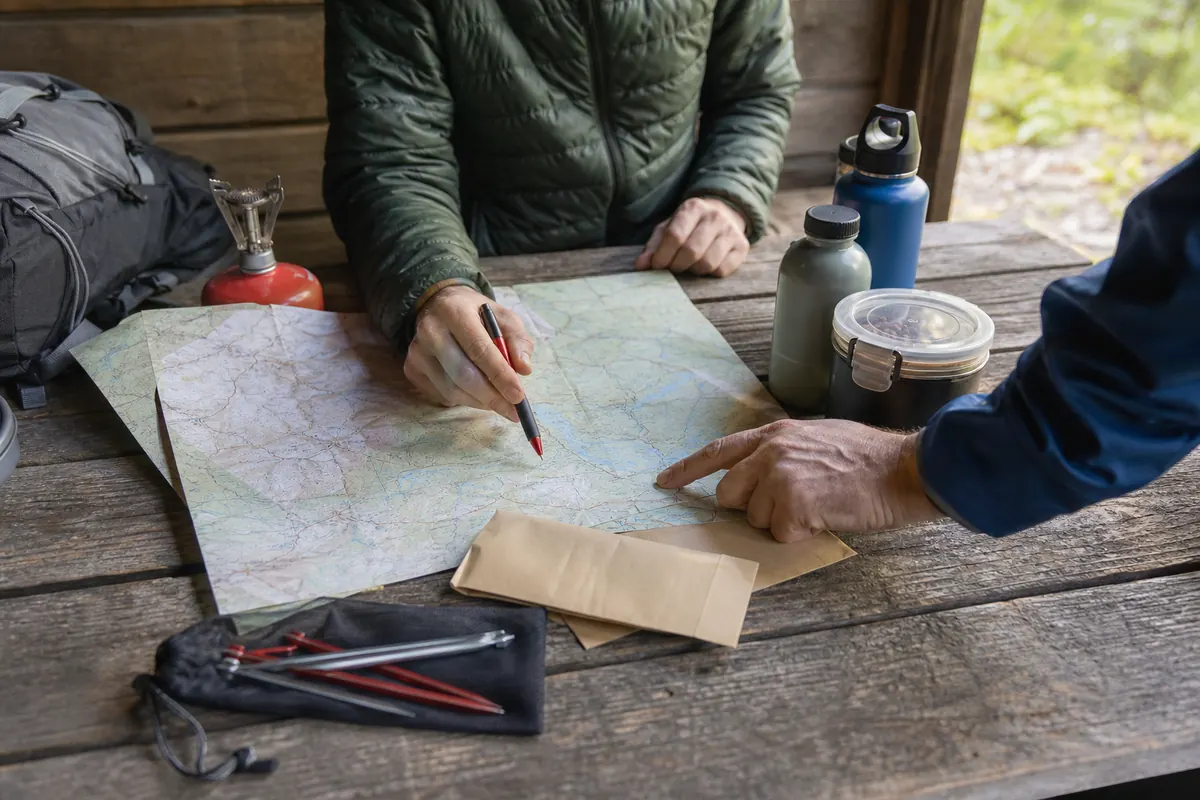
Do not build a route around a campsite that is merely popular in an old report. Access, closures, permits, water, fires, and wildlife rules can change after the report was written.
Once the camp is verified, measure the route to it from both directions. The walk-in may look reasonable while the shortest exit from camp is still too long for a failed night.
Record the official source and the date checked. That makes the final departure review faster and shows which facts need a fresh answer.
Ask how the camp works when it is occupied or unavailable. A first trip should have a legal alternate or an exit, not an assumption that another party will make room.
The alternate must follow the same permit, water, storage, and surface checks as the preferred site.
Confirm the boundaries of the camping area offline. Service can vanish before the group reaches the zone, and a vague note such as “camp nearby” does not show which side of a river, road, or closure remains legal.
Camp first, mileage second. A beautiful route with no verified place to sleep is not yet an overnight plan.
What current conditions must be checked twice?
Separate stable map facts from information that can change. Distance and broad terrain may remain, while access, closures, water, fire restrictions, weather, snow, flooding, and transport can shift quickly.
Check once while selecting the route so a condition can change the booking, equipment, or date. A disciplined trip planning process checks again shortly before departure.
- Road, gate, trailhead, and public-transport access are open for the planned times.
- The intended trail and legal campsite are open.
- Permit, reservation, group-size, and check-in requirements are satisfied.
- The current forecast fits the group's equipment and skill.
- Water sources have current credible information or the load supports a dry plan.
- Fire, stove, food-storage, wildlife, and waste rules are current.
- Known crossings, snow, flood, heat, or wind hazards remain within the plan.
- The exit transport still runs after the conservative finish time.
Assign one person to lead the recheck and another to confirm it.
This is not about hierarchy. A second set of eyes can catch a date, closure, or rule that looked familiar during the first read.
If reliable current information is unavailable, mark the fact unknown. Change the route, carry the conservative alternative, or obtain local information before depending on it.
Weather timing matters as much as a daily icon. A rainy backpacking plan compares storms with exposed walking, crossings, and camp setup.
Recheck the cancellation terms for permits and transport while options remain. A small financial inconvenience is easier to accept before it becomes pressure to continue into conditions the group had already decided to avoid.
Keep screenshots or offline copies of essential permits, maps, and official instructions where service may disappear. Practiced compass navigation backup prevents one online account from becoming the only route reference.
Dynamic facts expire. A plan stays usable only when access, weather, water, and rules are refreshed near departure.
How do you build the hiking day backward from darkness?
Choose a time when shelter should be secure, water available, and a warm or dry layer on. This is earlier than sunset because camp tasks become slower as light and energy fall.
Estimate shelter setup from a practice run, not from a product claim. Add time for site confirmation, water collection and treatment, changing layers, foot care, food, and storage.
Place the final water stop on the clock. A source that requires a side trip, slow treatment, or a heavy carry can add more time than its map distance suggests.
Use the slowest realistic loaded pace for the walking estimate. A loaded training baseline should include pack pressure, route finding, short rests, and group differences.
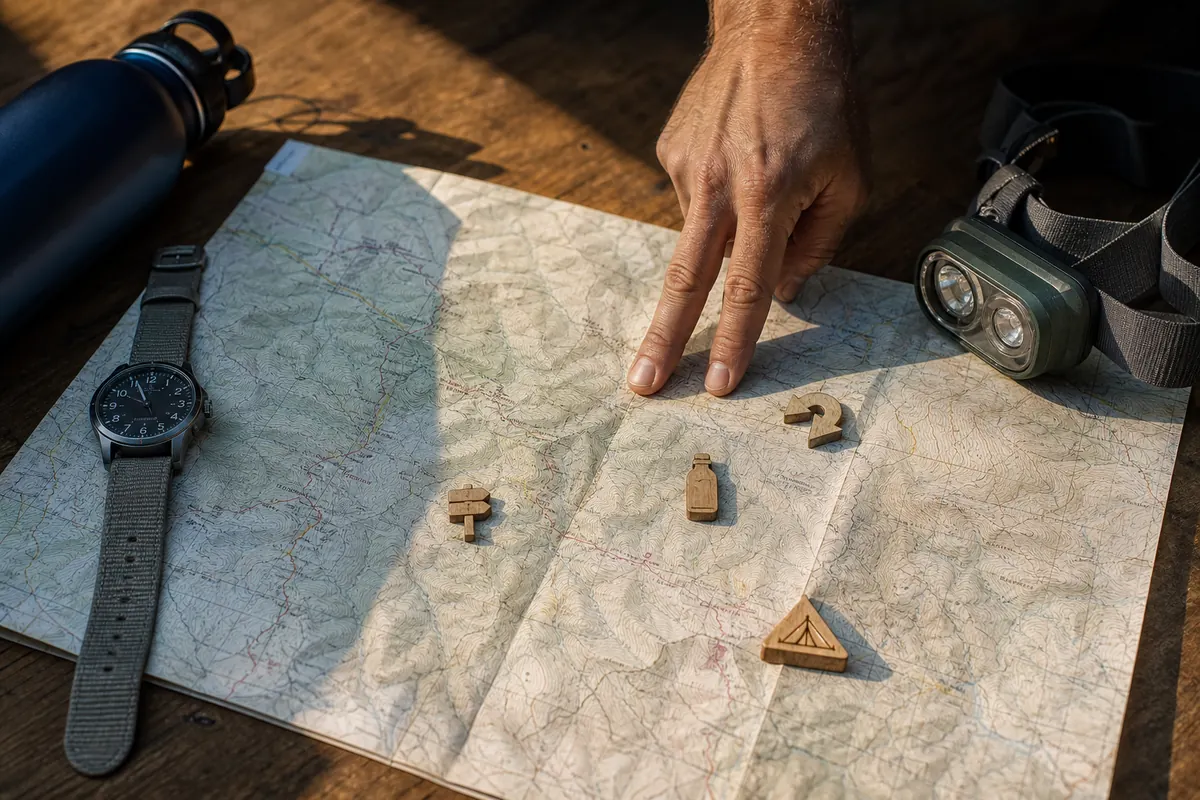
Add trailhead tasks. Parking, permits, bathroom use, pack adjustment, group briefing, and a final map check can consume the first part of the schedule before anyone walks.
Transport can set a harder deadline than sunset. A shuttle or pickup must still work after the conservative exit time, and a locked gate may make a late return more serious than a longer walk.
Choose a turnaround time and location that preserve the walk back. Do not set it at the campsite, because by then the choice to continue has already been made.
Build a second schedule for the shortened option. Name its legal camp or direct exit, the water it needs, and the time it reaches transport.
A vague fallback such as “we will decide there” still forces planning under pressure.
Use terrain events instead of distance alone. A bridge, junction, last water source, or beginning of the final climb is easier to recognize in poor service than an exact mileage readout.
Weather can move the deadline earlier. Thunder, increasing wind, heat, cold-rain hypothermia signs, or a difficult crossing may require the group to leave exposed terrain before the normal camp target.
Write the schedule as ranges, not a perfect minute-by-minute promise. The important numbers are the start window, latest decision point, camp-ready target, and overdue time.
Those ranges should remain readable on the offline route copy.
Protect camp daylight. The first overnight should arrive with time to solve a slow setup without converting every task into a dark emergency.
When should water availability veto a route?
Locate the last credible source before camp and the first one after leaving. The overnight water plan must cover the gap between them, including dinner and breakfast.
Current source information matters because seasonal streams, tanks, springs, and pumps can fail or become inaccessible. The water carry plan must treat old reports as clues, not proof.
Decide how much untreated water can be collected, how it will be treated, how long treatment takes, and which container holds clean water. A group filter is useful only when all needed fittings and a backup are present.
- Last source before camp
- Verified or treated as unavailable
- Camp demand
- Drinking, dinner, cleanup where allowed, and overnight use
- Morning demand
- Breakfast plus the next segment before a source
- Primary treatment
- Practiced with the expected water and container
- Backup
- Independent enough to survive the primary failure
- Route change
- Required when capacity cannot cover the dry segment
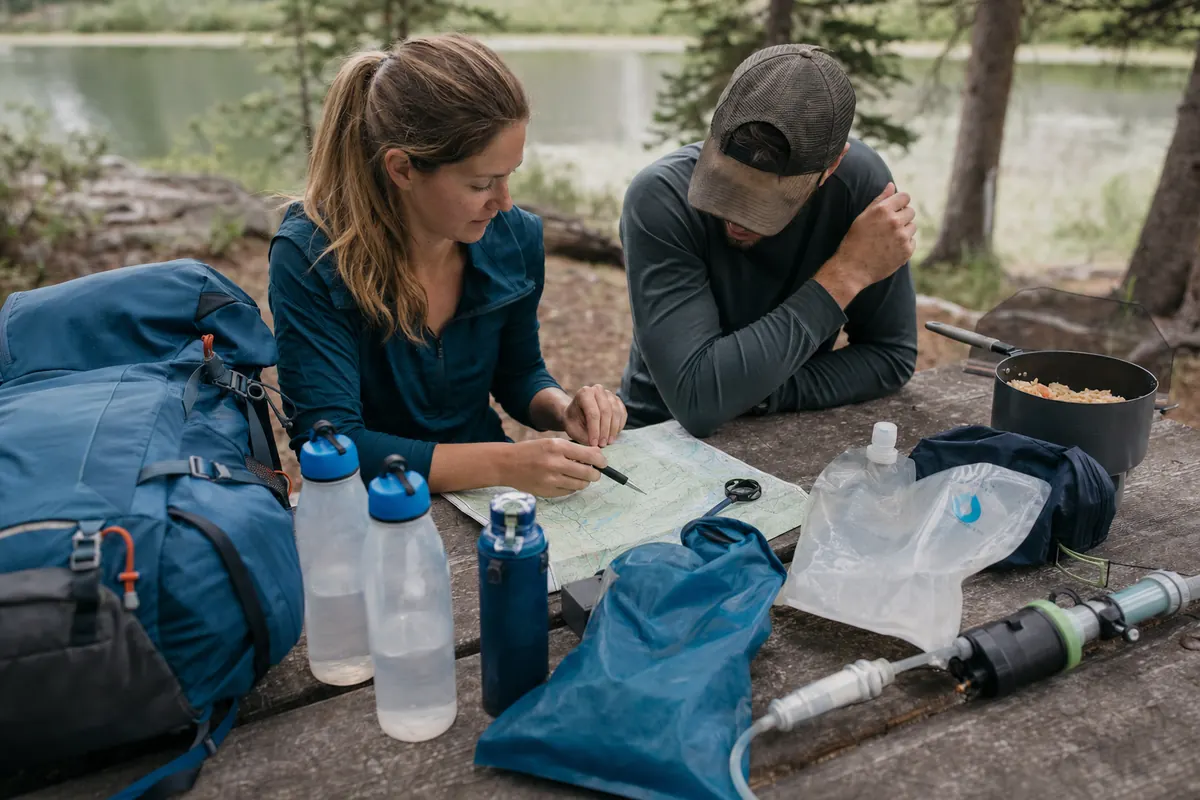
Include meal water before choosing the menu. A dry camp and dehydrated dinner can shift a large amount of water into the final carry.
Keep a clean and untreated boundary. Mark containers or use a stable routine so the group does not contaminate treated water while several people fill bottles.
If the group cannot carry the required amount with stable gait, move camp, change the route, choose another season, or use a source with credible current support. Do not plan to drink less than needed because the water is heavy.
Water is a route gate. When source, capacity, treatment, and backup do not close the overnight gap, the route is not ready.
How should the overnight load match the route?
A familiar trail feels different under shelter, sleep equipment, food, fuel, and camp water. Test the real load after the route and rules determine what must be carried.
Do not start with a target pack weight and remove systems until the number looks acceptable. A route-based packing system covers the night, water, weather, navigation, light, repair, food, and storage first.
Shelter and sleep
Protect the expected ground, temperature, weather, and people.
Water
Cover the longest dry interval with treatment and backup.
Food and fuel
Work after the planned arrival with required storage.
Clothing
Separate movement, camp, weather, and dry sleep jobs.
Emergency
Navigation, light, first aid, repair, communication, and delay reserve stay usable.
Shared gear
Every item and part has a named carrier.
Fit the loaded backpack after walking. The backpack fit sequence should remove shoulder numbness, hip slipping, backward pull, and balance change.
Shared equipment reduces duplicate weight only when it remains available. Consider what happens if people walk apart, one person exits, or a shelter part is carried in another pack.
When the complete load exceeds the group's tested ability, reduce route distance and climbing before removing critical overnight functions. Trip one does not need to prove the maximum that can be carried.
Route and load must agree. A shorter plan with a complete system teaches more than ambitious mileage carried with compensation.
Which problems trigger a turnaround?
Agree on observable triggers before excitement, fatigue, or sunk effort changes the conversation. A decision made at home is easier to follow than one invented after the margin is gone.
Time is the first trigger. If the group reaches the named point after the deadline, use the shorter camp or exit even when everyone still feels strong.
Location is another.
Stop moving when the group cannot confirm position. Continuing on a plausible path can turn one uncertain junction into a larger search problem.
| Trigger | Immediate action | Plan change |
|---|---|---|
| Late at decision point | Stop and compare remaining light with exit | Use nearer legal camp or walk out |
| Location not confirmed | Halt movement and orient | Backtrack only when the known route is clear |
| Last water unavailable | Recount safe water and distance | Exit or use the planned dry alternative |
| Pain changes gait | Treat and reassess without load | Shorten or exit before compensation grows |
| Shelter or sleep system fails | Use practiced repair or backup | Leave while weather and light permit |
| Weather removes margin | Move from exposure and reassess | Cancel the exposed stage or exit |
| Group cannot stay together | Stop and regroup | Use the least demanding safe option |
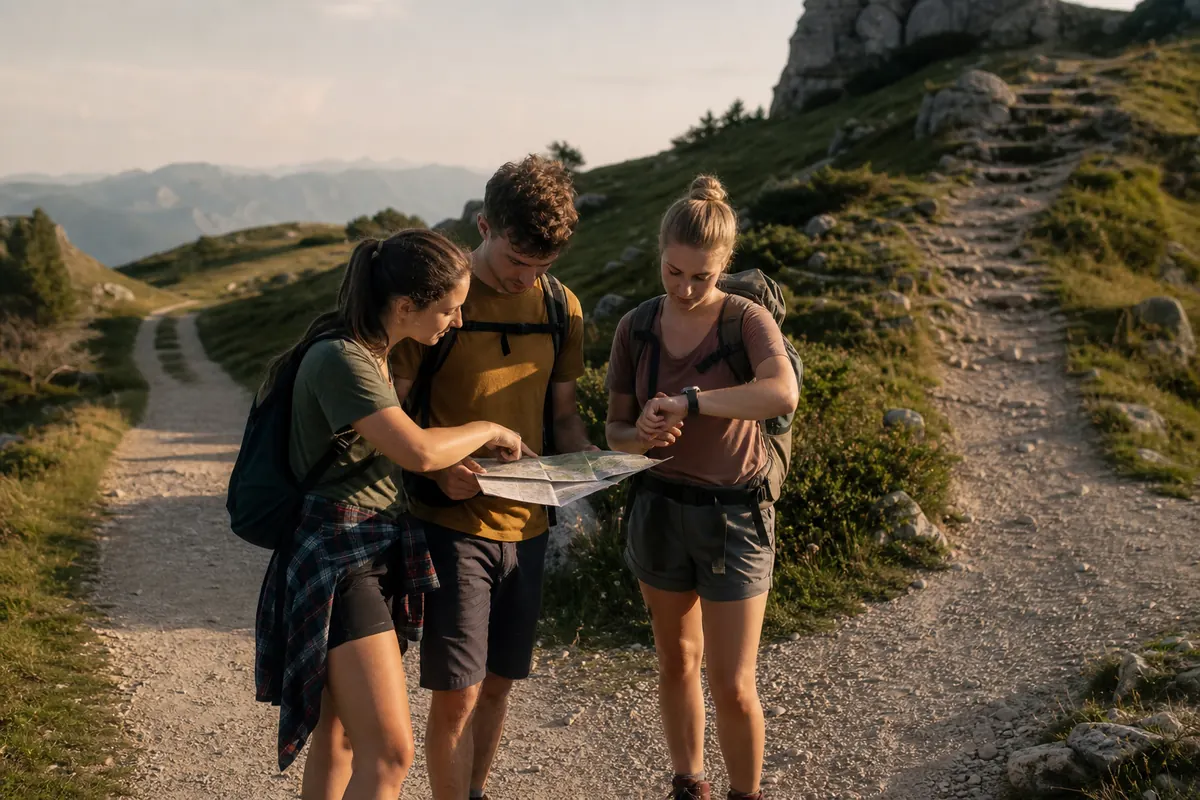
Water and shelter failures can combine. The backpacking mistake chain often begins before a late arrival removes repair time.
Pain that changes normal walking is a route problem, not a private discomfort. The walk-out usually becomes slower as compensation grows.
Do not wait for a dramatic emergency. A turnaround works best when the group still has light, warmth, food, water, attention, and a known route.
Use plain language during the decision.
State which assumption failed, what reserve remains, and which prepared option now applies. This keeps the group from arguing about effort already spent or waiting for a stronger person to make the choice alone.
Precommit to the exit. The original itinerary stops being useful as soon as its assumptions no longer hold.
How do transport and a trusted contact close the plan?
Plan the trip through the return home. Confirm where the vehicle can remain, when gates close, whether the road is suitable, and what happens if the group exits at another point.
For shuttles, pickups, or public transport, record the last usable departure and a backup. Limited service can turn a safe route shortening into an overnight transport problem.
- Write the exact routeInclude trailhead, intended camp, water points, decision points, and exits.
- List the groupRecord names, contact details, and relevant vehicle information.
- Set the scheduleGive start, camp target, return window, and a specific overdue time.
- Name the communication limitExplain where service may disappear and which device is carried.
- Choose a trusted contactUse someone who is not on the trip and will notice a missed check-in.
- Define overdue actionState who the contact should call and what information to provide.
- Close the planSend a completion message as soon as the group returns.
The overdue time should include the conservative walk-out and a modest delay, but it should not be so broad that a real problem goes unnoticed until the next day.
Give the trusted contact a simple escalation order. They should first check the agreed communication channel, then contact the named land manager or emergency service with the route, group, vehicle, campsite, exits, and last known plan.
They should not begin an untrained search.
Tell the contact which changes the group may make without alarm. A planned nearer campsite or early exit can be listed in advance, while a new route outside those options should trigger a message whenever communication permits.
Share a map or route file that another person can understand without access to your phone account. Include permit or vehicle details only as needed for a useful response.
Satellite communication can improve coverage but still depends on battery, sky view, subscription, correct contacts, and practiced use. It supports the plan rather than replacing it.
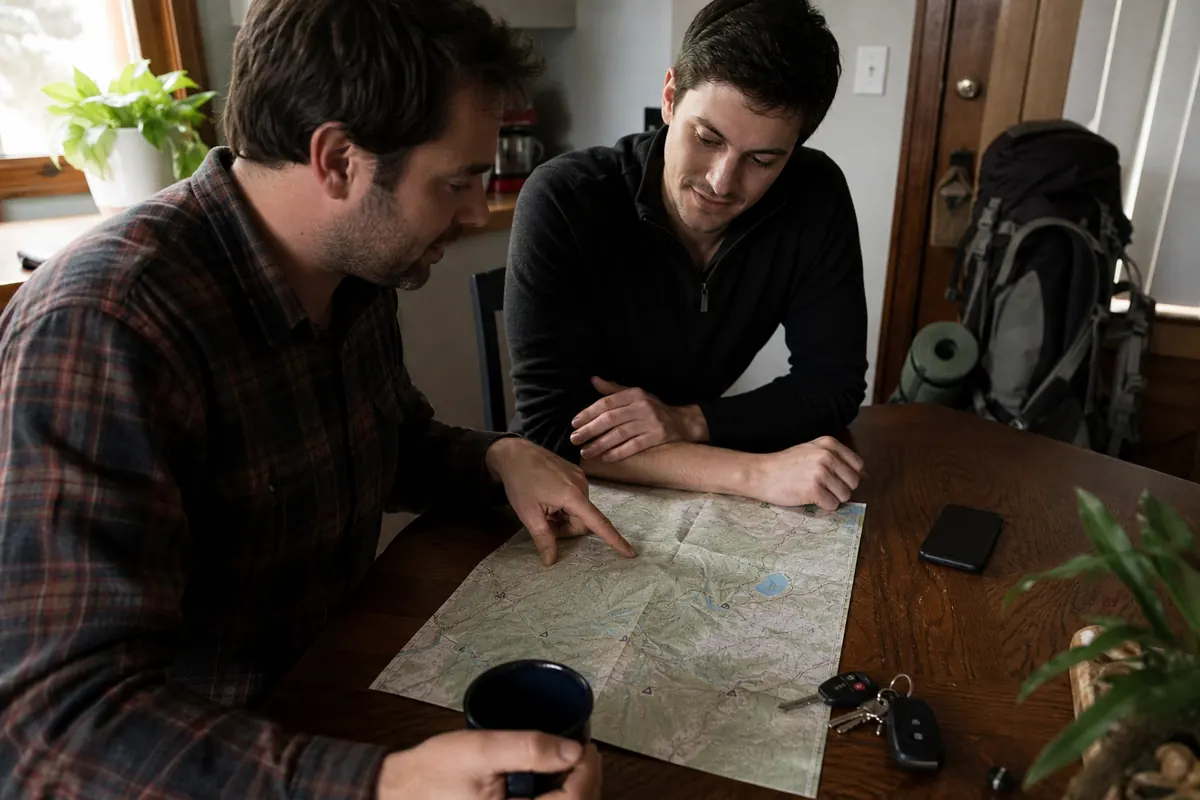
Test the check-in before leaving. A message preset, satellite contact, or group thread that has never been used can fail because of a wrong number, expired plan, hidden permission, or unfamiliar interface.
Someone outside should know where the group is supposed to be and when a missed return becomes an action.
How is readiness rehearsed and reviewed?
Carry the complete load on terrain that safely resembles the route. Use the expected water weight and practice the pace that leaves attention for camp.
At the end of the walk, start the camp sequence without reorganizing equipment at home. Confirm site, pitch shelter, add a dry or warm layer, treat water, inspect feet, cook, store food, and stage morning items.
- Loaded pace remains steady through the planned duration.
- Water, food, rain protection, map, and foot care are reachable.
- Shelter goes up with every required part in low light.
- The pad, insulation, and sleep clothing stay dry and usable.
- Water treatment and backup both work with the carried containers.
- Dinner uses the measured water, fuel, pot, and cleanup method.
- All scented items and trash fit the required storage system.
- Headlamp and repair items can be found without emptying the pack.
- The system packs again the next morning.
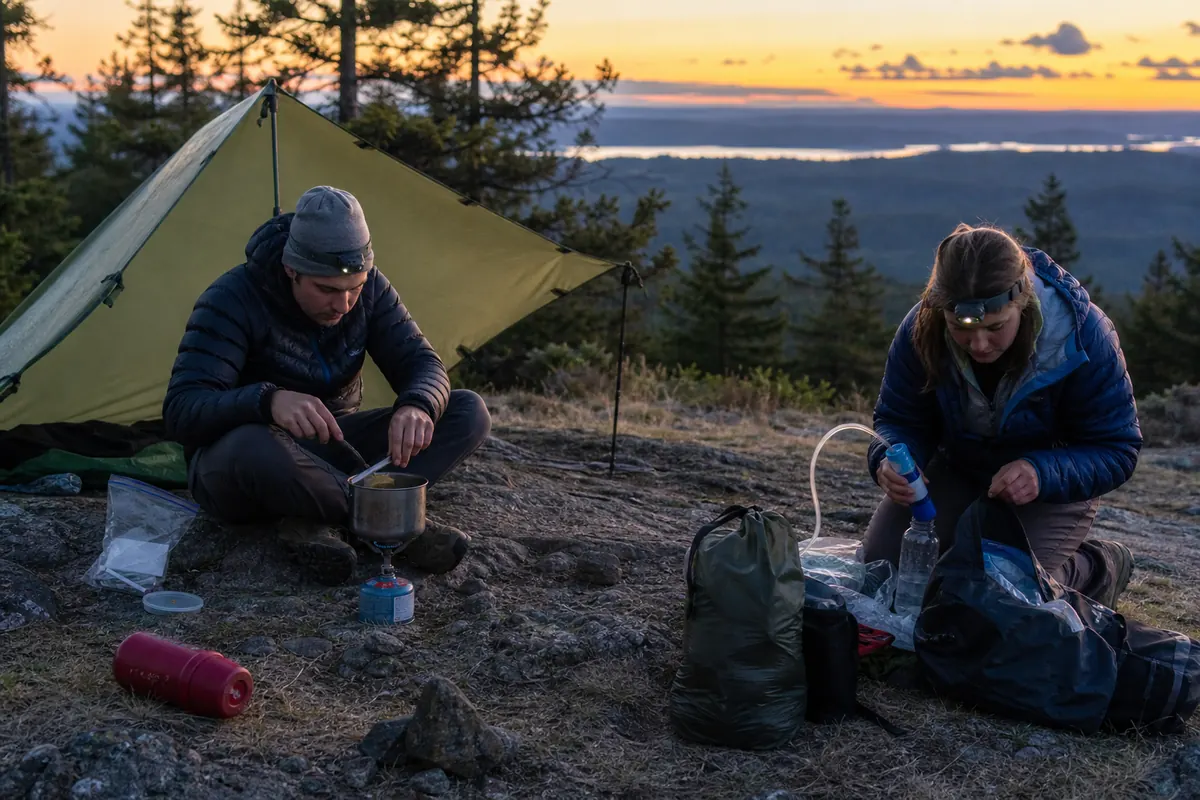
Sleep outside near home when possible. Ground cold, condensation, unfamiliar noise, damp socks, appetite, and morning stiffness reveal limits a daylight gear setup cannot.
Record actual times. The route schedule should use the observed loaded pace and camp setup, not the faster estimate made before the full system was tested.
Change one system at a time. If shelter, menu, pack layout, footwear, and route all change together, the next rehearsal cannot show which repair worked.
Run the rehearsal at the planned time of day. A shelter pitched at noon does not show whether headlamp access, falling temperature, tired hands, and a late appetite will slow the actual evening.
Include the exit decision. Stop the rehearsal at a preselected signal, pack the partially used system, and walk back.
This shows whether a real shortened trip can be organized without scattering wet, hot, or loose equipment.
Rehearse the handoff to camp. Strong walking does not prove that the group can still build a safe night afterward.
What does the second morning reveal about the next trip?
Notice normal movement before lifting the pack. Stiffness that eases is different from sharp pain, swelling, reopened hot spots, nausea, or a changed gait.
Review whether the sleep system preserved warmth, the dry core stayed protected, food and water quantities matched use, and the group could leave camp without searching for equipment.
Compare planned and actual times for trailhead departure, final water, camp arrival, shelter completion, dinner, sleep, and morning exit. A future multi-day trek plan should grow only after camp work stops consuming the margin.
Choose one change and test it before adding another night, colder weather, steeper terrain, remoteness, or more mileage. The first night is evidence, and the best next trip grows from what remained controlled.
Sources
The National Park Service recommends matching route duration and difficulty to the group's fitness and skills, checking current conditions and permits, planning transport, sharing a trip plan, and preparing backup options: NPS Trip Planning Guide.
The NPS Ten Essentials organize navigation, light, sun protection, first aid, repair, fire where appropriate, shelter, extra food, extra water, and clothing as emergency functions: Ten Essentials.
Leave No Trace recommends knowing regulations and hazards, preparing for severe weather and emergencies, using suitable group sizes, and planning food and waste before travel: Leave No Trace planning guidance.
The CDC advises treating backcountry water when safety is uncertain: Preventing Drinking Water-Related Illnesses. Verify again before departure because access, closures, permits, weather, water, fires, food storage, and transport can change.
Step by stepPractical steps
- Choose a one-night route with a verified legal camp, modest effort, current conditions, and an easy exit.
- Build the schedule backward from shelter completion through water, breaks, turnaround, and trailhead start.
- Match the full overnight load and water capacity to the selected route, rules, and group pace.
- Share route, schedule, exits, group, vehicle, and overdue action with a trusted contact.
- Rehearse the loaded walk and complete camp sequence, then use morning-two evidence for the next trip.
AnswersQuestions readers ask
How long should a first backpacking trip be?
Use one overnight with modest distance and climbing, several hours of camp daylight, and a legal campsite plus exit that remain reachable if pace, water, feet, or equipment changes.
How do I choose a first backpacking campsite?
Verify overnight legality, permits, site type, water, food storage, fire and waste rules through a current official source before choosing the route mileage.
What time should I start my first backpacking trip?
Count backward from the time shelter should be secure, including practiced camp setup, water treatment, breaks, slow loaded pace, trailhead tasks, and a buffer.
What should make me turn around on a backpacking trip?
Turn around or shorten for a missed decision deadline, uncertain location, failed water plan, pain that changes gait, unusable shelter or sleep equipment, worsening weather, or a group that cannot stay together.
Should I practice before my first backpacking overnight?
Yes. Carry the real load, then pitch shelter, treat water, make the meal, store scented items, use the sleep system, and repack near an easy exit before the real trip.