
Is Hiking Good Exercise? What Climbs and Descents Train
Understand what hiking trains, what it does not train, and how to make a route fit your body.
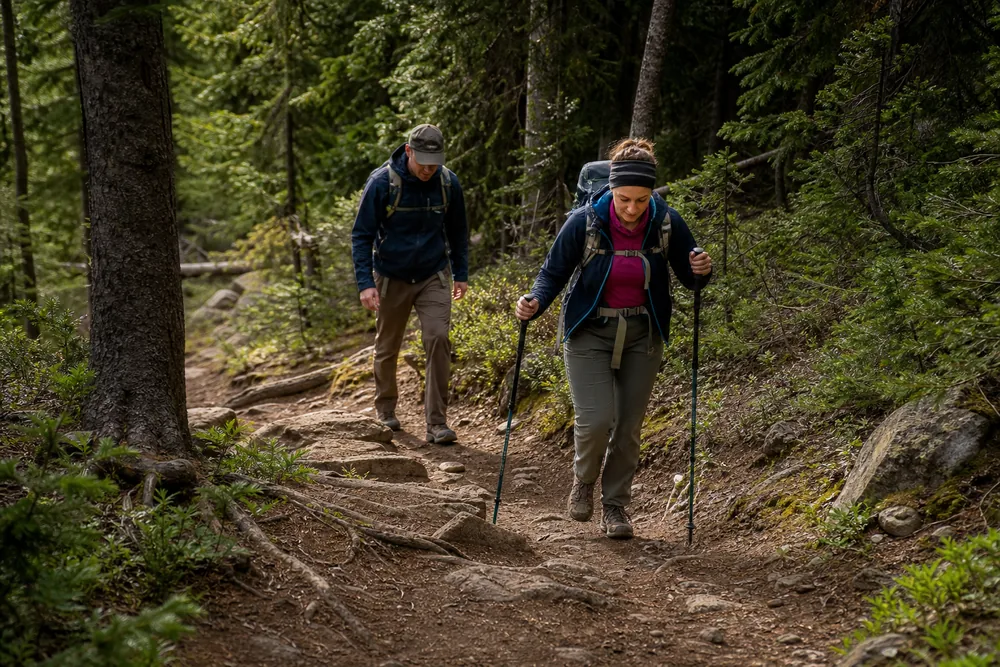
Yes, hiking is good exercise when the route matches your current fitness. It trains steady aerobic effort, leg endurance, balance, and time-on-feet strength, but it is not magic cardio just because the path has trees.
When does hiking count as real exercise?
Hiking is good exercise because it combines walking, climbing, balance, and load carrying in one outdoor session. A normal trail asks your heart, legs, feet, and attention to work together for longer than a short gym set.
The honest answer depends on the route. A flat one-mile path is light movement.
A three-hour hike with repeated climbs can feel like a full endurance workout, especially if you carry water, layers, and food.
Route demand decides how much fitness you get from the day.
- Main aerobic dose
- Minutes spent moving at a steady moderate or vigorous effort
- Moderate check
- You can talk but not sing while moving
- Vigorous check
- You can say only a few words before pausing for breath
- Strength gap
- Hiking does not replace two weekly muscle-strengthening days
- Progress check
- Normal movement, sleep, appetite, and foot comfort after the route
Hiking differs from a treadmill because the ground changes under you. Roots, gravel, steps, mud, and slopes ask for small corrections that build balance without turning the hike into a gym drill.

If you are brand new, hiking for beginners keeps the first route small before fitness numbers become the goal. The first win is learning a pace you can hold.
A trail becomes a workout only after the day hike basics are settled. Water, light, weather, navigation, and a return plan still matter when fitness is the reason for going.
Hiking trains some systems well and skips others
Hiking mainly trains aerobic fitness and repeated leg effort. Your heart works for a long block of time, while your legs repeat thousands of small pushes instead of a few heavy lifts.
Uphill sections load the calves, quads, and glutes. Downhill sections add braking work, which is why many hikers feel sore the next day even when the climb felt fine.
Your trunk also works in a quiet way. It keeps your pack from swinging, helps you step over uneven ground, and keeps your balance when one foot lands higher than the other.
Hiking is also weight-bearing activity because your legs support your body against gravity. The National Institute of Arthritis and Musculoskeletal and Skin Diseases explains that weight-bearing activity helps load bone, but that does not make every hike a complete bone-health or strength program.
Uneven ground adds coordination and balance demands that a smooth treadmill reduces.
That benefit depends on controlled steps. A surface that forces stumbling or panic has exceeded useful balance practice.
Downhill counts because your muscles slow the body with every step.
Heart and lungs
Long steady walking builds aerobic base when you keep moving without long stops.
Leg endurance
Repeated climbing teaches your legs to work after the first easy mile.
Balance
Uneven tread trains small stabilizing muscles in your feet, hips, and trunk.
Load tolerance
A daypack adds useful stress when it fits well and stays light enough to control.
The pack should help the workout, not ruin it. Fix backpack fit before you add weight for training.
How does hiking compare with walking, running, and gym work?
Hiking is not automatically better than other exercise. It is better when you need long effort, climbing practice, uneven ground, and time outside.
It is less precise when you need measured speed, heavy strength, or a controlled recovery day.
Flat walking is easier to repeat during the week.
Running trains faster turnover and higher heart effort, but it does not teach downhill braking or pack comfort. Strength training can build legs and hips faster, but it does not test feet for three hours on dirt.
Match the tool to the goal before you call a hike the whole plan.
| Exercise choice | Best use | Hiking gap it does not cover |
|---|---|---|
| Easy hike | Aerobic base, balance, time on feet | Heavy strength and speed |
| Flat walk | Repeatable weekly movement | Climb and rough footing |
| Run | Higher cardio effort | Pack comfort and descent control |
| Strength session | Legs, hips, calves, trunk | Long trail duration |
| Stairs or hills | Climbing practice | Navigation and uneven ground |
The CDC's weekly target includes muscle-strengthening work on two days because aerobic minutes and strength are different jobs.
Hiking repeats a manageable force thousands of times. A squat, step-up, row, push, hinge, or carry can load muscle more directly and can cover upper-body work that a light daypack barely tests.
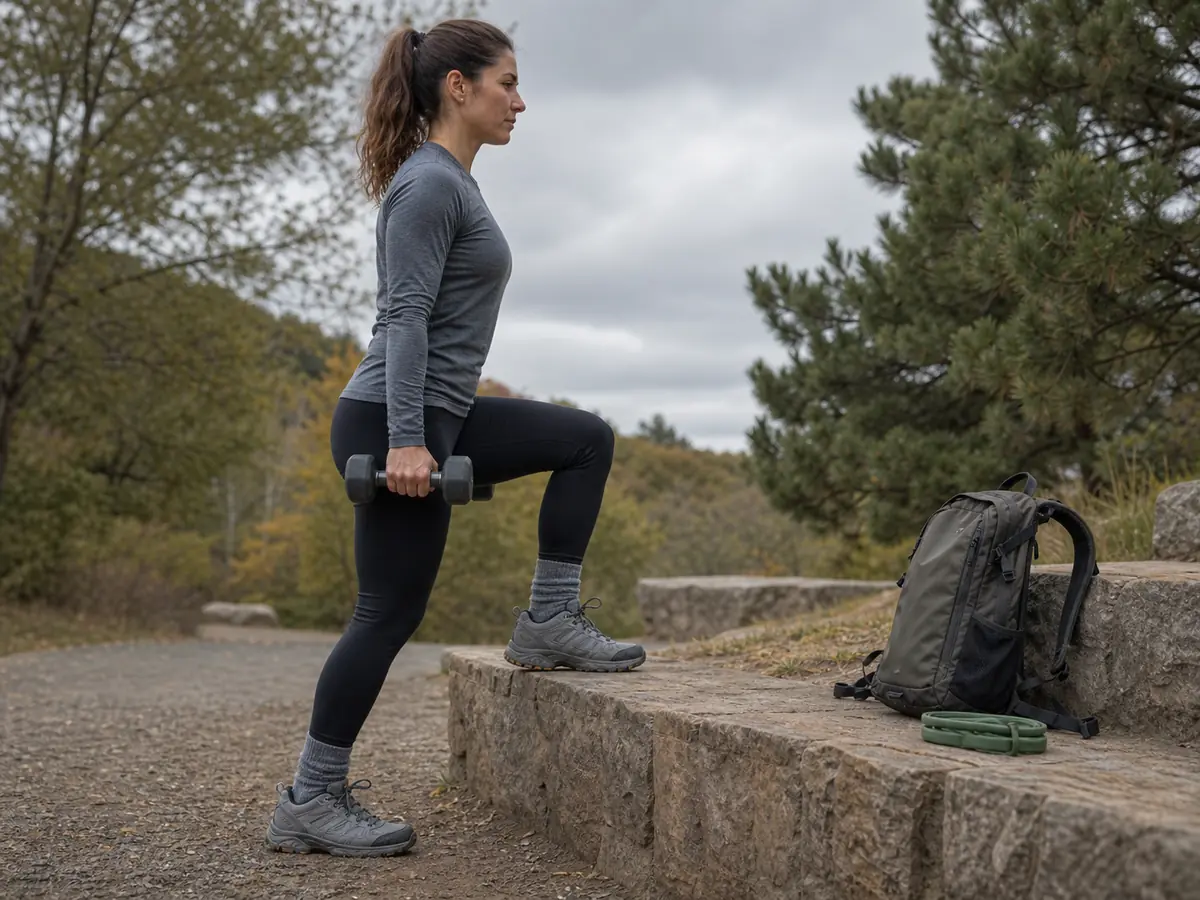
A useful week might pair one longer hike with brisk walks and two short strength sessions. The exact days can move, but hard leg work should not leave the next trail day clumsy.
Once the goal shifts from general health to a specific longer route, structured hill work matters more than weekly mileage.
Use the trail for what the trail does well. Use simple strength, walking, or hill work when the trail goal needs support between weekends.
How much hiking counts as cardio?
For general health, hiking can supply much of the weekly aerobic work when you move often enough at a moderate or vigorous effort. The CDC target for adults is at least 150 minutes of moderate aerobic activity or 75 minutes of vigorous activity each week, or a mix of the two, plus muscle-strengthening work on two days.
Use the talk test to classify the moving parts of the hike.
Moderate effort lets you talk but not sing. Vigorous effort limits you to a few words before you need another breath.
Trail difficulty and aerobic intensity are related, but they are not the same. Loose rock may make a route slow and mentally tiring while breathing stays easy.
A smooth sustained climb may create vigorous aerobic work with little technical difficulty.
For a practical log, separate moving time from long stops.
A 90-minute outing with 15 minutes of stopped time, 60 minutes at a moderate talk-test effort, and 15 easy minutes can be recorded as 60 moderate minutes toward the weekly target. The easy movement still has value, but it should not be relabeled to make the total look larger.
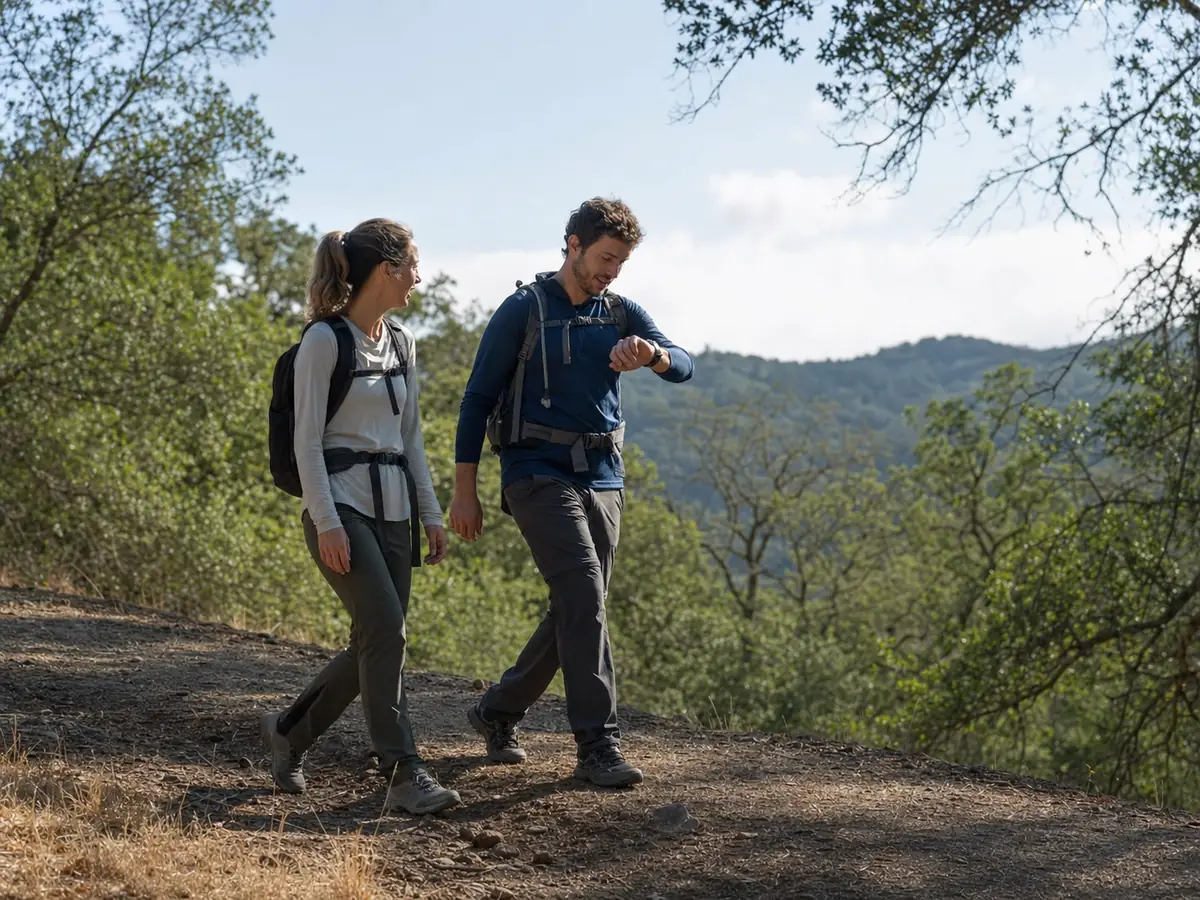
One long hike does not create a consistent routine by itself. Weekday walks, stairs, or short hill sessions can fill the remaining aerobic minutes without making every weekend route harder.
| Goal | Hiking can cover | Add this if needed |
|---|---|---|
| General fitness | Weekly moderate hikes | Brisk walks between hikes |
| Longer day hikes | Hills and longer trail time | A simple day-hike training plan |
| Stronger descents | Gradual downhill practice | Step-downs and controlled squats |
| More speed | Smooth trail intervals | Short fast walking blocks |
| Heavy packs | Light load carries | Strength work and pack progression |
A useful exercise hike should feel sustainable but honest. You should breathe deeper than a casual walk, warm up after the first few minutes, and still keep enough control to place your feet well.
Count controlled minutes instead of chasing exhaustion. If effort makes foot placement sloppy or conversation impossible on an ordinary grade, slow down before the route turns poor form into a fall.
- Start below your egoWalk the first 15 minutes easier than you think you need.
- Check your talk testAim for short sentences on climbs.
- Watch your feetSlow down when effort makes your steps sloppy.
- Use breaks on purposeStop before form falls apart, not after.
- Finish with marginEnd with enough energy to drive, eat, and recover well.
The right effort changes with heat and water.
A route that feels moderate in cool weather can become a hard workout when sun exposure and climb raise your fluid needs. Plan water with a realistic carry estimate before using a hot hike as training.
Do not make every hike a test. Easy hikes build consistency, while harder hikes reveal what still needs work.
Is one hike a week enough to improve fitness?
One weekly hike can improve fitness when it is a real step up from your current routine and you recover well enough to repeat it. It works better as the longest session in an active week than as the only movement you do.
The hike can supply a large share of your aerobic minutes. It still does not cover the CDC recommendation for muscle-strengthening work on two days, and a single hard outing leaves six days with no practice in walking rhythm or recovery.
Spread movement across the week so the trail day does not carry every job. Two or three brisk walks can maintain aerobic frequency, while two short strength sessions can train hips, legs, calves, back, and trunk more directly.
A practical week might use a 30-minute brisk walk on Tuesday, strength work on Wednesday, an easy walk on Friday, and a two-hour hike on Sunday. The exact days can change, but avoid placing hard leg work immediately before the hike if it makes descents clumsy.
Start from what you can repeat for three weeks. If the Sunday hike produces normal walking and manageable soreness the next day, add a little time or climb to one later outing.
When Monday brings limping, joint pain, poor sleep, or fatigue that disrupts ordinary activity, keep the next hike easier. More effort will not fix a weekly dose that your body cannot absorb.
People who already walk most days may improve with one progressively harder hike each week. Someone starting from very little activity may gain more by first making short walks routine, then using the hike as the weekly long session.
Frequency supports the long day. One weekly hike has more value when the rest of the week keeps movement consistent and strength gaps covered.
Calories burned is the wrong way to judge a hike
Calorie burn varies too much for one fixed number to be useful. Body size, pack weight, speed, climb, heat, and surface all change the result.
Use calories as a rough planning signal, not a score. A steep two-hour hike may require more food than a flat two-hour walk because climbing raises effort and slows your pace.
Device estimates can differ because they infer energy use from incomplete inputs. A larger number does not prove that the workout was better, and a smaller number does not erase steady aerobic work.
Hiking can support weight management when it becomes regular activity, but body-weight change also depends on eating patterns and total activity over time. One hard weekend hike cannot guarantee weight loss or compensate for an unsustainable routine.
Food supports effort better than guessing after you feel empty.
For most day hikes, bring quick carbohydrates, a salty snack, and enough water to match the route. The hiking packing list covers the food, light, weather, and foot-care basics that keep exercise from becoming a problem.
How can you make hiking harder without overdoing it?
Change one variable at a time. Add distance, climb, pack weight, or pace, but do not raise all four on the same day.
The safest progression is simple. First hike more often, then choose slightly longer routes, then add climbing, then carry a little more weight only when your feet and knees tolerate the earlier steps.
Use the last route you finished with normal coordination and next-day movement as the baseline. If that hike was four miles with 600 feet of gain on smooth dirt, the next test could add a mile on similar ground or add one shorter climb while keeping the distance.
A six-mile route with twice the gain, rough footing, and a heavier pack changes too many stresses to produce useful feedback.
Changing several stresses together is one of the common hiking mistakes that makes the cause of soreness or fatigue hard to identify. When the response is poor, repeat or reduce the changed variable instead of adding a different challenge.
One change at a time keeps soreness useful instead of confusing.
- Add no more than one new stress per hike.
- Keep the first hard climb shorter than your pride wants.
- Use trekking poles only if they improve control, not as a license to overreach.
- Stop adding pack weight when shoulders, hips, or knees complain.
- Choose smoother footing for faster walking.
- Choose rougher footing for balance practice, not speed.
If your goal is to hike faster, the route needs a different plan than simple fitness building. The hike faster guide focuses on stride, pacing, breaks, and smooth movement.
Recovery reveals what the workout actually cost
The useful test is not how heroic the hike felt during the steepest mile. The useful test is how your feet, knees, sleep, appetite, and normal walking feel over the next 24 to 48 hours.
Mild muscle soreness can be normal after a route with more climb or descent. Joint pain, limping, repeated blisters, or fatigue that wrecks the next day means the hike exceeded the training dose.
Recovery is evidence. If the same easy route feels better next week, hiking is building fitness.
If every outing creates a new problem, the route progression is too aggressive.
Good signal
You finish tired but coordinated and recover by the next day.
Too much climb
Downstairs hurt, knees feel sharp, or descents get sloppy.
Too much distance
Feet ache for days or blisters return in the same place.
Too much heat
Sleep and appetite feel off after a route that should be easy.
Wrong pack load
Shoulders or hips hurt more than legs and lungs.
Keep one simple log line after fitness hikes.
Record route, time, climb, pack weight, weather, and how you felt the next morning. That makes progression safer than guessing from memory.
How should you rate a hiking route for fitness?
Do not label every hike as easy, moderate, or hard by mood alone. Use a few concrete signals.
Check total time, sustained climb, steep descent, rough footing, heat, and how much pack weight you carried.
The trail choice decision comes down to comparing those demands against a route the group already knows. The route label matters less than the specific variable that will limit movement.
A route can be easy for your lungs and still hard on your knees if the descent is long. Another route can feel easy under trees and then become a real workout when the same distance crosses hot open ground.
Difficulty is made of parts. Naming the part that made the hike hard tells you what to train next.
| Hard part | Fitness meaning | Better next step |
|---|---|---|
| Long flat time | Aerobic base and foot tolerance | Add walking time gradually |
| Sustained climb | Breathing and climbing legs | Use short hill repeats |
| Long descent | Quad braking and knee control | Practice step-downs and shorter strides |
| Rough footing | Balance and attention | Slow down on uneven safe ground |
| Pack weight | Trunk and shoulder tolerance | Fix fit before adding load |
| Heat | Cooling and hydration demand | Shorten route and lower effort |
This scale also keeps hiking from becoming a vague “good workout” label. You can choose the route that trains the thing you need instead of hoping any trail will do.
It also helps you avoid false comparison.
A short steep hike may be harder than a longer flat route, but it trains a different limiter. One may leave lungs tired, while the other leaves feet and hips tired.
Use that difference when planning the next week. If the last hike was hard because of heat, do not answer with a heavier pack.
If it was hard because of descent, do not answer only with more uphill cardio.
This is why a hiking workout plan should name the limiter after every route. The next hike can then train that limiter on purpose instead of piling on a harder version of the wrong stress.
When should a hike stay easy?
Skip the workout version when the trail conditions raise the cost of a mistake. Heat, smoke, ice, lightning risk, high water, poor sleep, and a new injury all change the decision.
A heat hiking plan matters when temperature and sun exposure raise the effort of an otherwise familiar route. Snow, ice, cold, and short daylight move the day to winter footing choices and a tighter return window.
You can still move outside on an easier path. The point is to keep exercise from borrowing safety margin you may need later in the day.
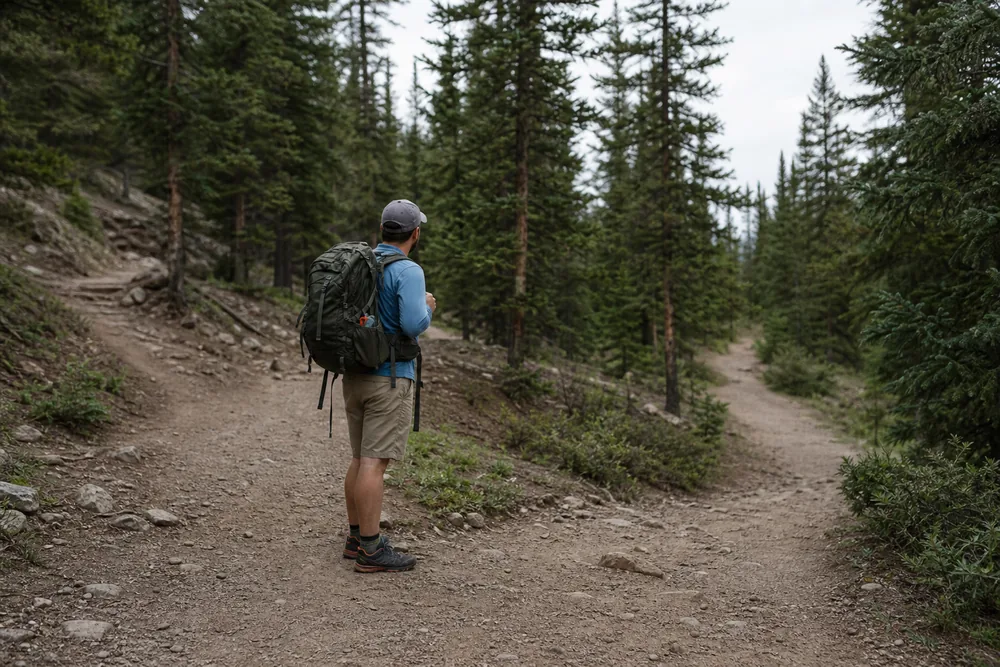
A shorter route still counts when it protects recovery and judgment.
When the question shifts from fitness to risk, hiking safety tips should control the route choice. Exercise is only useful if you come back able to train again.
Treat that as a hard line, not a motivational slogan. The workout is a success only when the return trip, drive home, and next-day recovery still look normal.
Sources
The CDC gives the adult weekly target of 150 minutes of moderate aerobic activity or 75 minutes of vigorous activity plus two muscle-strengthening days: CDC adult activity guidance. Its intensity guide explains the talk test for moderate and vigorous effort: CDC intensity guidance.
The National Institute on Aging separates aerobic, muscle-strengthening, and balance work: NIA exercise types.
NIAMS explains how weight-bearing activity loads bone: NIAMS bone health lesson. The National Park Service summarizes hiking's physical activity, balance, and outdoor benefits: NPS benefits of hiking.
Step by stepPractical steps
- Choose a route with exits that matches the least experienced hiker and current conditions.
- Leave the route, vehicle, finish time, and overdue action with a trusted contact.
- Pack and test navigation, light, weather, first aid, food, water, shelter, and communication systems.
- Set time, weather, water, body, and route triggers before starting.
- Check pace, feet, water, weather, map position, and group condition at fixed trail points.
- If trouble occurs, stop, protect the group, locate yourself, communicate facts, and move only on a known safe exit or away from an immediate threat.
AnswersQuestions readers ask
Is hiking better exercise than walking?
Hiking is usually harder than flat walking when the trail has climb, uneven footing, or pack weight. Flat easy trails can feel similar to a normal walk.
Can hiking help with weight loss?
It can support weight loss when it is part of a consistent routine and matched with sensible food habits. One hard hike cannot replace regular movement.
How often should I hike for fitness?
Weekly hikes help, but most people improve faster by adding walks, stairs, or strength work between trail days.
Does hiking build muscle?
Hiking builds leg endurance and some strength, especially uphill and downhill. It does not replace full strength training for the whole body.
Should beginners use hiking as cardio?
Yes, if the route is short, marked, and matched to current fitness. Keep enough energy to finish safely.
Does hiking count toward the 150 minutes of weekly exercise?
Yes. Count the moving minutes that reach a moderate talk-test effort toward the 150-minute aerobic target.
Keep easy movement and long stopped time separate instead of crediting the full outing automatically.
Is downhill hiking exercise even when breathing feels easier?
Yes.
Descents train muscular braking, balance, and foot control even when the aerobic effort drops. They can also create more next-day leg soreness than the climb.