
How to Hike at Altitude on a Day Hike
Thin air changes your pace, your water needs, and your margin for error long before it changes your legs, and a single day gives you no time to adapt.
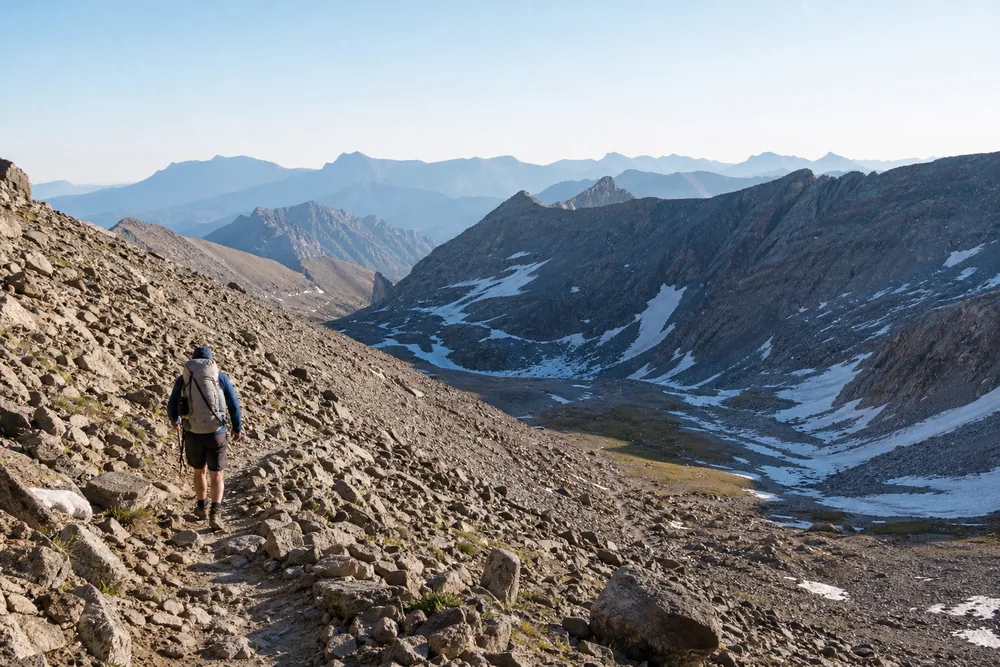
Manage a high-elevation day hike through ascent rate, hydration, honest symptom reading, and a turnaround set before you climb.
Thin air does not care how fit you are. A trail you would walk without thinking near sea level turns into a slow grind at 11,000 feet, and the change shows up in your breathing long before your legs complain.
The awkward part of a day hike is timing. Real adaptation to altitude takes nights, not hours, so a single push from the trailhead to a high pass gives your body almost no chance to adjust while you are still on it.
What you can actually control is how early you start, how fast you gain elevation, how much water you take in, and how honestly you read the first symptoms.
- Sleep high the night beforeEven one night at the trailhead elevation beats driving up from sea level at four in the morning.
- Start before first lightAfternoon storms build fast over high terrain and an early finish removes most of that risk.
- Cap your climbing rateAbove 8,000 feet, hold roughly 500 to 800 vertical feet per hour and slow down further if you cannot talk.
- Drink on a clock, not on thirstThirst lags badly in dry, cold, thin air, so set a schedule and stick to it.
- Do a symptom check at every restAsk about headache, nausea, and dizziness out loud, for yourself and for everyone with you.
- Descend at the first symptom that will not settleLosing 1,000 to 2,000 feet is the only fix that works within an hour.
Everything below explains why those six lines are the shape of the day, and where each of them breaks.
Why does thin air hit a hike you could otherwise walk?
The oxygen fraction of the air stays at roughly 20.9 percent all the way up. What falls is barometric pressure, and pressure is what pushes oxygen across the lung wall into your blood.
At 10,000 feet the pressure sits near 69 percent of its sea-level value. Each breath moves the same volume of air and delivers close to a third less usable oxygen.
Your body reacts within minutes. Breathing rate climbs, heart rate at any given pace climbs with it, and a blood oxygen reading that sits at 97 or 98 at home commonly drops into the high or even low 80s on an exposed pass.
That gap is why a familiar pace stops working. The engine is unchanged and the fuel line is narrower, so the same speed costs more.
- Oxygen fraction of the air
- About 20.9 percent at every elevation
- Air pressure at 10,000 feet
- Roughly 69 percent of sea level
- Usable oxygen per breath there
- Close to one third less
- Typical blood oxygen at 10,000 feet
- High 80s to low 90s
- Elevation where sickness becomes common
- Above 8,000 feet
- Time for meaningful adaptation
- Nights, not hours
Fitness protects you less than most hikers assume. Well-trained walkers develop altitude sickness at broadly the same rate as untrained ones, and occasionally sooner, because a strong aerobic base lets them climb faster than their body can follow.
That is the trap. Strong legs let you buy elevation quickly, and elevation bought quickly is exactly what triggers symptoms.
Speed of ascent matters more than strength.
An aerobic base block still helps, because a lower heart rate at any pace leaves you more margin when the air thins. It changes how hard the climb feels, not how your blood carries oxygen.
Adaptation itself runs on a schedule you cannot compress into one morning.
- Within minutes, breathing rate and heart rate rise to move more air - Within hours, your kidneys begin flushing bicarbonate so your blood chemistry can tolerate the faster breathing - Over two to four days, plasma volume shifts and the ventilation response settles - Over one to three weeks, red cell mass rises enough to change oxygen carrying
A day hike touches only the first two items on that list. Everything past the first day is unavailable to you, which is why the plan has to be built around limiting exposure rather than surviving it.
What altitude actually counts as high for a day hiker?
The number that matters is not the summit on the map. It is the elevation you reach, how long you stay there, and how far below it you slept.
Most people notice nothing below 5,000 feet. Between 5,000 and 8,000 feet the effect is real but usually mild, showing up as a slightly higher breathing rate and a pace you would call off-day rather than sick.
Above 8,000 feet the picture changes. Acute mountain sickness becomes common enough that roughly a quarter of unacclimatized visitors report symptoms, and above 11,000 feet that share climbs sharply.
| Elevation band | What a day hiker usually feels | What to change |
|---|---|---|
| Below 5,000 ft | Nothing attributable to altitude | Nothing |
| 5,000 to 8,000 ft | Faster breathing, mildly reduced pace | Add water, drop pace slightly |
| 8,000 to 11,000 ft | Headache risk, poor appetite, obvious slowdown | Cap climb rate, plan symptom checks |
| 11,000 to 14,000 ft | Frequent headache, nausea, real performance loss | Sleep high beforehand, set a turnaround time |
| Above 14,000 ft | Rapid onset for most unacclimatized hikers | Treat as a multi-day objective, not a day trip |
Your sleeping elevation the night before does more work than any other single number. A hiker who slept at 9,000 feet and climbs to 12,000 is asking their body for 3,000 feet of adjustment, while one who slept at sea level and drove up is asking for 12,000.
That is why the drive matters as much as the walk on western United States trailheads. Many popular alpine parking areas already sit above 9,000 feet, and hikers arrive there having gained more elevation in a car in three hours than they will gain on foot all day.
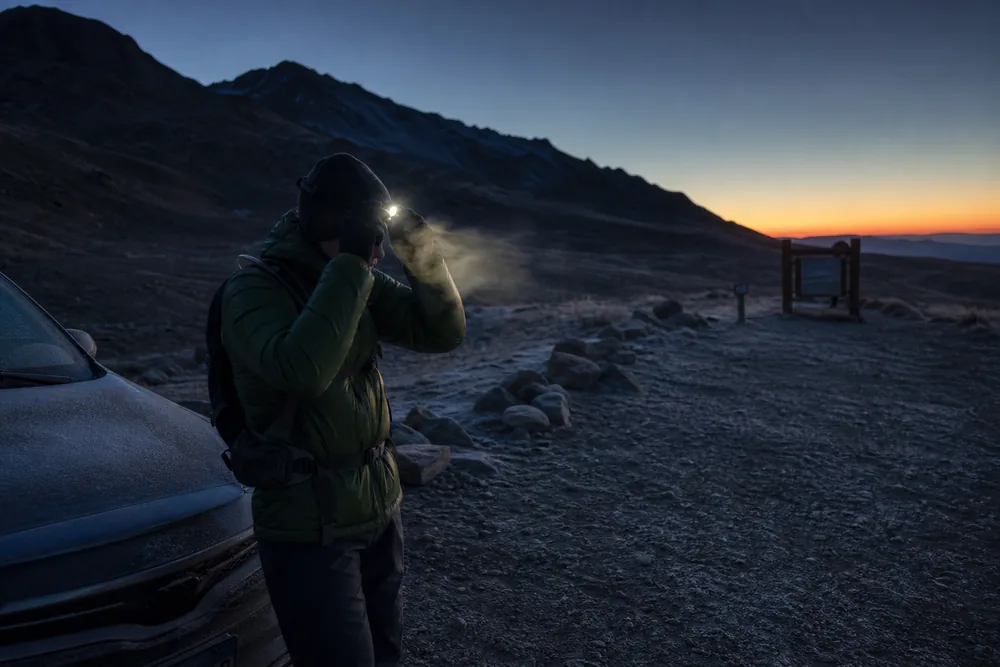
Age and sex barely predict who struggles. The strongest predictor is what happened to you last time you went high, so a hiker with a history of headaches at 11,000 feet should plan the day around that history rather than around anyone else's experience.
Chronic conditions shift the thresholds. Anyone with reduced lung capacity, poorly controlled heart disease, sickle cell trait, or a recent respiratory infection reaches trouble at lower elevations than the bands below suggest, and that conversation belongs with a clinician rather than a trailhead sign.
Time spent high matters too. A summit touched for ten minutes is a different physiological load from a ridge traverse that keeps you above 12,000 feet for four hours, even when the high point on both is identical.
When you pick the route, read the profile for the shape of the time above 10,000 feet rather than for the summit figure alone. That reading belongs in the same pass as trail gradient choices and turnaround planning, before the day is locked in.
How fast can you safely gain elevation in one push?
Multi-day guidance limits sleeping elevation gain to roughly 1,000 to 1,600 feet per night above 8,000 feet. A day hike is a different problem, because you return to a low sleeping elevation the same evening.
That difference gives you more headroom than a trekker has, and less patience from your body while you are up there. You can exceed the sleeping rule on the climb, but the symptoms arrive faster the further past it you go.
A workable ceiling on high ground is 500 to 800 vertical feet per hour, which is well below what many hikers move at lower elevations. The talk test is the field version of that number, and it is more honest than a watch.
If you cannot hold a full sentence without breaking it for a breath, you are above your sustainable rate for that elevation. That is a different signal from sustainable walking pace at low elevation, where the same breathlessness clears within a minute of easing off.
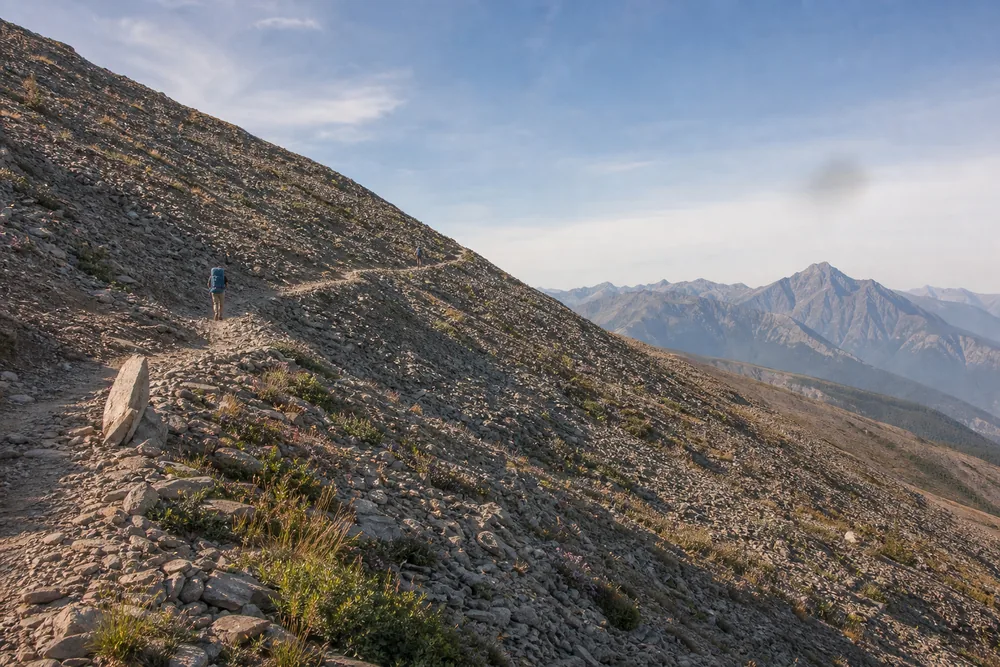
Rest steps and pressure breathing both buy real capacity. A rest step means locking the trailing knee for a fraction of a second on every stride so the skeleton carries the weight instead of the muscle, which lowers oxygen demand at the same speed.
Pressure breathing is the other half. Exhaling forcefully through pursed lips raises the pressure inside your airways slightly, which improves gas exchange and gives you a rhythm to hold when the climb steepens.
Trailhead already above 9,000 ft
Walk the first thirty minutes deliberately slower than feels natural. Most symptom onset traces back to the first hour, not the last.
Long approach, short summit push
Bank the easy miles at a low heart rate and save your margin for the section above the treeline where recovery gets slow.
Steep continuous climb
Switch to rest stepping early rather than after your legs burn. It costs nothing when you do not need it.
Carrying more than usual
Extra weight pushes oxygen demand up at the same pace, so it has to be paid for with a slower rate rather than more effort.
Weight is the variable most hikers forget to adjust. A heavier daypack load costs measurably more oxygen per step, and at 12,000 feet that extra demand comes out of a supply that is already short.
Group behaviour undoes all of this quickly. The fastest person sets the pace by default, and at altitude that pace is what pushes the slowest hiker into symptoms.
Deliberate group pace setting matters more above the treeline than anywhere else on a trail.
A predawn start is the other structural lever. Getting the high ground behind you before midday keeps you clear of the convective storms that build over alpine terrain most summer afternoons, and predawn start planning is worth doing the night before rather than at the trailhead.
Which symptoms mean altitude sickness and which mean hard work?
Headache is the one that decides. Acute mountain sickness is diagnosed around a headache that appears after arriving at elevation, plus at least one of nausea, dizziness, fatigue beyond what the effort explains, or trouble sleeping.
Exertion symptoms and altitude symptoms separate cleanly on a stopwatch. Effort-driven breathlessness, a pounding pulse, and burning legs all fade within a few minutes of standing still.
Altitude symptoms do not. A headache that arrives at 12,000 feet sits there through a fifteen-minute rest, a snack, and half a litre of water, and it often gets worse if you keep climbing.
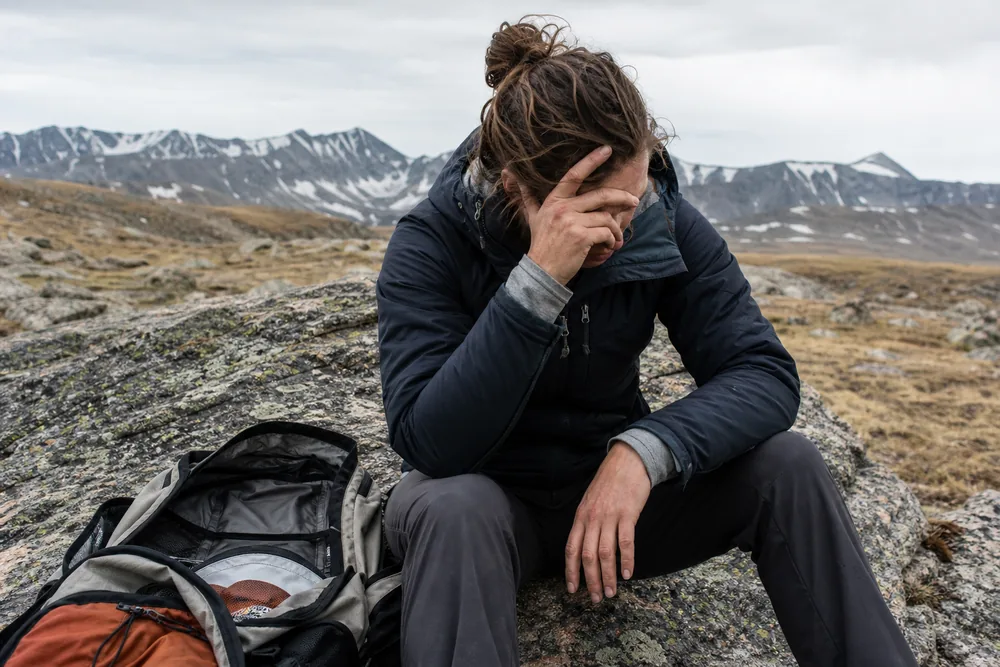
Appetite is an underrated early clue. Losing interest in food you normally want at a rest stop often precedes the headache by an hour, and it is easy to write off as a warm day or a boring snack.
- Headache that persists through rest, water, and food - Nausea or a genuine dislike of eating anything - Dizziness or unsteadiness when you stand up from a rest - Fatigue that does not match the distance you have covered - Breathlessness that stays high after several minutes of standing still
Two things above 12,000 feet are not on that scale at all. High altitude cerebral edema shows as confusion, a staggering gait, or an inability to walk a straight line, and high altitude pulmonary edema shows as breathlessness at rest, a wet cough, and a sense of drowning.
Cold complicates the reading. Above the treeline a hiker who is slowing down, growing quiet, and fumbling with zips may be showing hypothermia signs rather than altitude symptoms, and the two often arrive together on a windy pass.
Being alone removes your best diagnostic tool. Confusion is far easier for a partner to spot than for the affected person to notice, which is one of the sharpest reasons the margins in hiking alone shrink at elevation.
Breathing rate and water loss both run higher than you notice
You lose water at altitude through your lungs faster than at any elevation you are used to. The air is dry, it is cold, and you are moving far more of it per minute than you would on the same climb lower down.
That respiratory loss can reach a litre or more across a long high day before you count a drop of sweat. Cold air holds almost no moisture, so every breath you exhale is fully saturated water leaving your body.
Altitude also triggers a diuretic response in the first days at elevation. Your kidneys flush bicarbonate and take fluid with it, which is a healthy sign of adaptation and a nuisance for your water supply.
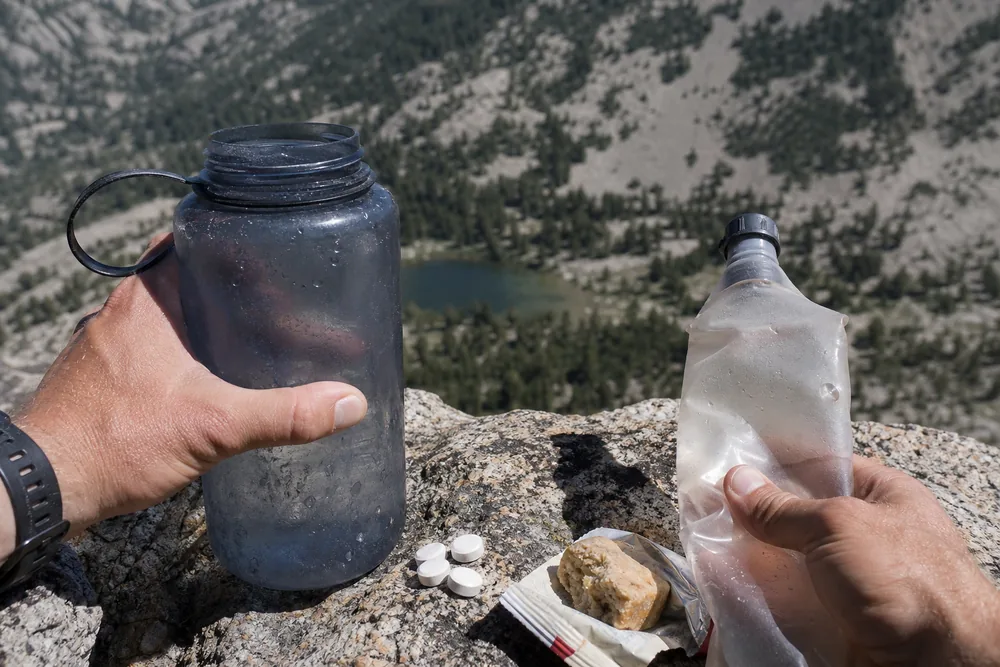
Thirst is a poor gauge up there. Cold suppresses it, the dry air hides sweat by evaporating it instantly, and most hikers finish a high day meaningfully short of what they lost.
Plan the day on volume and interval rather than on thirst. Roughly half a litre per hour of climbing is a reasonable starting figure on high ground, and the water carry math should be worked out from route length and refill points before you leave.
Electrolytes deserve attention once the total gets large. Drinking three or four litres of plain water across a high day dilutes sodium at exactly the point when a headache is hardest to interpret, so salt from food or tablets keeps the picture clean.
- Set a drinking interval, roughly every twenty minutes, instead of waiting for thirst - Add sodium once you are past about two litres for the day - Keep one bottle inside the pack in cold conditions so it does not freeze - Track urine colour at rest stops, since it is the only feedback you get on the trail
Eating gets harder at the same time water needs rise. Appetite drops above 10,000 feet for most people, which means the snacks that work at 6,000 feet often go untouched, and trail food timing has to shift toward small, frequent, easy-to-swallow portions.
Carbohydrates are the practical choice up high. They need less oxygen per calorie released than fat does, and they are the food most people can still stomach when altitude has flattened their appetite.
Turning around is the treatment, and it works within an hour
Descent is the only reliable fix for altitude sickness. Rest does not resolve it, water does not resolve it, and painkillers mask the symptom that tells you what is happening.
Losing 1,000 to 2,000 feet usually produces clear improvement within an hour. That is the whole intervention, and it is available to a day hiker in a way it is not available to a trekker committed to a high camp.
Set the turnaround before you start climbing. A time, an elevation, and a symptom threshold agreed at the trailhead survives the summit pull better than any judgement made at 13,000 feet with a headache.
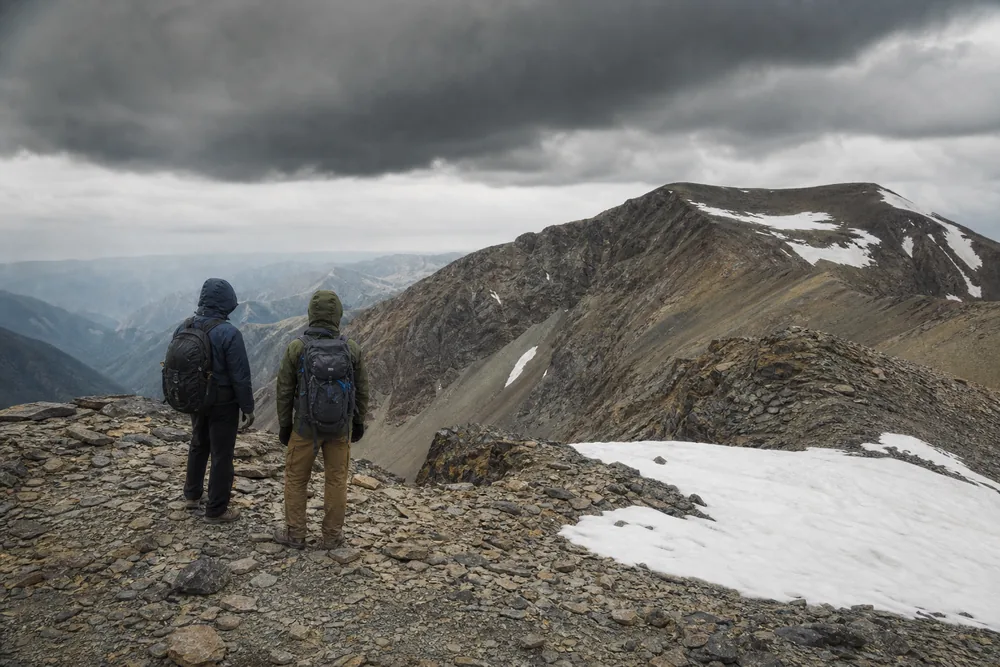
Descending also fixes the problem faster than most people expect. Symptoms that took three hours of climbing to build often ease inside forty minutes of losing height, which makes the decision cheaper than it feels at the moment you make it.
Distance is what turns that cheap decision expensive. A ridge traverse with the only descent route two hours ahead removes the option, so the time to check your escape lines is when you plan the route rather than when the headache arrives.
Summit fever is stronger at altitude than anywhere else, partly because judgement itself degrades with low blood oxygen. The person best placed to make the call is the one furthest from the symptoms.
- Anyone has a headache that has not cleared after fifteen minutes of rest and food
- Someone is stumbling, slurring, or asking the same question twice
- Anyone is breathless while sitting still or coughing up frothy sputum
- Your agreed turnaround time has passed regardless of how close the summit looks
- Cumulus is building vertically over the ridge before noon
- The group is spread so far that nobody can see the slowest hiker
Descending is not automatically safe once the decision is made. Judgement is already impaired, the ground above the treeline is often loose, and loose rock footing is where a shaky hiker most often takes a fall on the way down.
Frozen ground adds a second problem in the shoulder seasons. Snowfields that were soft at noon lock up as the temperature drops, so a descent that looked simple on the way up can need traction devices by late afternoon.
Nothing about a turnaround plan is unique to altitude, but the consequence of skipping it is. The same discipline that runs through backcountry safety habits simply has a shorter fuse when your blood oxygen is in the 80s.
If the objective genuinely needs more altitude than one day allows, the answer is a different trip shape. Building acclimatization nights into the plan is standard practice in multi-day trek preparation, and it converts an unreasonable day hike into a reasonable two or three day one.
Sources
- Centers for Disease Control and Prevention, CDC Yellow Book, High Elevation Travel and Altitude Illness - Wilderness Medical Society, Clinical Practice Guidelines for the Prevention and Treatment of Acute Altitude Illness - National Park Service, high elevation health and safety guidance for alpine parks
Step by stepPractical steps
- Sleep as high as you reasonably can the night before instead of driving up from low elevation on the morning of the hike.
- Start before first light so the high ground is behind you before afternoon storms build.
- Hold roughly 500 to 800 vertical feet per hour above 8,000 feet and slow further if you cannot speak a full sentence.
- Drink on a fixed interval rather than waiting for thirst, because cold dry air suppresses the thirst signal.
- Run a spoken symptom check at every rest stop covering headache, nausea, and dizziness for everyone in the group.
- Descend 1,000 to 2,000 feet at the first symptom that does not clear with rest, food, and water.
AnswersQuestions readers ask
How high is too high for a day hike if I live at sea level?
Most sea-level hikers can manage a day trip topping out between 10,000 and 12,000 feet if they sleep one night near the trailhead first and keep the climbing rate modest. Above 14,000 feet from a sea-level start, symptoms are common enough that the objective is better treated as a two or three day trip with an acclimatization night built in.
Does being fit protect me from altitude sickness?
No. Trained hikers develop acute mountain sickness at roughly the same rate as untrained ones, and sometimes sooner, because fitness lets them gain elevation faster than their body can adjust.
Fitness lowers your heart rate at a given pace and leaves you more margin, but it does not change how much oxygen your blood picks up from thin air.
How do I tell an altitude headache from a dehydration headache?
Use time as the test.
A dehydration headache usually eases within thirty to sixty minutes of drinking half a litre and eating something salty. An altitude headache sits through that same rest and often worsens if you keep climbing, and it tends to arrive alongside nausea, poor appetite, or unsteadiness on standing.
Should I take acetazolamide for a single day hike?
It is rarely worth it for a day trip, because the drug works by speeding up an adaptation that normally takes days and it needs to be started before the ascent. Talk to a clinician if you have a history of altitude sickness or a fixed high objective.
For most day hikers, a slower climbing rate and an earlier turnaround do more.
How much water should I carry for a high-altitude day hike?
Plan on roughly half a litre per hour of climbing on ground above 8,000 feet, then adjust for refill points and temperature. Faster breathing in dry cold air costs you a litre or more through your lungs alone across a long day, which is water you never see as sweat.
Is it safe to keep going if the headache is mild?
Only if it clears. A mild headache that resolves after fifteen minutes of rest, food, and water is usually effort or dehydration.
One that persists is the earliest reliable sign of acute mountain sickness, and continuing to climb on it is how a mild case becomes a serious one.