
How to Fuel a Day Hike Before Your Energy Drops
Fuel a day hike by eating before you feel empty, pairing snacks with water, and saving one small reserve for delays.
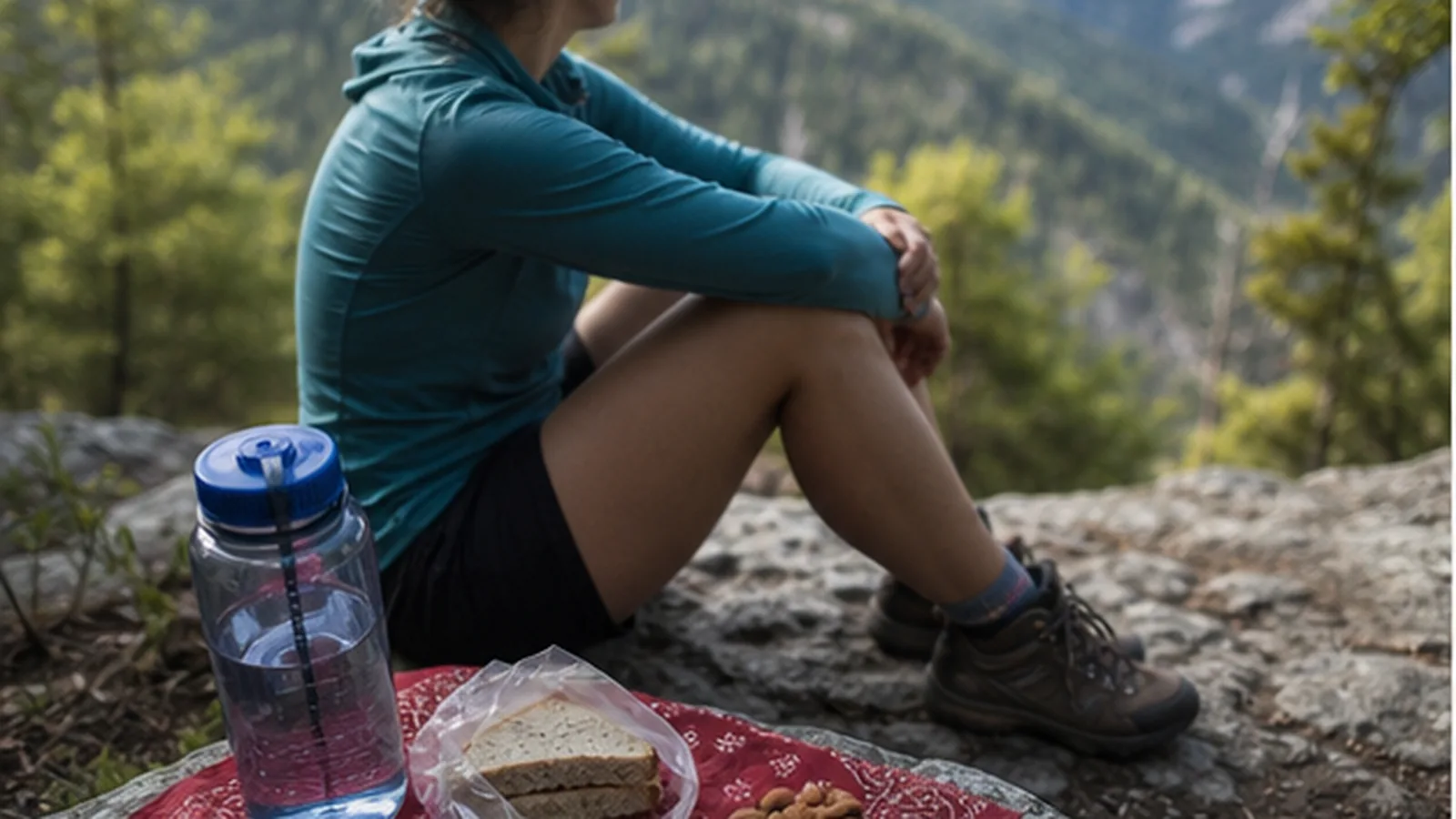
Plan day-hike snacks by effort and timing so energy stays steady before hard sections.
Fueling a day hike is mostly a timing problem.
If you wait until you feel shaky, the snack has to fix a drop that has already changed your pace, mood, and footwork. Eat small amounts earlier, drink with them, and keep one reserve you do not touch unless the day runs long.
- Start point
- Eat a real meal or snack before the trailhead, not only coffee
- Trail rhythm
- Small snack every 60 to 90 minutes for many moderate hikes
- Hard climb
- Eat before the climb, not only at the top
- Hot day
- Add salty snacks and more water attention
- Reserve
- Keep one compact snack for delay, missed turn, or slow group pace
This is not race nutrition. A normal hiker needs steady energy, a calm stomach, enough salt on sweaty days, and food that can be reached without unloading the whole pack.
If the hike is long, hot, or exposed, pair this plan with a water carry estimate instead of treating snacks and water as separate decisions.
Eat before empty. The best trail snack prevents the fade instead of rescuing it.
Why do day hikers lose energy before they feel hungry?
Hikers often fade because effort rises faster than appetite. A climb, heat, altitude, loose footing, or a group pace can drain energy while your stomach still feels fine.
By the time you notice weak legs or irritability, you may already be behind.
The first mistake is starting underfed.
A short morning hike can work after a light breakfast, but a long climb needs more than coffee. Eat something with carbohydrate and a little protein or fat before the trailhead so the first hour is not spent catching up.
The second mistake is saving all food for a scenic lunch. Lunch is useful, but one large stop does not help the climb before it.
Small snacks spread through the hike keep decisions steadier, especially when the trail gets rocky or the descent needs attention.
Heat changes the plan because sweat costs water and salt.
The National Park Service heat guidance recommends water, salty snacks, shade breaks, and cooler timing. On a hot hike, the hot-weather hiking plan puts salty snacks in the shade next to water.
Energy planning begins with the route. A fitness-matched day hike needs less rescue food than a route chosen for views first and effort second.
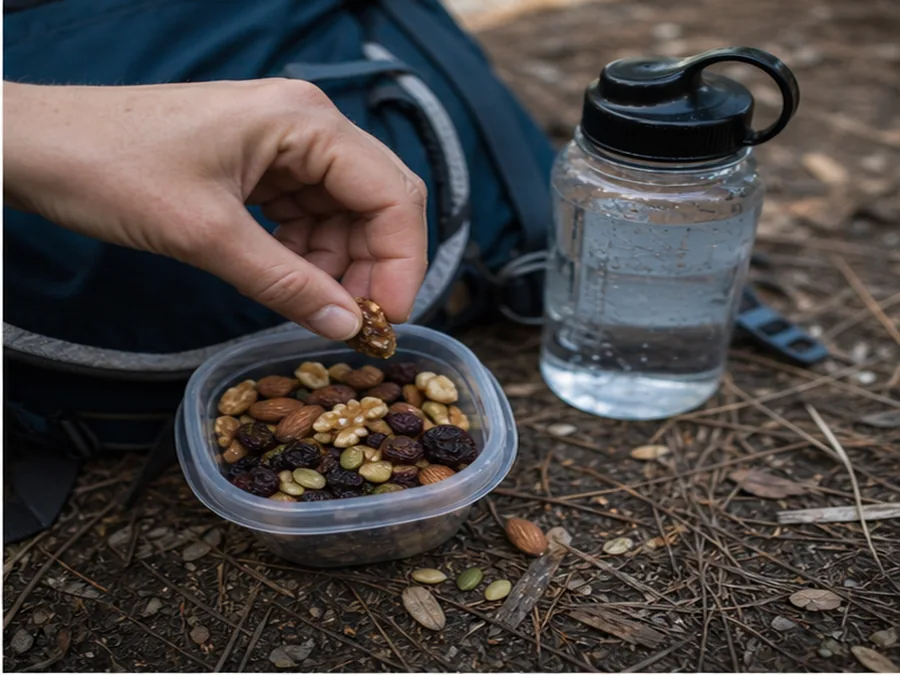
When should you eat during a day hike?
Do not plan snacks by mileage alone.
Plan them around effort. A flat mile through shade and a steep mile in sun do not ask the same thing from your body.
Mark the first long climb, exposed section, loose-rock descent, and last mile back to the car.
| Hike moment | Snack move | Why it helps |
|---|---|---|
| Before starting | Small meal or trailhead snack | Prevents the first-hour energy dip |
| Before a climb | Easy carbohydrate plus water | Starts the climb before legs feel empty |
| Long steady section | Carbs, fat, and salt | Keeps energy even without a heavy stomach |
| Hot exposed stretch | Salty snack with planned water | Supports sweat loss and pace control |
| Delay or wrong turn | Emergency reserve | Protects the exit when the day runs long |
For many moderate hikes, a small snack every 60 to 90 minutes works better than waiting for hunger.
Harder conditions may shorten that rhythm. Easier hikes may need less.
The point is to plan the first snack before the trail decides for you.
If you hike with a group, say the snack plan out loud.
Group pace hides personal needs because people do not want to stop first. A planned two-minute snack break before a climb is easier than fixing one person who bonks halfway up.
Group pace changes snack timing because the fastest hiker may not be the first person to fade. Build the snack rhythm into the group hiking pace so stops happen before the quiet person is already behind.
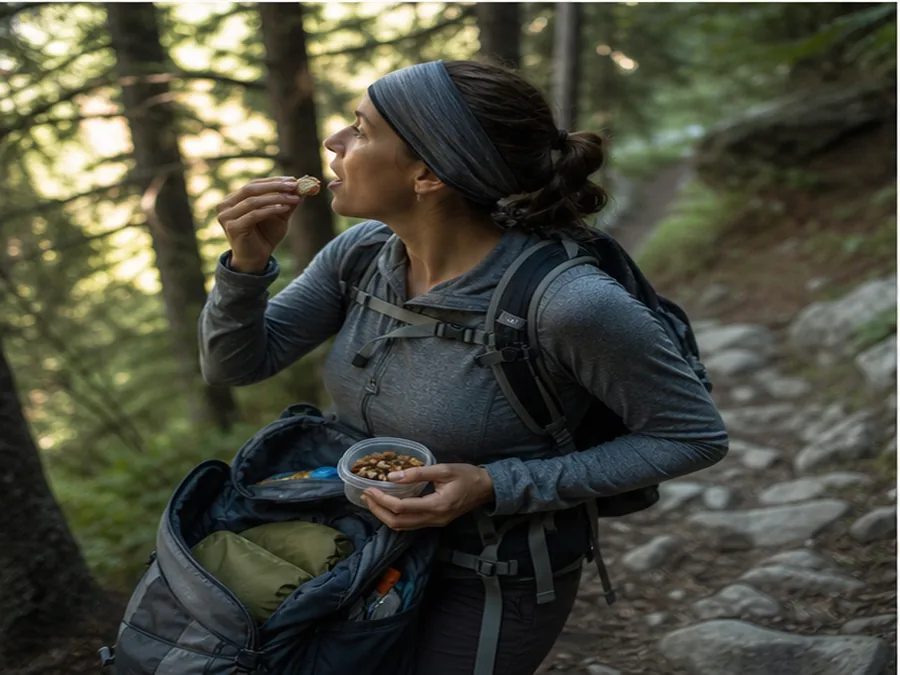
How much food should you pack for a day hike?
Pack food for the planned moving time, the hardest hour, and one realistic delay. Mileage alone is a weak measure because six flat miles and six steep miles can require very different effort.
Start by marking each 60 to 90 minute eating window on the schedule. Give each window one reachable portion.
Then add the sealed reserve after the planned portions, not as part of them.
For sustained endurance activity, the American College of Sports Medicine gives 30 to 60 grams of carbohydrate per hour as a useful performance range.
A relaxed short hike may need less. A long climb, fast pace, cold day, or repeated ascent may move your needs toward that range.
Use nutrition labels instead of guessing from package size. Add the carbohydrate grams in the portion you will actually carry.
A bar labeled as two servings counts differently when you plan to eat only half at one stop.
You do not need to hit one exact number every hour.
Use the range to catch obvious underpacking. If a five-hour strenuous hike has only one small carbohydrate snack for the whole group, the plan has no way to support repeated effort.
Split the food into planned portions before leaving home. Put the first snack where you can reach it without a pack dump.
Keep the later portions closed so eating early from boredom does not erase the final hours.
Carbohydrate supports the active sections, while some fat and protein can make a longer easy stretch feel steadier.
Put the simpler carbohydrate before a hard climb. Save denser nuts, cheese, or nut butter for a lower-effort stop when the stomach has time to work.
Test the amount on familiar routes and write down what came home. Increase food when you finished hungry, slowed unexpectedly, or used the reserve.
Reduce planned portions only when several similar hikes show that the food was consistently unnecessary.
Count eating windows first. A measurable plan is easier to adjust than a random bag of snacks.
Which hiking snacks survive heat and rough packing?
Good day-hike snacks are durable, reachable, and easy to eat with dusty hands. They do not need perfect nutrition.
They need to work while you are standing beside the trail, wearing a pack, and trying not to turn the break into a full unpacking session.
Fast energy
Dried fruit, fig bars, pretzels, crackers, or simple bars help before climbs.
Longer burn
Nuts, nut butter packets, cheese, jerky, or trail mix can steady longer sections.
Salt support
Pretzels, salted nuts, crackers, or electrolyte food help when sweating is high.
Stomach-safe choices
Familiar foods beat new products on a hike with no easy exit.
Emergency reserve
A bar, nut mix, or other compact food stays sealed until the plan changes.
Avoid snacks that melt, crumble into dust, leak oil, or demand careful prep unless the hike is easy and the weather is mild. A good snack you can reach is better than a perfect snack buried under layers.
Hot trails need a different snack mix. Keep food reachable under sun-protective hiking layers so you can eat with water in shade before the exposed section.
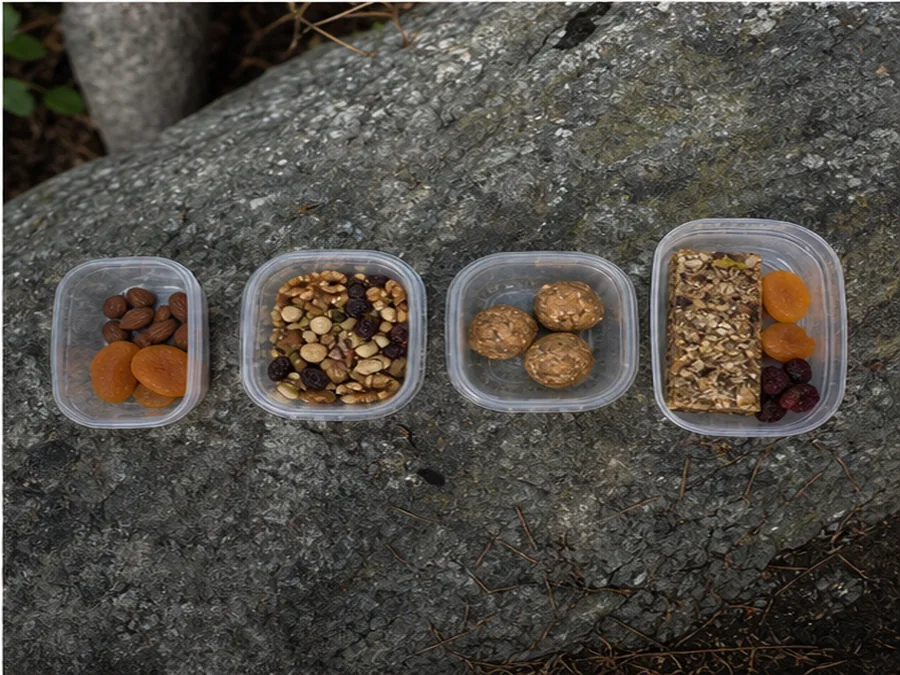
Do not test a brand-new food on your longest hike.
New gels, powders, and high-fiber snacks can upset your stomach. Try them on a shorter beginner hiking route or training walk first.
Reachable beats perfect when the trail is hot, windy, or crowded.
What should you do when trail food causes nausea?
Stop pushing food when nausea appears. Move to shade or a safe rest point, slow the effort, and check heat, altitude, water, pace, and other symptoms before deciding that low energy is the only problem.
Try a smaller portion of a familiar, mild food. A few bites every 10 to 15 minutes may sit better than a full bar at once.
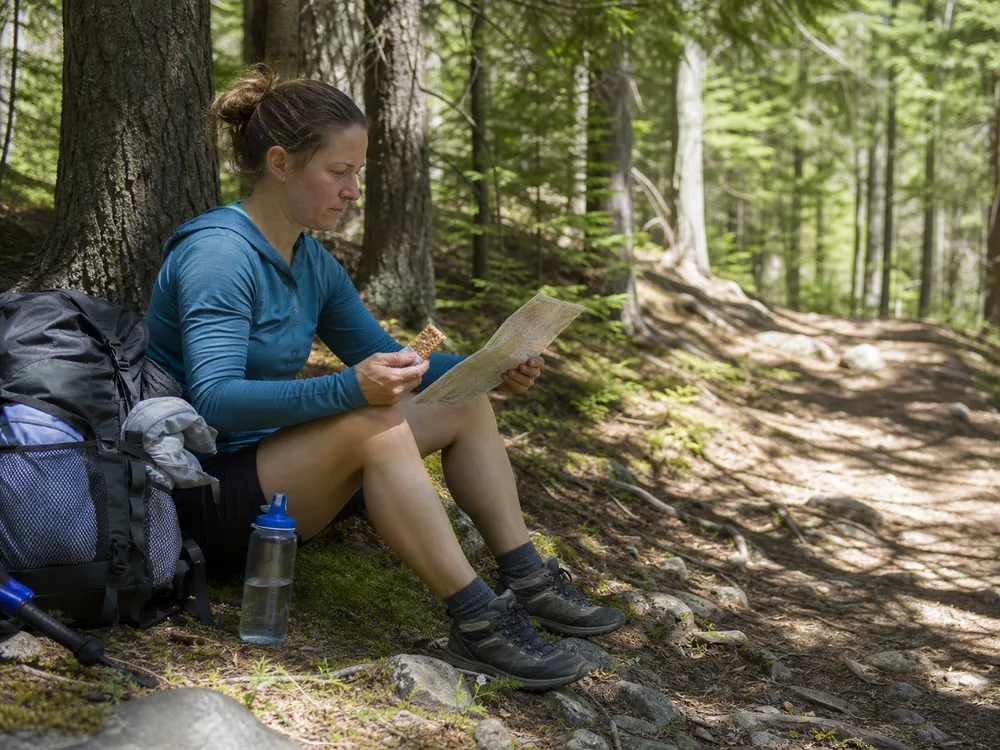
Sip water with dry food instead of washing down a large portion in one drink.
Change texture when the mouth is dry.
Soft fruit puree, a moist bar, or a familiar drink with carbohydrate can be easier than crackers or jerky. Keep the choice simple and use a product you already tested.
High-fat, high-fiber, or very concentrated food can feel heavy during a steep climb. Those foods may work well during an easy section or longer stop.
Move them away from the hardest effort instead of declaring them bad trail foods.
Do not assume every shaky or irritable hiker only needs sugar.
Headache, dizziness, confusion, unusual weakness, loss of coordination, or hot skin requires a broader safety check. Cooling, descent, or emergency help may matter more than another snack.
Repeated vomiting ends the original hike because the person may not keep down water or food. Start the safest exit while the person can still move, and get medical help for confusion, fainting, severe weakness, worsening symptoms, or inability to drink.
When symptoms settle after rest, do not immediately return to the same pace.
Shorten the objective and keep the next portion small. A stomach that rejected food during the climb may do it again when effort rises.
After the hike, note the food, amount, timing, heat, altitude, and symptoms. One record can reveal that the problem was a new gel, a huge lunch before a climb, too little water, or an objective that was too hard for the day.
Nausea changes the objective. Food helps only after you rule out the conditions that make continuing unsafe.
How should snacks, water, salt, and shade work together?
Food and water affect each other.
Dry salty food without enough water can feel heavy. Plain water without food on a sweaty day may not solve low energy.
The CDC heat guidance for moderate activity in heat gives water guidance and notes electrolyte drinks when sweating lasts for several hours.
If you are sweating heavily, use salty snacks or an electrolyte option you know your stomach accepts. Do not overdo concentrated drink mixes.
They can taste good at home and sit badly during a climb.
Shade changes how well a snack break works. A two-minute pause under a tree can lower effort, let you drink calmly, and give your stomach a chance to settle.
Kids, newer hikers, and fast groups need earlier prompts. Watch for slower steps, quiet mood, clumsy footing, headache, or irritability.
Those signs do not prove a food problem, but they are enough reason to pause and check water, food, heat, and pace.
Water volume decides which foods make sense. Essential day-hike gear includes accessible water capacity, so a dry salty snack does not arrive after the bottle is already low.
How do you keep perishable hiking food safe?
Perishable food needs a cold source on a day hike. The USDA defines the food safety danger zone as 40°F to 140°F, where bacteria can multiply quickly.
Do not leave perishable food in that range for more than two hours.
When the air temperature is above 90°F, the USDA limit drops to one hour. Time in the car and at the trailhead counts too.
Cheese that needs refrigeration, meat sandwiches, cooked chicken, cut produce, yogurt, and mayonnaise-based food need an insulated pouch with a frozen gel pack or frozen drink. Chill or freeze the food before departure so the cold source is not trying to cool a warm meal.
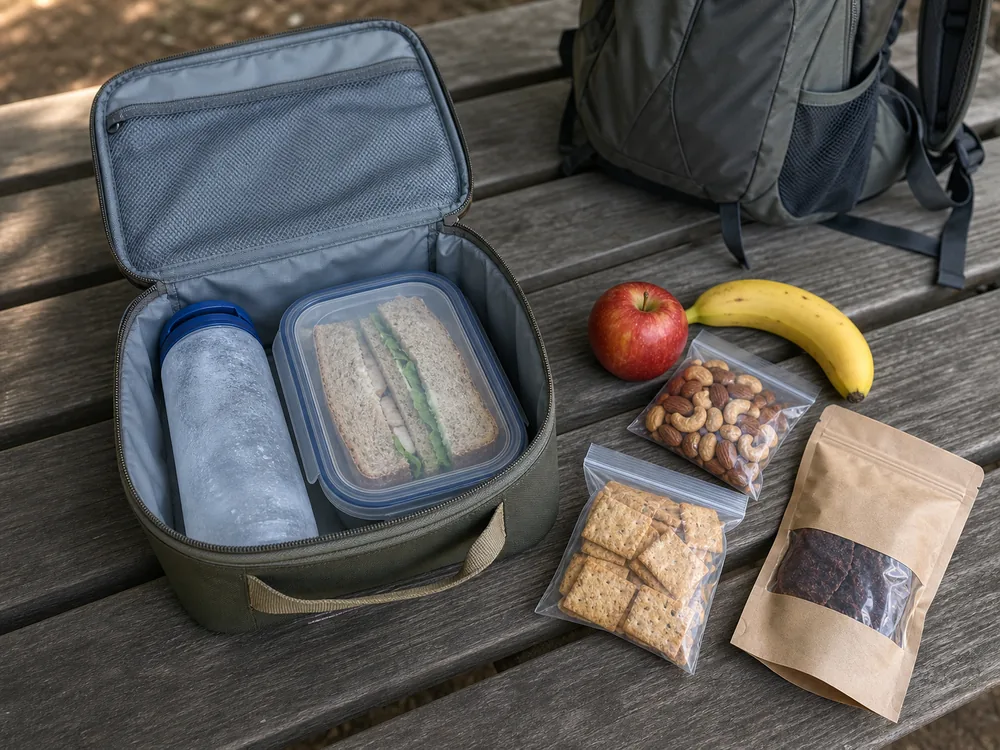
Pack the cold meal deep in the pouch and open it only when needed.
Keep the pouch shaded inside the pack. Direct sun and a hot car can use most of the safe time before the hike starts.
When you cannot keep food cold, choose shelf-stable options such as whole fruit, nuts, trail mix, unopened jerky, crackers, or nut butter. Check each label because some meat, cheese, and prepared products require refrigeration even when a similar product does not.
Discard perishable food when its safe time or temperature control is uncertain.
Smell, taste, and appearance cannot prove that harmful bacteria are absent. The reserve snack should be shelf stable so it remains useful after a long delay.
Cold food needs real cold. An insulated pouch slows warming, but a frozen source provides the temperature control.
Why should one snack stay sealed for the exit?
The reserve snack is not a treat.
It is a margin item. Save it for a delayed group, missed turn, slower descent, cold wind at the overlook, or an unexpectedly hot last mile.
- Put the reserve in a different pocket from normal snacks.
- Choose food that will not melt, crush, or need water to swallow safely.
- Tell the group which food is the reserve so it is not eaten at lunch.
- Carry extra if someone in the group regularly underpacks food.
- Replace the reserve after every hike, even if it was not used.
A reserve snack works best with other margin items. Keep a headlamp, layer, basic first aid, and navigation available too.
Food alone does not fix a late finish, a storm, or a hurt ankle, but it keeps the group clearer while solving the real problem.
On rocky terrain, low energy can show up as poor foot placement before hunger. If you are heading into scree and loose rock or a hands-on scramble, eat before the technical section, not after.
Save the last snack for the part of the hike you did not plan.
Technical terrain should not be the place where the group discovers low energy. Eat before controlled descent footing begins so every step stays deliberate.
Hot, dry days can also bring smoke, fire restrictions, or closures. Check current wildfire season conditions before packing food for an exposed route.
Altitude can dull appetite while effort rises. On a high trail, pair snacks with an altitude day-hike plan and use time-based reminders instead of hunger alone.
Which snack fits each trail problem?
Different trail problems need different snacks.
A steep climb asks for easy energy before effort spikes. A hot exposed section asks for salt, water, and shade.
A cold windy overlook asks for food that can be eaten quickly before hands get stiff.
Pack at least two textures and two energy speeds.
A simple bar may work while walking, but nuts or jerky may sit better during a longer stop. Dried fruit can help before a climb, but it may need water so it does not feel sticky or heavy.
| Trail problem | Better snack choice | What to avoid |
|---|---|---|
| Long climb | Easy carbohydrate plus water | Waiting until the top |
| Hot exposed mile | Salty snack with shade break | Dry food without enough water |
| Cold rest stop | Quick food you can eat with gloves | Messy food that takes prep |
| Loose descent | Small snack before technical footing | Eating while walking on unstable ground |
| Slow group exit | Sealed reserve snack | Finishing all treats at lunch |
This is also where allergies, preferences, and stomach history matter. The best group snack is useless if one person cannot eat it or hates it enough to skip the break.
Each hiker should carry at least one food they know works.
Do not bury the snack under rain gear, camera gear, or extra layers. If eating requires a full pack dump, the group will delay the break until someone is already fading.
For sunrise or sunset hikes, schedule the first eating stop while the group has enough light to handle food without missing the route or footing.
Snack for the next problem, not for the last overlook.
Sources
The National Park Service heat illness guidance supports drinking water, eating salty snacks, resting in shade, and timing activity for cooler parts of the day. The CDC NIOSH heat stress hydration recommendations support frequent water intake during moderate activity in heat and electrolytes when sweating lasts for several hours.
The USDA Forest Service safety guidance supports carrying plenty of food and water and preparing for changing conditions. The American College of Sports Medicine endurance nutrition guidance supplies the 30 to 60 grams of carbohydrate per hour reference for sustained endurance activity.
The USDA hiking food safety guidance supplies the temperature danger zone, time limits, cold-source advice, and shelf-stable examples.
Step by stepPractical steps
- Eat before the trailhead if the hike includes sustained effort.
- Mark the hardest climb, exposed section, or technical descent before packing snacks.
- Snack before the hard section rather than waiting for hunger.
- Pair food with water and salty options when sweating is high.
- Keep one compact reserve snack sealed for delays or a slow exit.
AnswersQuestions readers ask
How often should I snack on a day hike?
Many moderate hikers do well with a small snack every 60 to 90 minutes, with an earlier snack before a long climb, hot exposed section, or technical descent.
What are good snacks for a day hike?
Good options include trail mix, salted nuts, pretzels, dried fruit, fig bars, crackers, jerky, cheese, nut butter packets, and familiar bars.
Should I eat before a hike?
Yes, if the hike has sustained effort. Eat a normal meal or small trailhead snack before starting so the first climb does not begin with low energy.
Do I need salty snacks while hiking?
Salty snacks help more when you are sweating heavily, hiking in heat, or staying out for several hours. Pair them with water.
What is an emergency snack for hiking?
An emergency snack is a compact food you save for delays, missed turns, slow descents, or a longer day than planned. Keep it separate from normal snacks.