
How to Do a Sunrise or Sunset Hike
Time a dawn or dusk hike backwards from civil twilight, carry two lights, and plan the leg you walk in the dark before the one you walk toward the view.
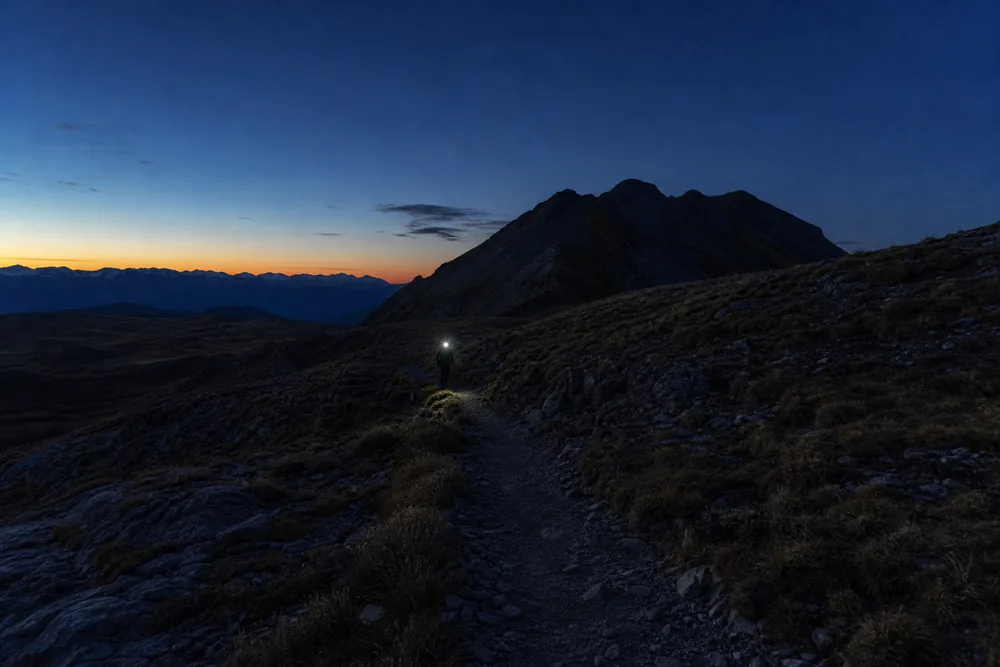
Plan a sunrise or sunset hike around civil twilight, headlamp redundancy, familiar ground, and a return leg timed at climbing pace.
The hard part of a sunrise hike is not the alarm. It is that roughly half your walking happens in light you cannot judge by looking out the window the night before.
Sunset hikes break the same way from the other end. The climb goes fine, the view delivers, and then the descent starts in a darkness that nobody put a number on.
Both trips run on the same fix. Work the clock backwards from the light, carry more illumination than feels reasonable, and pick ground your feet already know.
Plan ahead and prepare.
Leave No Trace, Principle 1
On a hike built around dawn or dusk that principle narrows to one thing. You need to know what time your usable light runs out and where you will be standing when it does.
Why is walking in the dark half of the day a different trip?
Your eyes change first, and they change slowly. Full dark adaptation takes something like twenty to thirty minutes, and one look at a bright phone screen undoes most of it.
That matters because the ground stops giving you depth. Under flat pre-dawn light or a single headlamp beam, a shadow and a hole look identical until your foot is already in one.
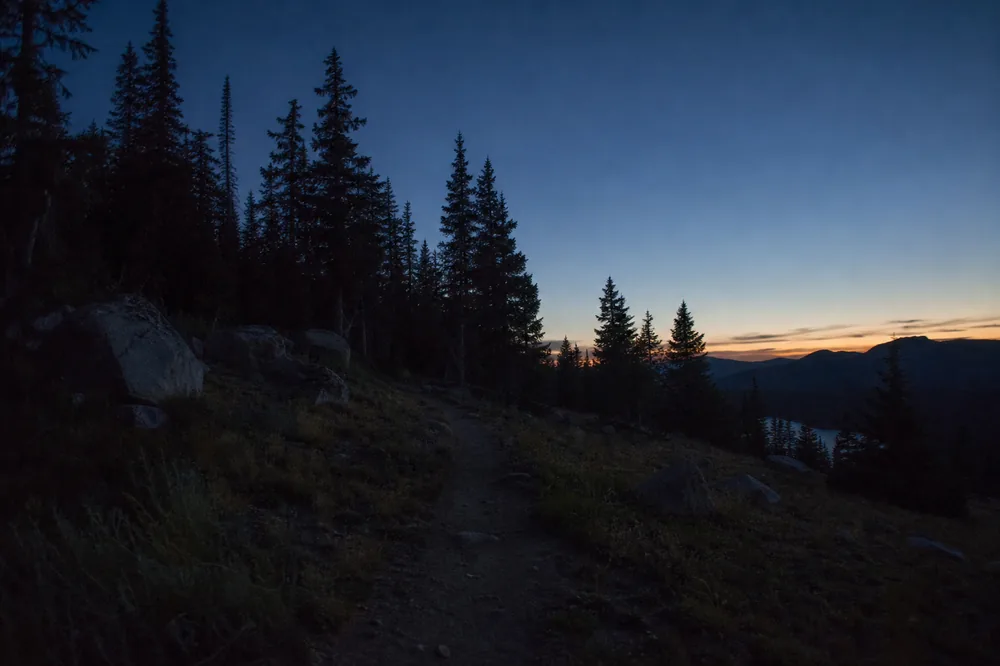
- Dark adaptation takes twenty to thirty minutes and a bright screen wipes out most of it - Flat light removes the shadows that normally show you tread edges, roots, and holes - Core temperature and reaction time both sit low in the pre-dawn hours - Junctions look nothing like the daylight photos you memorised
Your body is running on the same short night, so a four in the morning start costs you reaction time before the trail asks for any. None of this makes the hike reckless.
It does mean the margins you lean on in daylight, like reading terrain at a glance, quietly stop working, and a lot of what goes wrong traces back to the same frequent hiking errors that good light normally covers up.
Why do so many plans cover the way out and forget the way back?
Because the outbound leg has a reward at the end of it and the return leg does not. Attention follows the payoff.
A sunset hiker plans the climb around the light. Two hours up, arrive with time to spare, watch the colour go.
That plan is finished and it is only half a plan.
The return is where conditions are worst and the hiker is most tired. Descending on tired legs inside a headlamp beam is usually slower than the climb was, which is the opposite of what almost everyone budgets.
Most hikers assume the way down takes half the time of the way up. In the dark it commonly takes the same or longer, because every foot placement gets checked before it gets weighted.
If the climb took ninety minutes, hold ninety minutes for the descent and treat anything quicker as a bonus you did not need.
Sunrise hikes hide the same gap in reverse.
The dark section comes first, so the temptation is to carry less light on the theory that it will be bright soon enough. That reasoning falls apart on the west side of any ridge, where direct sun can arrive twenty to forty minutes after the official sunrise time and a shaded valley holds usable darkness longer still.
So the light plan is settled at home rather than in the car park.
A headlamp is not one item. It is a system of a primary light, a backup light, and cells that still hold charge when the temperature drops.
Alkaline cells lose a meaningful share of their usable capacity below freezing, lithium primary cells hold their output far better, and either way the spare cells belong in an inside pocket against your body.
- Fresh or fully charged cells in the primary lamp before you leave the house
- A second independent light, not merely spare batteries for the first one
- Spare cells carried in an inside pocket where body heat keeps them working
- The beam angled low and slightly across the trail rather than straight ahead
- A phone kept in reserve for navigation and calls instead of used as your walking light
A phone torch is not a substitute.
It occupies a hand, it drains the battery you may need for a map or a call, and its beam is wide and flat, which is the worst possible combination for reading tread. Beam angle changes what you can see more than raw brightness does, so tilting the beam down and slightly to one side restores the shadows that show you edges, rocks, and the lip of a step.
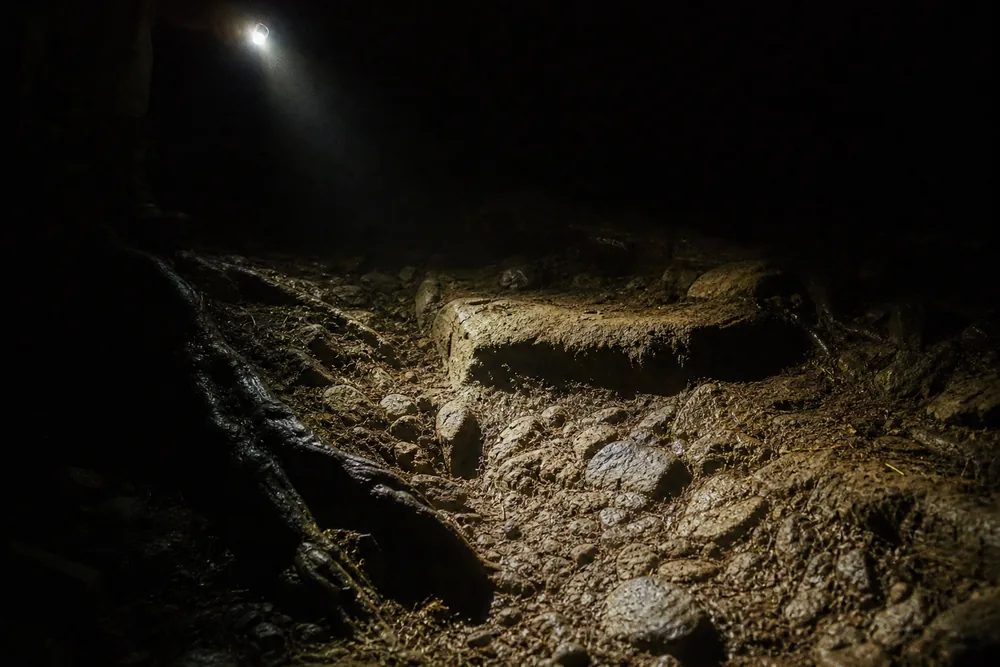
Two lights per person is the standard worth holding, and it is the one item the rest of a day hike kit list cannot cover for you if you left it out.
Group size makes the second leg harder again, because the slowest walker's pace becomes everyone's pace as soon as nobody can see the trail edge.
Write both times down before you leave. If you only know one of them, you have planned an outbound hike and left the second half to luck.
What kind of ground stays honest after dark?
Ground you have already walked in daylight.
That is the short answer, and it rules out most of what people attempt on their first sunrise trip. Familiarity is doing real work here, because you are not remembering scenery, you are remembering how many junctions there are, which one has the confusing side path, and roughly how long each section takes.
Choose the objective on how it behaves at the worst moment rather than how it looked on a bright afternoon, and let trail difficulty ratings set your ceiling rather than your ambition.
| Trail feature | In daylight | Once the light is gone |
|---|---|---|
| Graded out-and-back with clear markers | Easy | Manageable with a headlamp and a known turnaround |
| Several unsigned junctions | A minor annoyance | The single most common way people get lost |
| Exposed ridge with drop-offs | Straightforward walking | The beam flattens the edge until it disappears |
| Boulder field or open scree | Slow but obvious | Route-finding stops working almost entirely |
| Unbridged stream crossings | A judgement call | Depth, current, and footing all become guesses |
Length matters less than complexity, so a six mile out-and-back on one obvious trail is a far safer dark objective than a two mile loop with four unmarked forks.
Surface deserves its own thought as well. Loose ground that you would walk through without comment at noon becomes genuinely awkward when the beam removes contrast, and the technique in loose-rock footwork is worth having before you need it in the dark rather than after.
Which overnight conditions decide how cold you get?
The swing surprises people more than the low number does. A valley sitting at twenty-four degrees Celsius in the afternoon can be under eight before sunrise, and desert ground routinely does worse than that.
Radiational cooling explains most of it.
On a clear, still night the ground sheds heat straight to open sky with nothing to trap it, and the air just above the surface keeps dropping until the sun starts putting energy back in. That is why the daily minimum usually lands near sunrise instead of at midnight, so the coldest twenty minutes of the trip often arrive while you are standing still at the viewpoint you got up for.
Cold air also pools. Valley bottoms and basins can sit several degrees colder than the slope above them, so the walk out of a canyon at first light is often colder than the ridge you were standing on an hour earlier.
Clear and still overnight
The biggest drop of all. Expect the lowest reading within half an hour of sunrise and put the layer on before you stop moving.
Overcast sky
Cloud traps outgoing heat, so the swing is smaller, but damp air makes any given temperature feel considerably worse.
Windy ridge at sunset
Wind strips heat the moment you stop climbing. The insulation goes on before the summit, not after you have cooled down on it.
Valley bottom at dawn
Cold air sinks and settles. The coldest air of your trip is often at the lowest point rather than the highest.
The genuine hazard is the pause, not the walking. You climb warm, stand still for forty minutes taking photographs, and let sweat-damp layers work on you in still air, which is how early hypothermia signs appear on a trip nobody would call extreme.
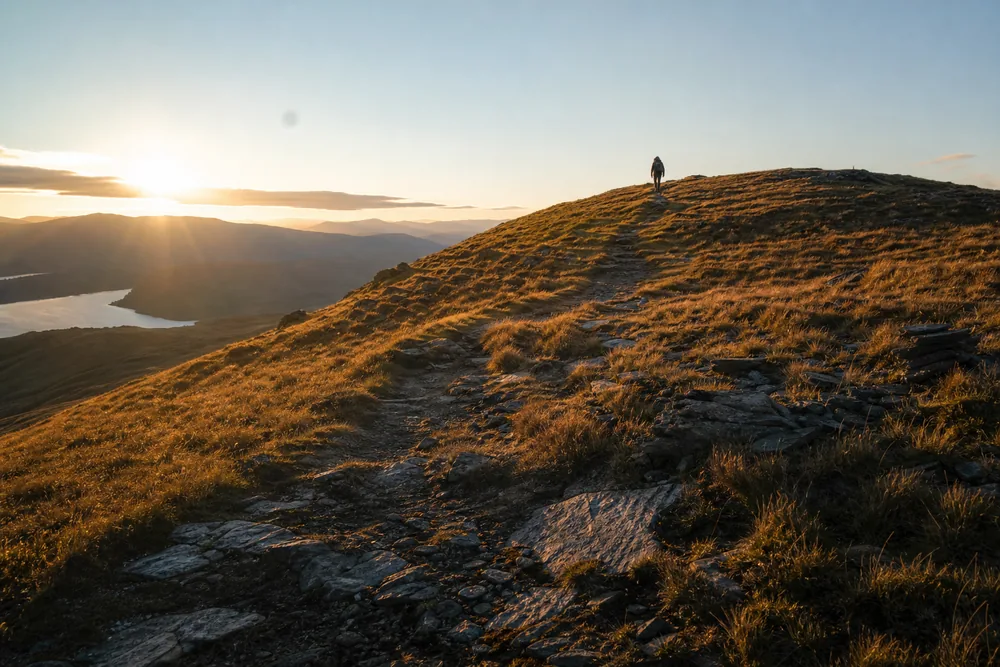
Food is part of the same defence. Eating properly on a cold pre-dawn climb keeps heat production up, and steady trail snacking habits matter more when your body is already fighting the temperature.
When the cold stops being a comfort problem and starts being a route problem, the trip belongs in a different category, and the judgement in cold-season route planning applies well before there is snow on the ground.
How do you work the clock backwards from the light?
Sunrise and sunset times are the wrong anchors on their own. The two numbers that decide your schedule are civil twilight and golden hour.
Civil twilight is the window when the sun sits within six degrees of the horizon. There is usually enough natural light in it to walk a clear, graded trail without a headlamp, and at mid latitudes it lasts roughly twenty to thirty-five minutes on either side of the sun.
Golden hour is the shooting window, not the walking window. It runs from sunrise to about an hour after, and from an hour before sunset until the sun drops, and it is the reason most people are out there at all.
The two windows rarely line up with the hike you want. The moment you came for sits inside golden hour, the walking you can do without a lamp sits inside civil twilight, and only one of those can be moved.
- Look up four numbersGet sunrise or sunset plus the start and end of civil twilight for your exact date and coordinates, not a city forty miles away.
- Fix the moment you came forDecide whether you want first light on the summit or the last colour on the ridge, then treat that as a hard arrival time.
- Subtract your honest paceUse your slowest recent time on similar ground rather than your best, and add ten minutes for every junction you have to think about.
- Add a standing marginAllow twenty to thirty minutes at the viewpoint for photos, food, and putting layers on before you move again.
- Run the second leg the same wayTime the return from your departure moment and check exactly where you will be when civil twilight ends.
Terrain shifts those numbers more than the calendar does. A deep east-facing valley can stay dark for half an hour after the sky above it has gone bright, and a west-facing slope loses the sun long before the summit behind you does.
Aspect is worth checking on the map before you commit to a departure time. A trail that spends its last hour before sunrise on the shaded side of a ridge is a headlamp trail whatever the almanac says about first light.
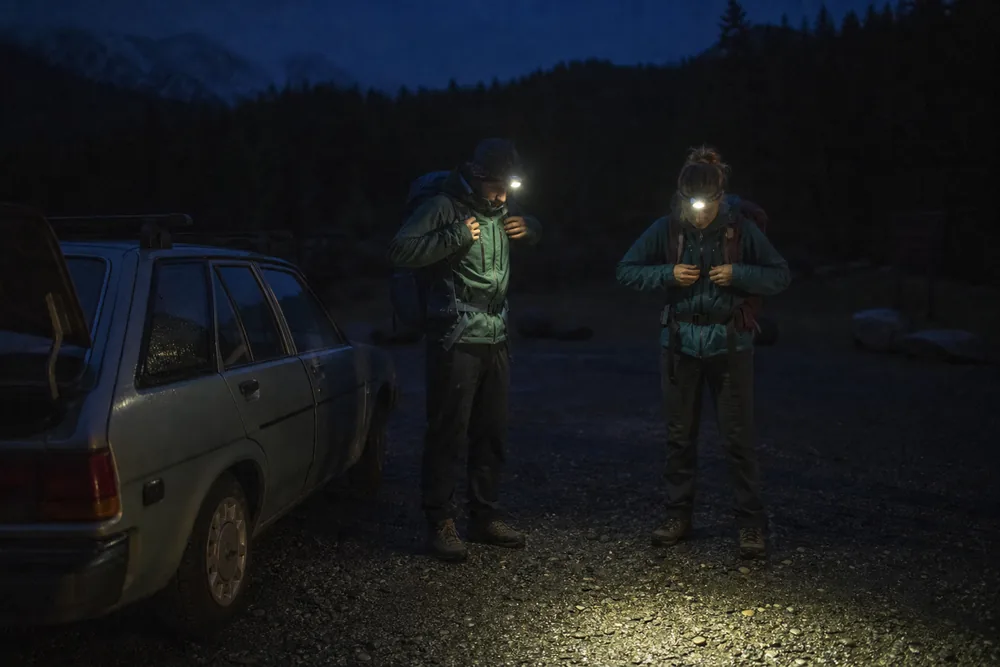
Weather compresses everything again. Heavy cloud, fog, or a rain squall can take thirty minutes off the front and back of your usable light, so the habits behind a wet-weather hiking plan become timing decisions rather than clothing ones.
Round the arithmetic in the unhelpful direction. If your slowest recent time on that ground was ninety-five minutes, plan on a hundred and five, because nobody has ever regretted reaching a summit ten minutes early.
Offline maps get downloaded at home too, not at a trailhead with one bar of signal, and the paper backup in a sensible hiking kit list still earns its weight on a short evening walk.
Then write the two times somewhere you will actually look at them. Your departure hour and the moment civil twilight ends on the way back are the whole plan, and the rest of the trip is detail.
Do animals really move more at dawn and dusk?
Yes, for a great many species. Crepuscular activity is the normal pattern for deer, elk, rabbits, many rodents, and the predators that follow all of them.
Most of that is harmless, and watching a herd feed in low light is one of the honest rewards of an early start.
The practical consequence is surprise. Animals hear you late when wind and water mask footfalls, and an animal surprised at close range behaves worse than one that watched you coming for two hundred metres.
So make ordinary noise on blind corners, in dense brush, and near running water. Talking at a normal volume does the job better than a bell and costs nothing.
Larger animals deserve more space in low light, not less.
Moose and bears are both harder to see and harder to read at dusk, and backing off early is far cheaper than working out what a shape at twelve metres intends to do. Dogs raise the stakes on both sides, because a leashed dog can meet wildlife before you register it is there.
Reading the way back when the landmarks are gone
Daylight navigation is mostly landmark navigation. You match the shape of a ridge, a distinctive tree, a rock band, or the valley off to your left, and you barely notice you are doing it.
The beam takes all of that away, leaving three or four metres of trail surface and a wall of black, so every junction has to be identified from the ground rather than the horizon.
Junction counting replaces shape matching.
On the way out, note the time you reach each fork and something concrete about it, like a cairn, a fallen trunk, or the direction water runs across the tread. Then look behind you, because a junction you approach from the opposite side often looks like a completely different place, and ten seconds of glancing back saves an argument in the dark two hours later.
- Note the clock time and one physical detail at every junction on the way out - Take a rough compass bearing back toward the trailhead while you can still see - Turn and look back at each fork so you recognise it from the return direction - Keep the phone warm, because cold batteries report false low readings and shut down early
A compass earns its place on exactly this kind of trip. Even a rough bearing to the trailhead tells you whether the fork you just took is broadly right or badly wrong, which is usually the only question that matters.
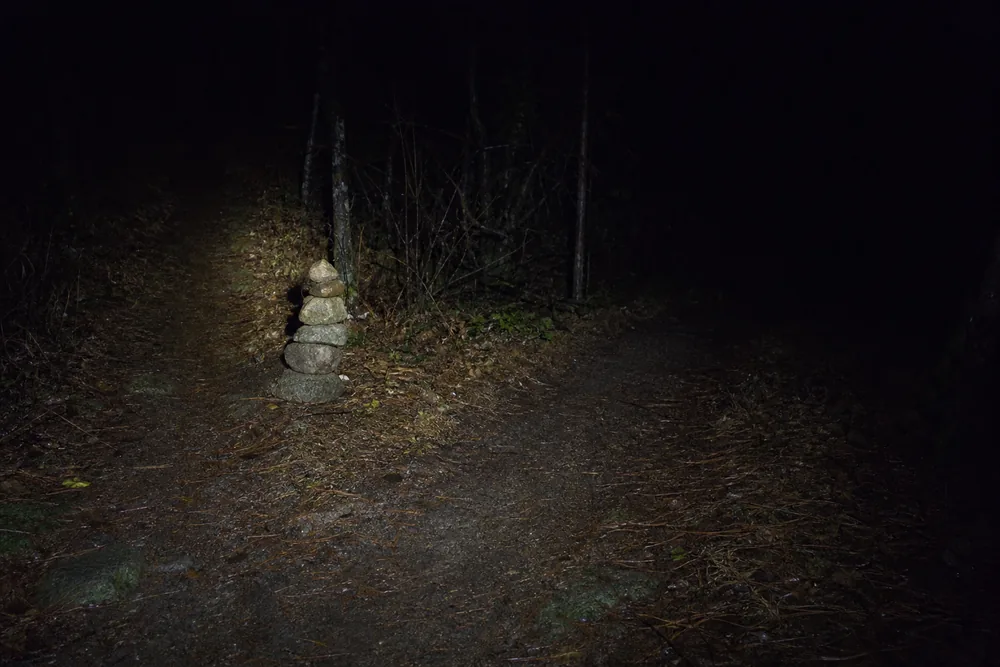
Tired quadriceps and a flat beam are a poor combination on tight turns, and the cornering habits from descending switchbacks matter more at nine at night than they ever do at noon.
The turnaround that protects that whole leg is a time, not a place. Set it before you leave, and let the clock rather than the summit make the call.
Three signals should end the upward part regardless of distance remaining.
You have hit the turnaround time, your primary light is behaving oddly, or someone in the group has slowed enough that the return arithmetic no longer works. Missing the view is a small loss, because a sunset seen from four hundred metres below the summit is very nearly the same sunset.
Walking alone changes every number in this article. Nobody notices a slow twisted ankle, nobody carries the spare light, and the tighter margins behind a solo hiking plan tighten again once the sun is down.
Leave the details with someone at home.
Your route, your turnaround time, and your expected return hour cost one message to send, and they are the part of a hiking safety plan that works whether or not anything goes wrong. Done properly, these are among the best hours to be walking, and the cost of admission is arithmetic done in advance and a second light you probably will not need.
Sources
- Leave No Trace Center for Outdoor Ethics, Principle 1: Plan Ahead and Prepare - U.S.
National Weather Service explanation of radiational cooling and why daily minimum temperatures typically occur around sunrise - U.S. National Park Service hiking safety guidance on carrying a headlamp or flashlight with spare batteries on day hikes
Step by stepPractical steps
- Look up sunrise or sunset plus the start and end of civil twilight for your exact date and coordinates.
- Fix the moment you came for, whether that is first light on the summit or the last colour on the ridge.
- Subtract your slowest recent pace on similar ground and add ten minutes for every junction you have to think about.
- Allow twenty to thirty minutes standing at the viewpoint for photos, food, and adding layers.
- Time the return from your departure moment and check where you will be when civil twilight ends.
AnswersQuestions readers ask
How early should I start a sunrise hike?
Work backwards rather than picking a round number.
Take your arrival time on the summit, subtract your slowest recent pace for that distance and climb, add ten minutes for every junction you have to think about, then add fifteen minutes of slack. On a two hour climb that usually means leaving the trailhead around two and a half hours before sunrise, and earlier if the trail sits on a shaded east-facing slope.
What is the difference between civil twilight and golden hour?
Civil twilight is the walking window. It is the period when the sun is within six degrees of the horizon and there is normally enough natural light to follow a clear trail without a headlamp, lasting roughly twenty to thirty-five minutes at mid latitudes.
Golden hour is the photography window, running from sunrise to about an hour after and from an hour before sunset until the sun drops.
How many lights do I need for a dusk hike?
Two per person, working independently.
A primary headlamp with fresh or fully charged cells, plus a second small light that does not share batteries with the first. Spare cells go in an inside pocket where body heat keeps them working, because alkaline batteries lose a large share of their usable capacity below freezing.
Should I hike a new trail for the first time at sunrise?
Not if you can avoid it. Familiarity in the dark is about remembering how many junctions there are and which one has the confusing side path, and none of that transfers from a map.
If the trail is new to you, pick a simple graded out-and-back with clear markers rather than a loop with unsigned forks.
Why is it colder at sunrise than in the middle of the night?
On clear, still nights the ground keeps shedding heat to open sky, so the air just above the surface continues to cool until the sun starts putting energy back in.
That usually puts the daily minimum within about half an hour of sunrise. Cold air also drains downhill and pools, so valley bottoms often read several degrees lower than the slope above them.
Do I need to worry about wildlife at dawn and dusk?
Mostly it means being predictable rather than being afraid. Deer, elk, rabbits, rodents, and the predators that follow them are most active at those hours, and the real risk is surprising something at close range near running water or on a blind corner.
Talking at normal volume, keeping dogs under close control, and giving moose and bears extra room covers almost all of it.