
How to Hike in Hot Weather and Still Turn Around Early
Hike hot weather by moving early, lowering the objective, drinking before thirst, eating salt, resting in shade, and turning around before symptoms decide for you.
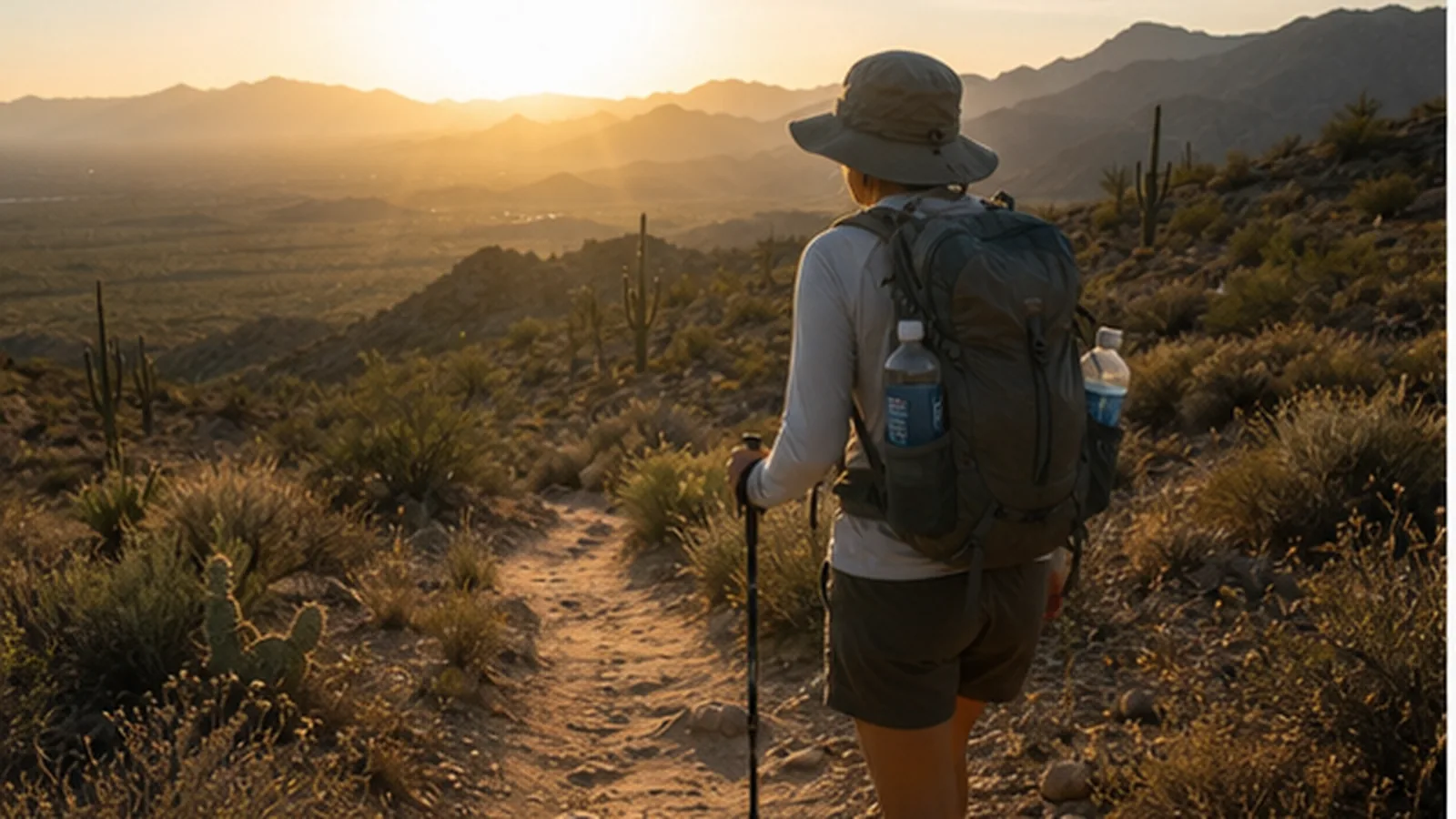
Plan hot-weather hiking around timing, water, shade, clothing, pace, and an earlier turnaround.
Hot-weather hiking is not a normal hike with more water added.
Heat changes timing, route choice, pace, clothing, food, and the turnaround point. The best plan keeps you out of the worst heat instead of trying to endure it.
- Best timing
- Start early, avoid the hottest hours, and leave time for a slow exit
- Water plan
- Carry enough for the route, heat, people, and delay, then drink before thirst
- Food plan
- Use salty snacks when sweating is high
- Clothing
- Light-colored sun clothing, hat, sunglasses, and sunscreen
- Turnaround
- Turn back before symptoms, empty bottles, or exposed miles remove options
The National Park Service heat guidance recommends starting before 10 a.m. or after 4 p.m., wearing sun protection, drinking water, eating salty snacks, resting in shade, and getting wet when possible.
That guidance changes the whole hike plan, not only the pack list.
Avoid the heat window. The safest hot-weather hike is often the one that finishes before the day peaks.
How do you read the heat before choosing the route?
Read the hourly forecast for the trail area, not only the high temperature for the nearest town. Check the temperature, humidity, cloud cover, wind, and any heat advisory during the hours when you will still be walking.
The heat index combines air temperature and relative humidity.
It describes how hot shaded air feels because humid air slows the evaporation of sweat. The National Weather Service calculates it for shade and light wind, so an exposed trail can be much harsher than the number suggests.
Full sunshine can add as much as 15°F to the apparent heat measured by heat index. A dark rock slope, sandy wash, or open ridge can also radiate heat back toward you.
Treat long sun exposure as a reason to shorten the route even when the shaded forecast looks acceptable.
If your weather service publishes Wet Bulb Globe Temperature, use it for exposed activity.
WBGT accounts for temperature, humidity, wind, and solar radiation. It gives a better picture of the load on a moving hiker than air temperature alone.
Match the forecast to the route hour by hour. Mark when the climb enters sun, when shade moves off the return trail, and when the car may become dangerously hot.
A route with an exposed return needs a larger time margin than a shaded out-and-back of the same distance.
Weather changes the objective before you leave home. A heat advisory, warm overnight low, poor air movement, or forecast that rises faster than expected can make the cooler backup the right choice.
Forecast the exposed return. The temperature at the trailhead when you start does not describe the hardest part of the day.
When should a hot hike start and end?
Choose a shorter route than your cool-weather fitness suggests.
Heat raises effort, slows recovery, and makes a small mistake harder to fix. A shaded four-mile hike can be more realistic than a famous eight-mile exposed route on the same day.
Start early enough that the hardest climb and exposed return are not happening at midday.
Grand Canyon summer guidance says timing is a major factor and advises avoiding hiking between 10 a.m. and 4 p.m.
in extreme heat contexts.
Look for real shade, not just trees on a map. A canyon, ridge, burn area, beach, slickrock route, or high alpine trail may offer little shade when the sun angle changes.
If the route has no shade and no water, lower the mileage or choose another hike.
Plan the exit before the start.
Know where the trail turns back toward the car, where you can stop in shade, and where cell service is unlikely. Pair the plan with day-hike fitness limits instead of using distance alone.
The first route decision is fitness, not toughness. A essential day-hiking gear gives you more room to slow down when heat changes the effort.
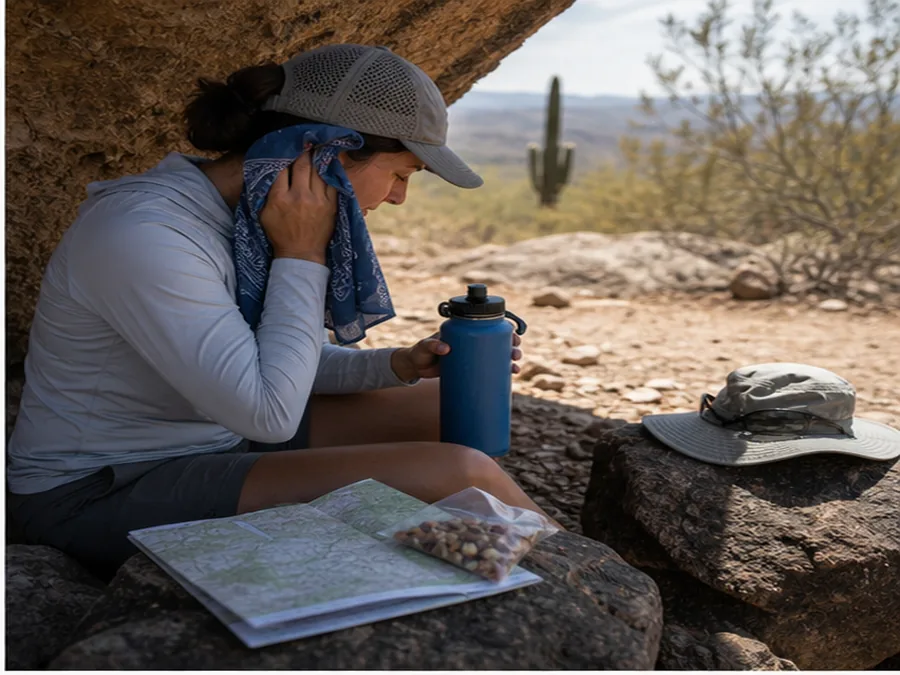
How much water margin decides the turnaround?
Water planning starts before the trailhead.
Count people, expected hours, heat, exposure, refill reliability, and a reserve. A small bottle is not a hot-weather plan unless the hike is very short and the exit is immediate.
| Condition | Water decision | Extra margin |
|---|---|---|
| Short shaded hike | Normal bottle plus small reserve | Check everyone starts hydrated |
| Exposed summer trail | More water and earlier turnaround | Do not depend on finding shade later |
| Long sweat session | Add salty food or electrolyte option | Avoid drinking only plain water for hours |
| Kids or dogs | Carry for them, not just yourself | They may not show need early |
| Unverified source | Treat as unavailable | Carry or filter only from confirmed water |
The CDC NIOSH heat guidance gives a workplace hydration reference for moderate heat activity and warns not to overdrink beyond need. Hiking is not workplace labor, but the principle is useful: drink steadily, replace salt when sweating lasts, and avoid trying to fix the whole day with one late water stop.
Use the NIOSH figure of about 8 fluid ounces every 15 to 20 minutes only as a planning reference for moderate activity lasting less than two hours in heat.
Your actual need changes with body size, pace, humidity, clothing, acclimatization, and sweat rate. Carry a measured amount so you can compare the plan with what the group has actually used.
Do not force water faster than your body can use it. NIOSH says fluid intake generally should not exceed 48 fluid ounces per hour.
Drinking very large amounts of plain water can dilute blood sodium, especially during several hours of heavy sweating.
For prolonged sweating, pair steady drinking with normal meals, salty snacks, or a balanced electrolyte drink.
Avoid salt tablets because they deliver a concentrated dose and can upset the stomach. If a medical condition or medicine affects fluid or salt balance, ask a clinician for an individual plan before a hot hike.
Drink to a measured plan. The goal is steady replacement with food and cooling, not finishing every bottle on a timer.
Use a water carry calculation before the hike if the day is hot, dry, high, or exposed.
Then set a hard turnaround amount. If the group has used half the water before reaching the planned halfway point, the trail is already telling you to turn back.
Water sets the turnaround. The destination does not overrule empty bottles.
Water planning should also account for food. A day-hike fueling plan helps salty snacks and shade breaks happen before the group is hot, hungry, and impatient.
Do not count a possible water source unless current information says it is flowing and usable. Seasonal creeks, closed taps, and empty tanks turn a warm hike into a hot exit problem.
What clothing lowers heat gain?
Clothing should reduce sun load while still letting sweat move.
Light-colored, loose, breathable sun clothing often beats exposed skin that burns and overheats. A wide-brim hat, sunglasses, and sunscreen protect the parts that keep taking direct sun.
Hat and sunglasses
Protect eyes, face, ears, and neck from direct sun.
Light sun layer
A breathable long sleeve can reduce burn and radiant heat.
Sunscreen
Apply before the trail and reapply by the product instructions.
Vent options
Open cuffs, vents, and zippers during climbs before overheating builds.
Cooling cloth
Wet a bandana or shirt when water is available and safe to use.
Do not wait until you feel cooked to adjust layers. Open vents, slow the pace, and drink before the climb.
Once heat stress builds, fixing it takes more time than preventing it.
Foot care also changes in heat.
Sweaty feet blister faster, and hot descents can make shoes feel tighter. If your route is long, combine heat planning with chafing prevention and a sock plan before the trailhead.
Heat can worsen rubbing because sweat, salt, and dust stay against skin. Add what to wear hiking before long hot routes, especially when the return is downhill.
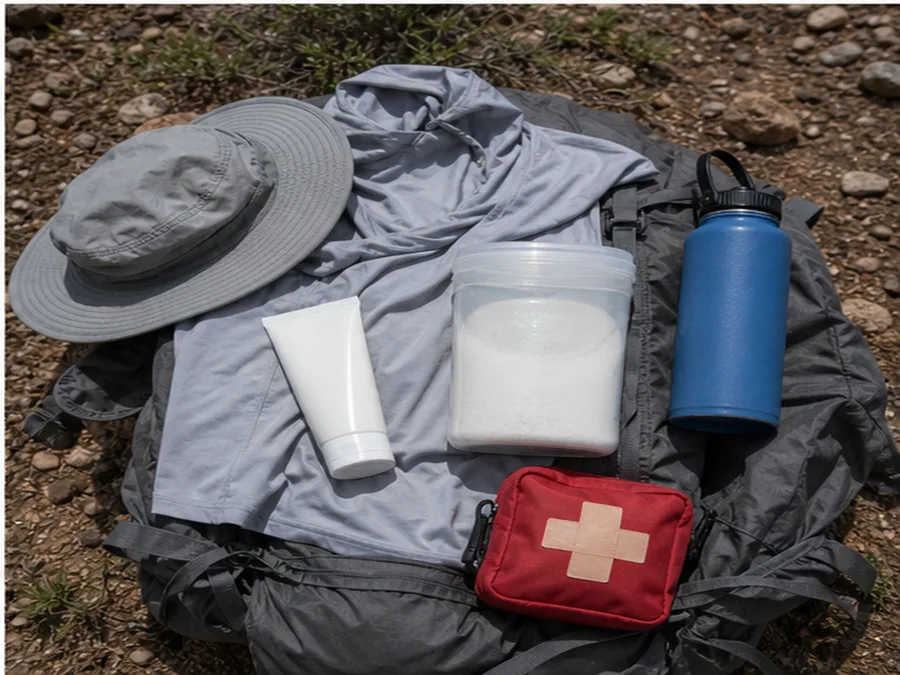
How do you get used to hiking in heat?
Fitness does not equal heat acclimatization. A strong hiker can still struggle during the first hot days of the season because the body has not adapted its sweating, circulation, and heart-rate response.
NIOSH workplace guidance builds heat exposure gradually over 7 to 14 days. It starts a person new to the heat at no more than about 20 percent of the usual exposure on day one, then adds no more than 20 percent each day.
That schedule is not a personal hiking prescription, but it shows why a full summer objective is a poor first hot outing.
Translate the principle into easier hikes.
Begin with a short shaded walk near a simple exit. Add time or climbing on later days only when you recovered normally, slept well, and had no lingering headache, unusual fatigue, nausea, or dizziness.
Do not increase heat, distance, and pack weight together. Change one demand at a time so you can tell what caused trouble.
A two-mile shaded walk with a light pack teaches you more than a long exposed hike that ends in exhaustion.
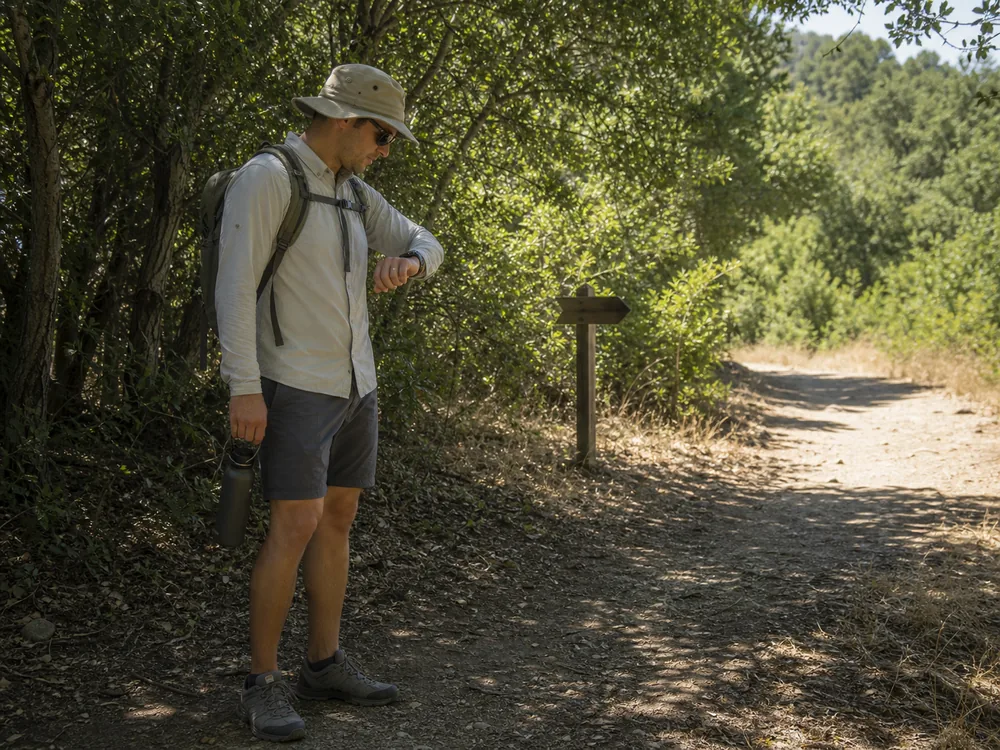
Heat adaptation can fade after time away.
NIOSH notes that a week or more without heat exposure may cause a significant loss. Reduce the next hike after travel, illness, an air-conditioned break from summer, or the first heat wave after cool weather.
The least adapted person sets the group plan. New hikers, visitors from a cooler climate, and anyone returning after illness need shorter exposure and more cooling time.
Build heat time slowly. Acclimatization improves tolerance, but it does not make extreme heat safe.
Pace by cooling, not by pride
The right hot-weather pace leaves room to cool down. If every stop is spent gasping in full sun, the pace is too high or the route is wrong for the day.
- Start slower than normalGive the body time to settle before the first climb.
- Use shade stops earlyRest before symptoms force a long stop.
- Snack with waterPair salty food and fluid when sweating is high.
- Check the groupAsk about headache, dizziness, cramps, nausea, confusion, and unusual fatigue.
- Turn around earlyLeave the hardest heat for the car ride, not the trail.
Watch behavior, not only complaints.
Someone who gets quiet, clumsy, irritated, confused, or unsteady may be in trouble before they describe symptoms clearly. Stop in shade, cool down, drink if able, and make the exit decision early.
Heat and altitude stack badly because both increase effort. If the hike is high and hot, use a lower pace ceiling and consider the altitude day-hike plan before adding mileage.
Cooling is part of pace. A pace that leaves no shade breaks is not a sustainable pace.
A group in heat should move by the slowest safe pace, not the average pace. Set group hiking pace rules before the first exposed climb.
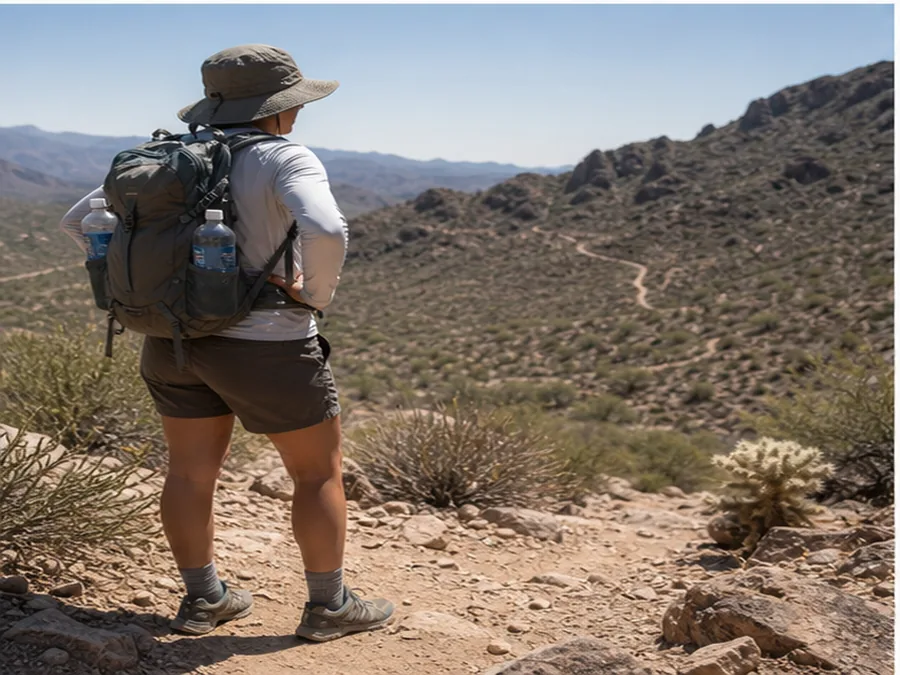
Which warning signs end the hike?
The turnaround is not the point where the hike has failed.
It is the point where the plan protects the return. Hot weather punishes late decisions, so set objective triggers before starting.
Turn around when shade disappears, water drops faster than planned, the group slows sharply, the trail gets more exposed, or the return will cross the hottest hours. A summit, overlook, or lake is not worth losing the ability to exit safely.
- Set a latest turnaround time before starting.
- Set a water amount that must remain for the return.
- Mark the last reliable shade or rest point.
- Check each person before the hottest exposed section.
- Choose a cooler backup hike before leaving home.
Hot, dry days can also bring smoke, fire restrictions, or closures. Check current wildfire season conditions before leaving because a water and shade plan does not address poor air quality.
If the hike also crosses scree or loose rock, be more conservative because heat makes balance and footwork worse.
Turn around while choices remain. Waiting for symptoms means the plan has already become smaller.
If the route includes hands-on rock, heat lowers the margin further. A rocky scrambling decision should become more conservative when hands are sweaty or shade is gone.
Sunrise starts help only when the exit still has daylight. A dawn or dusk plan should include lights, route familiarity, and a clear latest turnaround.
The earliest heat symptom in a group may be a behavior change, not a complaint. Treat silence, stumbling, confusion, unusual anger, or repeated stops as a reason to cool down and reassess immediately.
What should you do when someone starts overheating?
Stop the hike at the first concerning change. Move the person into real shade, remove the pack and excess layers, and start cooling while another person checks the route out and the ability to call for help.
Wet the person's skin and clothing with cool water when enough water remains for the exit. Fan the wet skin to increase evaporation.
Put cool wet cloths around the neck, armpits, and groin if practical, and keep the person lying or seated so dizziness does not cause a fall.
If the person is alert and can swallow, offer small amounts of water or an electrolyte drink.
Do not make a confused, vomiting, fainting, or unconscious person drink. Forced fluid can enter the airway.
Painful cramps after heavy sweating call for rest, cooling, fluid, and food or a balanced electrolyte drink. CDC guidance says to avoid salt tablets.
Get medical help when cramps last more than an hour, or sooner for someone with a heart condition or a prescribed low-sodium diet.
Headache, nausea, dizziness, heavy sweating, weakness, or a fast decline can signal heat exhaustion.
Even if cooling helps, the original objective is over. Start the safest exit only when the person is alert, steady, improving, and able to keep drinking.
Confusion, slurred speech, collapse, seizure, loss of consciousness, or very hot skin can signal heat stroke. Call emergency services immediately and cool the person continuously while help is coming.
Do not delay for a temperature reading or wait to see whether rest fixes it.
Keep one capable person with the patient. Send others for help only when the route, distance, communications, and group size make separation safer than staying together.
Cooling starts before evacuation. A person who cannot stand, think clearly, or keep fluids down may no longer be able to walk out safely.
Pick the cooler backup before driving
A hot-weather plan is stronger when it includes a cooler backup hike.
Choose a shaded trail, shorter loop, creekside walk where access is legal and safe, or an early-morning out-and-back before you leave home. That backup makes it easier to change plans at the trailhead.
Do not wait for the parking lot debate. Heat makes people bargain with the original goal because they already drove there.
A named backup route turns the decision from giving up into choosing the plan that fits the day.
| Original problem | Cooler backup | Why it works |
|---|---|---|
| Exposed ridge | Shaded forest loop | Less direct sun and easier rest stops |
| Long climb | Short out-and-back | Earlier turnaround and simpler exit |
| No water source | Trail near confirmed facilities | Less dependence on uncertain refill |
| Late start | Sunset-safe short route | Avoids rushing in heat |
| Mixed group | Lower-mileage loop | Protects the slowest hiker |
The backup should still be a real hike, not a consolation prize.
Pick one with good footing, reliable access, and enough shade that breaks actually cool people down. Save the exposed objective for a cooler day.
Tell the group the backup before anyone gets attached to the hotter plan. People accept a safer change more easily when it was part of the plan from the start.
If the day also involves a controlled descent footing, keep the daylight margin honest. Cooler air does not help if the return happens in darkness without enough light or route familiarity.
A backup is a decision tool, not a sign the hike failed.
Sources
The National Park Service heat illness guidance supports early or late timing, sun protection, water, salty snacks, shade rest, and cooling with water. The CDC NIOSH heat stress recommendations provide the hydration limits and work-based planning references used here.
The CDC acclimatization guidance supports gradual exposure over 7 to 14 days and reducing exposure after time away.
The CDC heat illness guidance supports the symptom and first-aid distinctions. The National Weather Service heat tools explain heat index, direct sun, and Wet Bulb Globe Temperature.
The Grand Canyon summer hiking guidance supports avoiding the hottest hours and planning around shade and water in extreme heat contexts.
Step by stepPractical steps
- Choose a shorter or shadier route than your cool-weather fitness suggests.
- Start early enough to avoid the hottest exposed hours.
- Calculate water for people, heat, exposure, and delay before starting.
- Wear sun protection and adjust layers before overheating builds.
- Use shade breaks, salty snacks, and group checks before symptoms force the decision.
- Turn around when water, shade, time, or behavior removes the exit margin.
AnswersQuestions readers ask
What temperature is too hot for hiking?
There is no single number for every hiker or route. Exposure, shade, humidity, fitness, acclimatization, water, and exit options matter.
How much water should I bring for hiking in hot weather?
Carry enough for the route, heat, exposure, people, and delay, then set a turnaround amount before starting.
What should I wear hiking in hot weather?
Wear light-colored, breathable sun clothing, a hat, sunglasses, and sunscreen. Choose clothing that protects skin while letting sweat move.
Should I eat salty snacks on a hot hike?
Yes, salty snacks can help when you are sweating heavily. Pair them with water and use familiar foods or electrolyte options your stomach already tolerates.
When should I turn around on a hot hike?
Turn around when water drops faster than planned, shade disappears, the group slows sharply, symptoms appear, or the return would cross the hottest exposed part of the day.