
How to Prevent Chafing on a Long Hike
Where chafe starts, what stops it, and how to fix a hot spot before it ends your day.
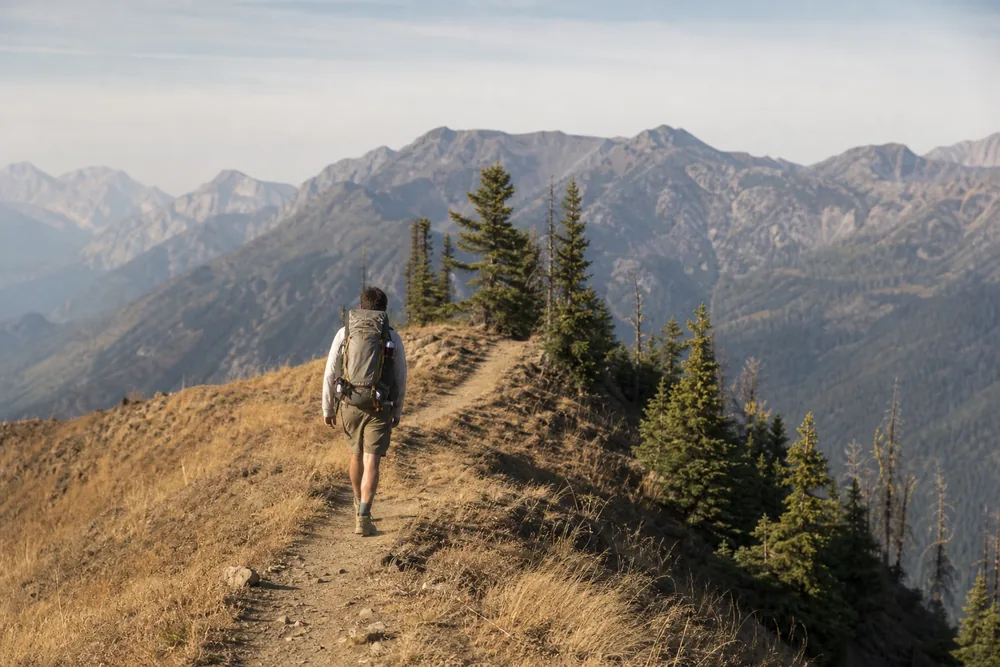
Chafing builds through the quiet middle of a long day, driven by damp skin, dried salt, and thousands of repeated passes across the same contact line. Here is where it starts, what actually prevents it, and how to catch a hot spot early.
Chafing almost never announces itself in the first hour. It builds through the quiet middle of a long day, and by the time you feel it, the skin is already sore enough to shorten your stride.
The cause is unglamorous. Damp skin, salt left behind by dried sweat, and a fabric edge crossing the same square inch a few thousand times per hour will sand the surface layer down until it stings.
Which is why the useful work happens before you start walking and at the first faint twinge, not at mile fourteen when you are already walking with your legs apart.
Apply petroleum jelly to areas where skin rubs against skin or clothing, such as the inner thighs and underarms, before a long workout.
American Academy of Dermatology Association, exercise skin-care guidance
Which parts of your body chafe first on a long day?
Chafe is not distributed evenly. It concentrates at a small number of predictable contact lines, and those lines are set by your anatomy, your clothing, and where your pack sits.
Inner thighs go first for most hikers, especially in humid air or on a warm afternoon when shorts ride up and skin meets skin with every stride.
Underarms follow, usually on people carrying trekking poles, because pole use adds a large repeated arm swing that a normal walking gait does not.
Then come the strap lines. Sports bra bands, pack shoulder straps, and sternum straps all sit on skin that sweats heavily and rarely dries during the walking day.
The waistband and hipbelt line is the one hikers underestimate. A belt carrying real weight presses a seam into damp skin for hours, and a poorly adjusted belt slides while it presses.
Getting the load onto your hips through correct pack fit adjustment reduces the pressure and the sliding at the same time.
Sternum straps create a smaller but stubborn spot on the chest, which is why shirt-under-strap rubbing shows up on hikers who never chafe anywhere else.
Your own map is also set by gait and body shape. Two people on the same trail in the same clothing can finish the day with completely different sore spots, so general advice only gets you to the starting point.
Feet are a separate case with the same physics. A sock seam, a wrinkle, or a damp sock lining produces a hot spot in exactly the way a shirt seam produces an armpit raw patch.
Inner thighs
Skin against skin, worsened by humidity, riding shorts, and any stride change late in the day. The first place most hikers feel a sting.
Underarms
Sleeve seam against a sweat-heavy area, amplified by trekking poles and by pack straps that push the sleeve inward.
Bra and strap lines
Elastic bands and webbing sit on skin that stays wet all day. Damage here is slow, deep, and slow to heal.
Waistband and hipbelt
Pressure plus sliding. A loaded belt over a shirt hem or a folded waistband is a reliable raw line by afternoon.
Feet and ankles
Seams, wrinkles, grit, and sock moisture. Different tissue, identical friction-plus-moisture mechanism.
Once you know your own pattern, you stop treating chafing as bad luck and start treating it as three or four specific spots that need attention before the trailhead.
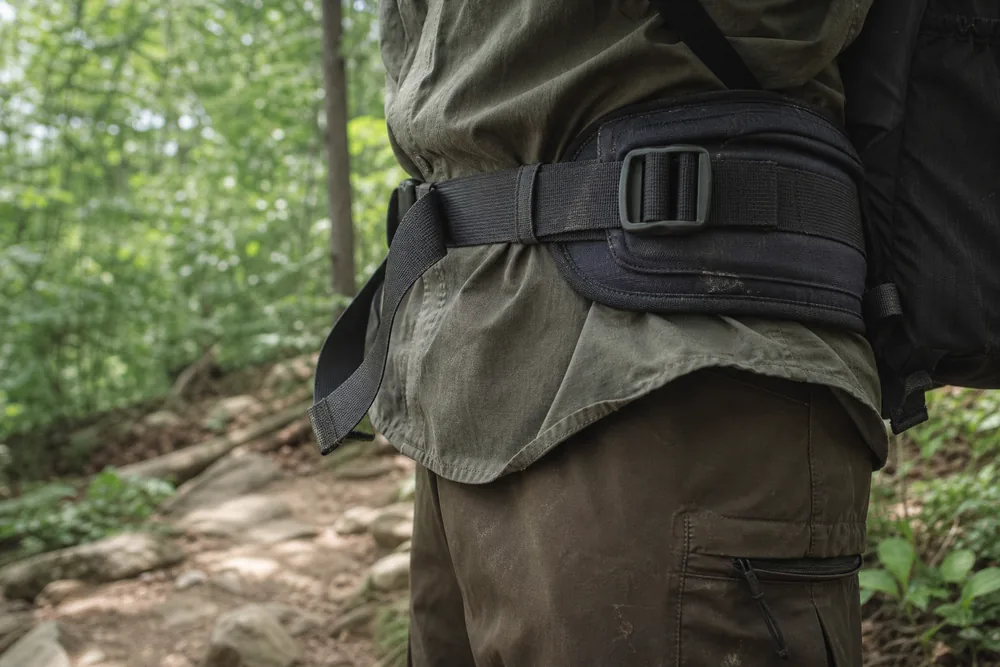
How does sweat turn ordinary friction into raw skin?
Dry skin against dry fabric slides reasonably well. The coefficient of friction is low enough that thousands of repetitions cause little damage.
Add moisture and the picture changes. A thin film of sweat makes fabric grip skin rather than glide across it, so each stride drags the surface layer instead of passing over it.
Then the sweat evaporates and leaves salt crystals behind. Those crystals are abrasive, and they sit exactly where the rubbing is worst.
Heat makes all of this faster because you sweat more and your skin swells slightly, which tightens the fit of clothing that felt fine at the car park. Managing output through sensible hot weather pacing keeps the sweat rate down before it becomes a skin problem.
Repetition is the multiplier people forget. At a normal walking cadence you take roughly 100 steps a minute, so a six-hour day is somewhere near 36,000 strides through the same contact line.
That is why a shirt seam you never notice on a two-mile walk becomes a problem at fifteen miles. Nothing about the seam changed, only the number of passes.
Rain and stream crossings do the same thing from the outside. Wet fabric holds grit and stays heavy against skin, which is one reason wet weather hiking produces chafe in people who never get it on dry days.
Cotton deserves its bad reputation here. It absorbs sweat, holds it against skin, stiffens as it dries, and drapes heavily, which is four separate ways to increase surface drag.
Sweat composition shifts as the day goes on, and steady salt and snack timing keeps both your output and your skin chemistry more even.
Spare water is part of the same calculation. A realistic water carry plan leaves enough for a mid-day rinse instead of forcing a choice between drinking and cleaning a salt-crusted strap line.
Understanding the mechanism gives you the three levers. Reduce moisture, reduce the abrasive residue, or reduce the number of passes across bare skin.
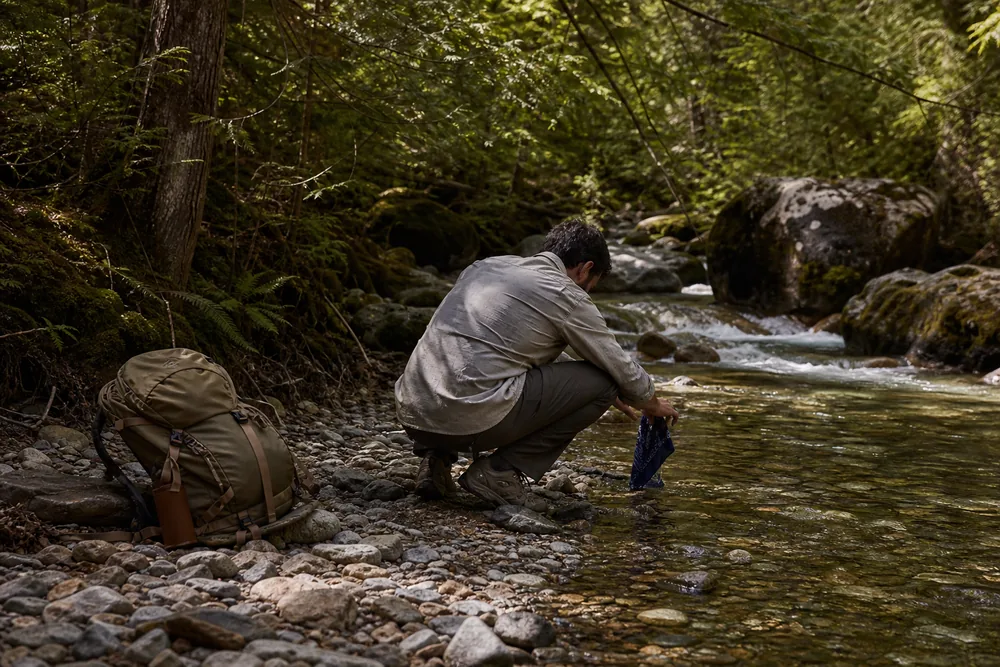
What to do in the twenty minutes before you start walking
Almost all of the leverage sits in the pre-hike window, when the skin is dry, the light is good, and nothing hurts yet.
Start with dry skin. Balm applied over sweat or over yesterday's residue sits on top of the moisture instead of forming a barrier.
Cover the spots you know, not the spots a list tells you about. Your own history is a better predictor than any general recommendation.
Then do a clothing check while you are still standing at the car, because a folded waistband or a twisted sock is trivial to fix now and impossible to fix comfortably at mile eight.
Be generous with the amount. A thin smear rubs off within an hour, while a proper layer that feels slightly slippery lasts through most of a morning.
Test the load before you commit. Fifty metres of walking with the pack on tells you whether the hipbelt is riding, which no amount of adjustment while standing still will reveal.
- Dry and check the skinWipe the known contact areas dry and look for anything already tender from a previous day.
- Apply the barrierWork balm or petroleum jelly into inner thighs, underarms, and any strap line, using enough to feel slick rather than tacky.
- Tape the repeat offendersIf one spot chafes every single time, cover it with kinesiology tape or a hydrocolloid patch before it has a chance to start.
- Smooth every seamFlatten the shirt hem under the hipbelt, straighten sock cuffs, and make sure nothing is folded under a strap.
- Set the belt and strapsBuckle the hipbelt on your iliac crest, snug it, then walk fifty metres and re-check before committing to the day.
Carry the small tin with you rather than leaving it in the car. Re-application at the halfway point is normal on a long, hot day, and it costs about ninety seconds.
Skin supplies belong on the hiking packing list alongside water and warmth, because a balm left at home is the one item nobody can improvise.
Pre-dawn starts deserve extra care, since dressing in the dark hides folded seams. Anyone planning a sunrise start should run the seam check under a headlamp rather than by feel.
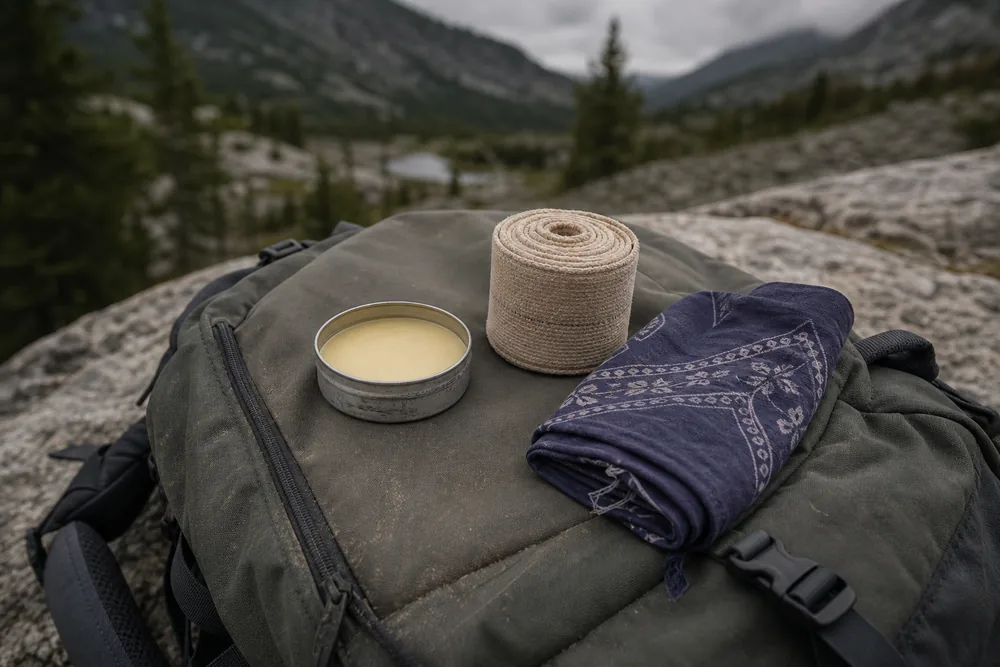
Balms, powders, and tape each fail in a different way
There is no single best product, because the three categories solve different problems and break down under different conditions.
Balms and petroleum jelly work by reducing surface drag directly. They are the most reliable option for long hot days, and their weakness is that heavy sweat and repeated rubbing eventually thin the layer.
Powders work by absorbing moisture rather than lubricating. That helps in humid conditions and inside socks, but powder plus heavy sweat produces a gritty paste that abrades rather than protects.
Tape removes the skin from the equation entirely by giving the fabric something else to rub against. It is the strongest option for a known repeat spot and the fussiest to apply well.
Anti-chafe sticks sit between balm and convenience. They apply cleanly and stay put, though they lay down a thinner film than a jelly and need re-application sooner.
Silicone-based balms hold up better than petroleum jelly in sustained wet conditions, because water does not thin them as quickly. They cost more per gram, which is the trade for the extra hours.
Zinc oxide creams add a mild protective barrier on skin that is already irritated, though they are thick enough to feel odd under a moving strap.
Hydrocolloid patches belong to the treatment side more than the prevention side, but they are worth carrying because they let you keep walking on a spot that has already broken.
| Product | Best for | How it fails | Re-apply |
|---|---|---|---|
| Petroleum jelly | Long hot days, inner thighs, strap lines | Thins out under heavy sweat and stains fabric | Every 3 to 4 hours |
| Anti-chafe stick or balm | Clean application, underarms, bra lines | Thinner film than jelly, wears through faster | Every 2 to 3 hours |
| Powder | Humid air, inside socks, low-output days | Turns to abrasive paste when sweat is heavy | Not usefully re-applied mid-hike |
| Kinesiology tape | One known spot that chafes every time | Peels if applied to damp or oily skin | Should last the full day |
| Hydrocolloid patch | Skin that is already broken or blistered | Slides off if the area keeps getting wet | When edges lift |
The practical answer for most people is balm on the body, tape on the one spot that always goes, and powder reserved for feet in humid weather.
Consecutive days change the maths, because skin never fully recovers overnight. Anyone doing multi-day trek preparation should plan to carry more barrier product than a single big day would suggest.
Fabric and seam choices decide how much friction ever reaches your skin
Products manage the friction that occurs. Clothing decides how much occurs in the first place, which makes it the higher-leverage choice.
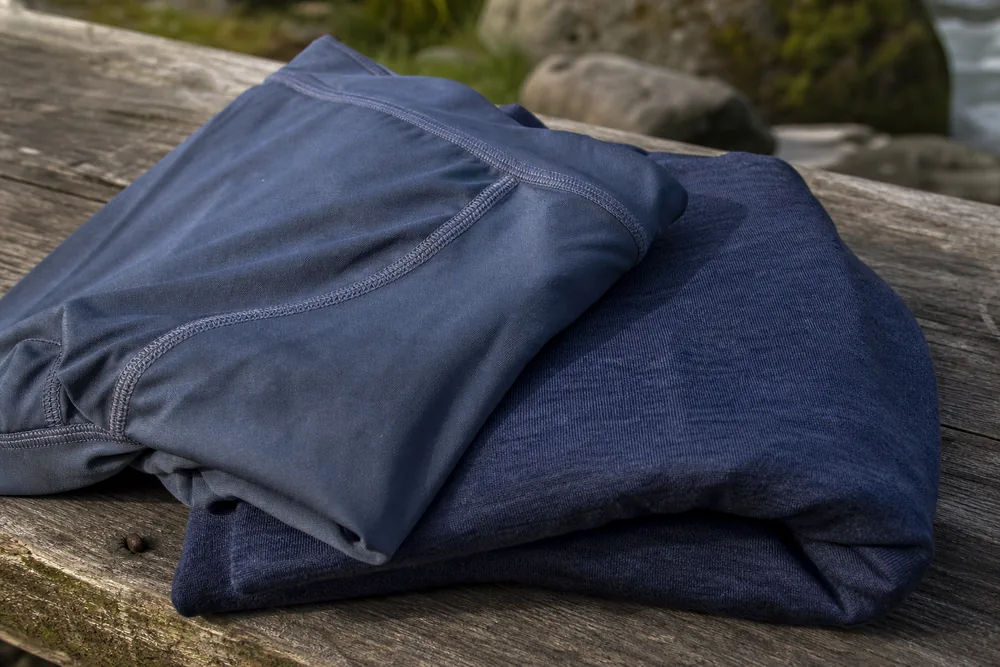
Synthetics and merino move moisture off skin and stay soft as they dry, so the fabric keeps sliding rather than gripping.
Seam placement matters more than fabric weight. A flat-lock seam lies almost level with the fabric surface, while a standard overlocked seam stands proud and works like a low ridge against skin.
Fit sits in the middle. Clothing that is too loose flaps and rubs across a wide area, while clothing that is too tight presses a seam into one line and holds it there.
- Flat-lock or bonded seams in shorts, base layers, and briefs, checked by running a thumb along the inside - Synthetic or merino next to skin everywhere that sweats heavily, with cotton left at home on long days - Compression shorts or longer liners under hiking shorts if inner thighs are your recurring spot - A bra with a smooth band and no exposed hook under a pack that carries weight on the shoulders - Smooth-toe wool or synthetic socks sized so they do not bunch at the arch
Liner shorts are the single most effective change for thigh chafe. They keep skin from touching skin, and a well-fitted pair stays put instead of rolling up into a rope at the top of the thigh.
Sock choice works on the same logic. A snug, wrinkle-free sock in a shoe with room at the toes removes the movement that creates a hot spot, which is a foundation of most common hiking mistakes around foot care.
Waistband height is worth a moment of thought when you know a hipbelt will be loaded. Trousers whose waistband lands exactly under the belt give you two hard edges stacked on one line of skin, and hikers who carry a heavy daypack feel that stack quickly.
New clothing on a long day is a gamble. Anything that will see fifteen miles should have seen five first, ideally on a training walk where you were building hiking fitness rather than committed to a route.
Wash new synthetics before wearing them too, because sizing finishes can leave a slightly stiff hand that softens after a cycle.
Cold weather flips one assumption. Layers trap sweat against skin under a shell, so winter layering creates chafe on days that never feel hot.
Can you keep hiking once the skin is already raw?
Usually yes, if you stop early enough. The decision point is not the raw patch, it is the hot spot ten minutes before it.
A hot spot feels like warmth, a faint sting, or a spot you keep noticing. That sensation is the surface layer separating, and it is the last cheap moment to intervene.
Stopping there costs five minutes. Stopping after it breaks costs the rest of the day and often the following week.
The hard part is that a hot spot arrives when you are warm, moving well, and reluctant to break rhythm. Treat the reluctance itself as the signal.
Tape applied at this point needs dry skin under it, so wipe the area and let it air for a minute before the adhesive goes on.
When you do stop, treat the surface rather than covering it. Rinse off salt and grit with clean water, dry the area properly, then apply a barrier or a patch to smooth skin.
- Rinse the area with clean water and dry it fully before anything else touches it - Cover broken skin with a hydrocolloid patch rather than balm, which will not stay put on a weeping surface - Change into a dry layer if you have one, since a wet garment undoes the repair within a mile - Loosen or reposition the strap or belt that caused it, even if that means carrying weight less comfortably - Shorten your stride and slow down, because pace and stride length change the rubbing distance directly
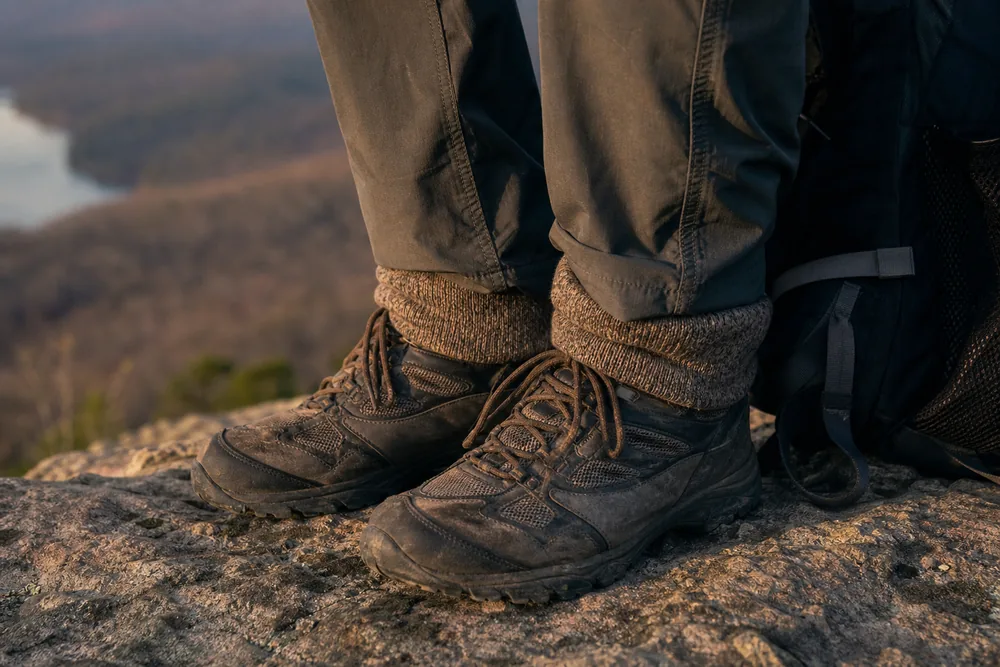
Feet get the same treatment on a shorter clock. A hot spot under a sock cuff or across the heel needs the shoe off, the sock straightened, and a patch applied within minutes rather than at the next viewpoint.
Pace is a real lever here. A group that has drifted into a fast rhythm produces more friction per hour, and setting a deliberate group walking pace after a repair keeps the fix intact.
Watch for infection signs over the following days. Spreading redness, heat, swelling, or pus in a chafed area needs medical attention rather than another patch, and recognising trail injury basics matters more than any product choice.
Finish the day differently once skin is broken. Shower, dry the area, and leave it uncovered overnight so it is not sitting damp under a dressing for eight hours.
- First warning sign
- Warmth or a faint sting, not pain
- Time to act
- Within about ten minutes of noticing it
- Typical onset
- Hour three to five on a warm long day
- Highest-risk conditions
- Humid heat, rain, or a loaded hipbelt
- Most effective single fix
- Liner shorts for thighs, tape for a known spot
- Healing time once broken
- Three to seven days for surface chafe
Chafing responds well to boring preparation. Two minutes of balm, one flattened seam, and a willingness to stop at the first sting will carry most hikers through a long day with skin intact.
If you are still building toward longer mileage, sorting your skin plan early saves a season of trial and error on the days you most want to enjoy.
Sources
- American Academy of Dermatology Association, guidance on preventing and treating chafing and exercise-related skin irritation, aad.org - NHS, patient guidance on blisters, causes, prevention, and care of broken skin, nhs.uk
Step by stepPractical steps
- Array
- Array
- Array
- Array
- Array
AnswersQuestions readers ask